
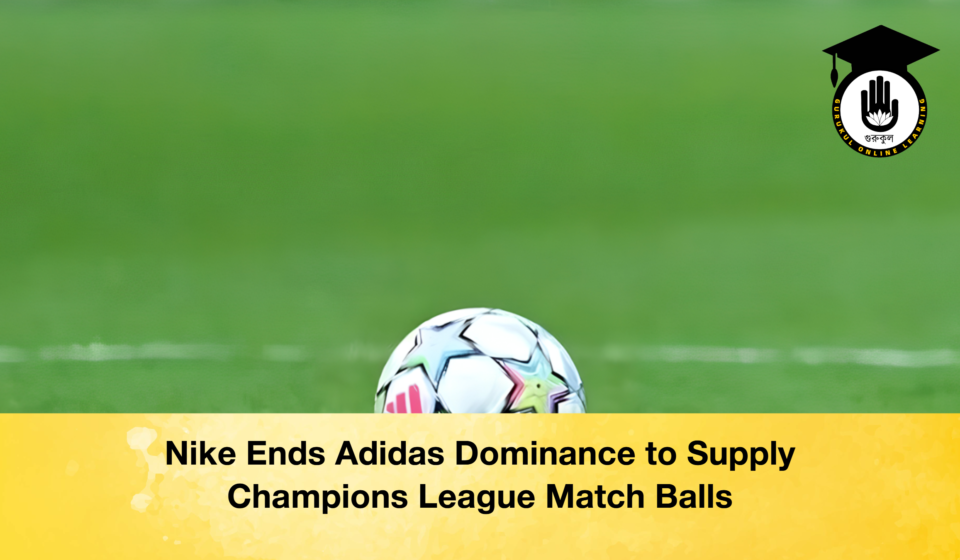

American sportswear giant Nike is set to become the official match ball supplier for the UEFA Champions League, bringing an end to Adidas’s decades-long partnership with European football’s premier club competition. Under the new agreement, Nike will provide match balls for all UEFA men’s club tournaments from the 2027-28 season through to 2031. The decision was officially confirmed on Monday in a statement released by UC3.
The commercial rights for UEFA’s club competitions are managed jointly by UEFA and European Football Clubs (EFC) through UC3. In March, UC3, alongside its commercial partner Relevent Football Partners, launched a competitive tender process to select the next official ball supplier. Nike emerged victorious from the bidding war, signalling a major shift in the commercial landscape of European football and closing the curtain on Adidas’s iconic era in the Champions League.
The scope of the agreement extends well beyond the flagship Champions League. Nike will also manufacture the official match balls for the UEFA Europa League and the UEFA Conference League. In addition, the deal covers the UEFA Super Cup, the UEFA Youth League, and the UEFA Futsal Champions League. This marks the first time in European football history that a single manufacturer will supply balls across all three of UEFA’s top-tier men’s club competitions simultaneously.
According to a report by sports publication The Athletic, the landmark contract is valued at approximately $45 million annually. Securing this agreement represents a significant strategic milestone for Nike as it seeks to reinforce its foothold in the global football market.
Welcoming the deal, Camilo Andrade, Vice President and General Manager of Nike Football, expressed delight at the company’s return to the Champions League stage after more than two decades. He described the opportunity to supply balls for UEFA’s prestigious men’s club competitions as a great honour for the brand.
Andrade emphasised that the ball remains the most vital piece of equipment in the sport. He noted that Nike intends to prioritise player feedback, combining new technology and product innovation to uphold the heritage and prestige of these tournaments. He characterised the partnership as part of the company’s long-term investment and commitment to the global game.
Despite the high-profile nature of the deal, financial analysts remain cautious about its broader impact on Nike’s corporate performance. While securing visibility on the Champions League stage will undoubtedly boost brand exposure and marketing reach, industry observers warn it may not resolve the company’s underlying commercial challenges, which include declining sales and criticism over a slowdown in product innovation.
David Bartosiak, an analyst at Zacks Investment Research, pointed out that high-profile partnerships alone will not restore Nike’s former market dominance. To remain competitive, the company must deliver meaningful improvements in product quality and genuine innovation; otherwise, even major commercial agreements may fail to yield the expected returns.