
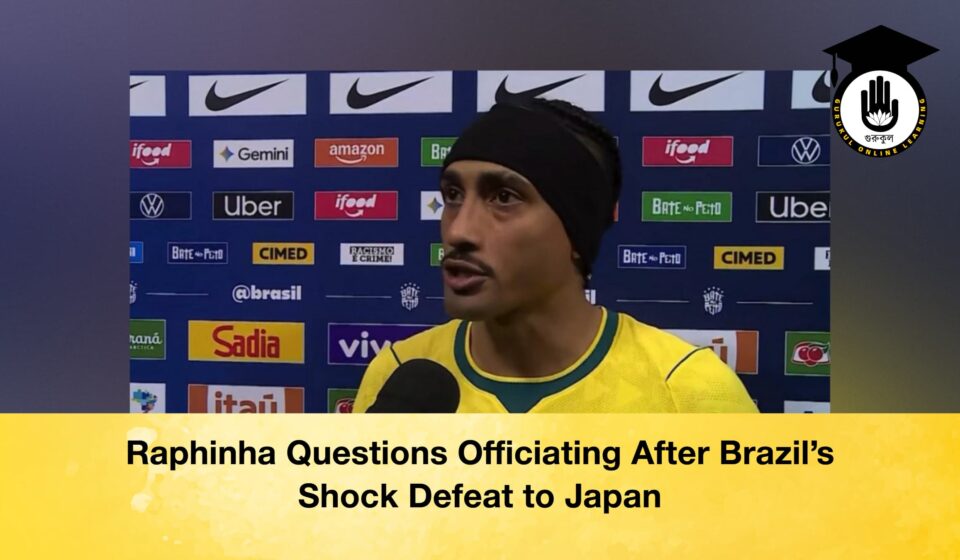

Brazil captain Raphinha has expressed strong frustration with the refereeing after his side suffered a 3-2 defeat against Japan, claiming that playing against both the opposition and the referee made the contest particularly difficult. Despite acknowledging signs of improvement in Brazil’s performances since the World Cup, the forward believes several contentious decisions influenced the outcome of the match.
Japan stunned the five-time world champions with two goals inside the opening 20 minutes at the Singapore National Stadium. Brazil struggled to contain their opponents in the early stages but gradually found their rhythm and fought their way back into the contest.
Vinícius Júnior scored twice to bring Brazil level, raising hopes of a comeback victory. However, Japan had the final say when Tatsuhito Sakamoto scored the decisive goal in the first minute of stoppage time, securing a memorable 3-2 victory.
The winning goal became the centre of controversy, with Brazil’s players and coaching staff questioning whether Japan should have been awarded the opportunity to continue the attack.
Speaking after the match, Raphinha, who captained Brazil on the occasion, acknowledged the team’s progress while taking aim at the standard of officiating.
“Since the World Cup, we have been improving and trying to find our style of play. I think we played really well. We were much better in the second half than in the first. But it becomes difficult when you have to play against the referee. Everything becomes more complicated,” he said.
However, the Barcelona forward was careful not to attribute the entire defeat to the referee. He admitted that Brazil still had several areas to address and that the team needed to continue working towards improvement.
“I am not saying that we have no responsibility. There are many areas where we need to improve, and we will do so. But we cannot ignore the refereeing in today’s match,” Raphinha added.
The frustration over the officials became particularly visible during the closing stages. Raphinha had already left the pitch in the 71st minute, making way for Endrick, but remained involved in the heated exchanges from the sidelines.
The decisive incident occurred in stoppage time. As Japan attempted to regain possession, their forward Takumi Minamino became involved in a challenge with Brazilian midfielder João Gomes. Brazil’s players and members of the coaching staff believed Minamino had committed a foul during the encounter.
Singaporean referee Jansen Foo Chuan Hui, however, allowed play to continue. Japan capitalised on the situation, with Sakamoto finding the net to put his side ahead. Brazil immediately protested, insisting that the goal should not have stood.
The incident was subsequently reviewed by the Video Assistant Referee (VAR), but the decision remained unchanged and Japan’s goal was allowed to stand.
Raphinha and Brazil head coach Carlo Ancelotti were particularly unhappy with the ruling. Both left the technical area and entered the pitch to challenge the referee’s decision. As tensions escalated, the referee showed red cards to both Raphinha and Ancelotti.
Raphinha’s complaints were not limited to the incident surrounding Japan’s winning goal. He also questioned the officiating in two earlier situations, including an alleged handball in the build-up to Japan’s opening goal and a penalty appeal involving Brazil during the first half.
For the Brazilian forward, these incidents formed part of a series of decisions that he felt had gone against his team.
The defeat represents a setback for Brazil as they continue working to rebuild their team and establish greater consistency following the World Cup. Their recovery from a two-goal deficit demonstrated attacking resilience, particularly through Vinícius Júnior’s contribution, but defensive vulnerabilities and the inability to protect the draw ultimately proved costly.
While Raphinha recognised that Brazil must take responsibility for their shortcomings, his post-match comments made clear that he believed the controversial refereeing decisions deserved serious scrutiny. The result left Brazil with plenty to reflect on, while Japan celebrated a significant victory against one of international football’s most successful nations.