
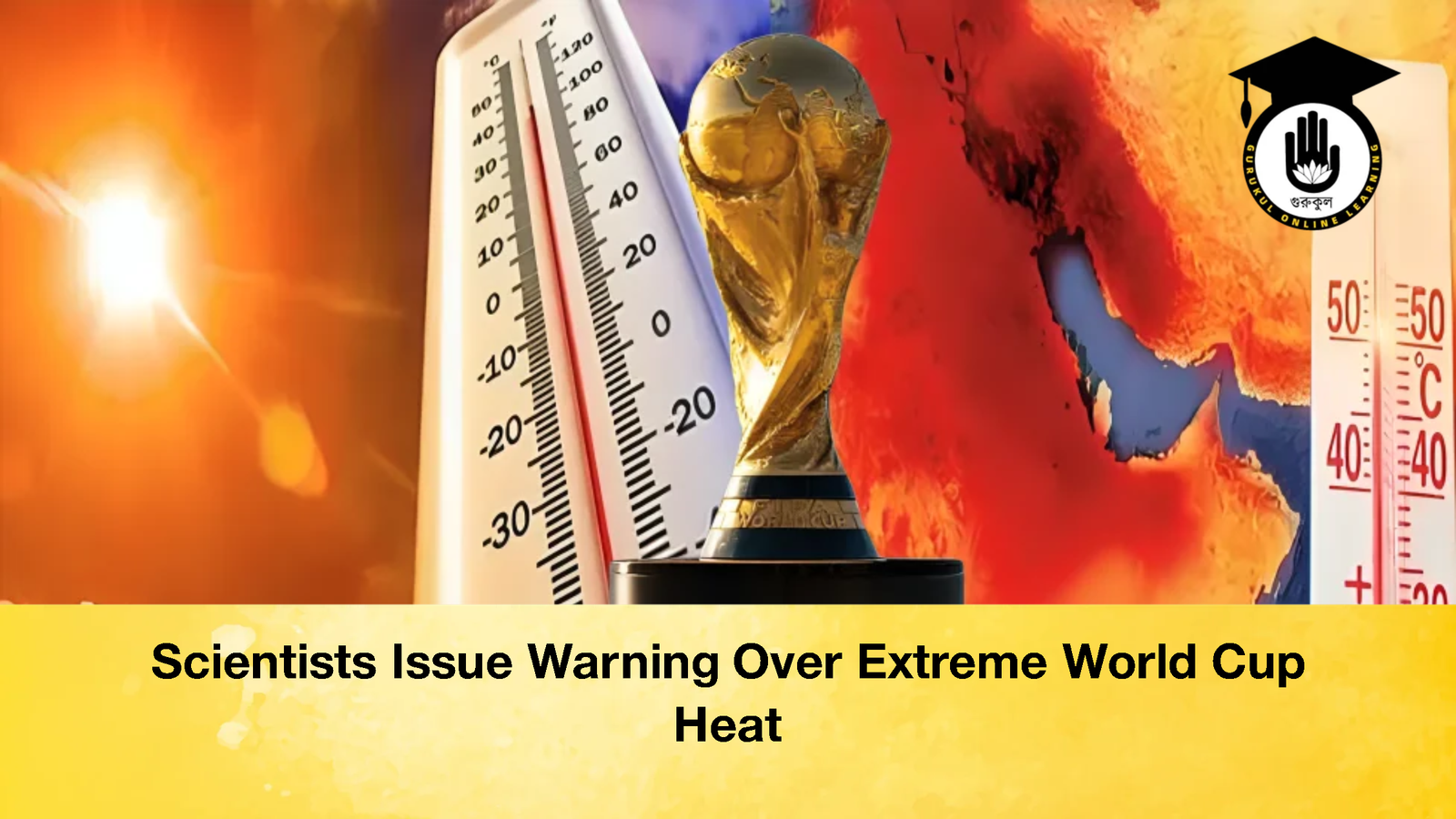

As the 2026 FIFA World Cup draws closer, an international collective of scientists has issued a rigorous warning regarding the potential for extreme environmental conditions to jeopardise athlete safety. According to a comprehensive research study conducted by a panel of 20 experts, the tournament—jointly hosted by the United States, Canada, and Mexico—could subject participants to perilous levels of thermal stress. The findings indicate that of the sixteen stadiums designated for the global event, fourteen present a significant risk of extreme temperatures.
The research underscores that match venues situated in Mexico and the southern regions of the United States are particularly vulnerable. Forecasters and researchers suggest that temperatures in these specific locations could approach or even exceed 40°C during the competition period. Such conditions are not merely a matter of high thermometer readings; the study emphasises that the combination of ambient temperature, high humidity, intense solar radiation, and low wind speeds will create a hazardous physiological environment for elite athletes performing at peak intensity.
Physiological Demands and Historical Context
The scientific panel asserts that the cumulative effect of these environmental factors will place unprecedented strain on the cardiovascular and thermoregulatory systems of the players. This is not the first time such concerns have been raised regarding North American sporting events; players participating in previous club competitions hosted in the United States have already reported significant physical distress due to similar climatic conditions.
While the projected average temperatures for the southern venues are expected to fluctuate between 30°C and 35°C, the scientists warn of frequent spikes that could push the mercury beyond the 40°C threshold. The report suggests that under these conditions, the metabolic heat generated by players during 90 minutes of professional football may exceed the body’s natural ability to cool itself, potentially leading to heat exhaustion or life-threatening heatstroke.
FIFA’s Current Mitigation Strategies
In response to these atmospheric challenges, FIFA, the global governing body for football, has already outlined several mandatory measures to protect player welfare. These include:
Compulsory Cooling Breaks: A mandatory three-minute break in each half of every match to allow players to rehydrate.
Climate-Controlled Benches: The installation of temperature-regulated seating areas for substitute players and technical staff.
Thermal Monitoring: The utilisation of the internationally recognised Wet Bulb Globe Temperature (WBGT) index to monitor heat stress in real-time at pitch level.
The WBGT index is considered more accurate than standard thermometers as it accounts for humidity, wind speed, and radiant heat, providing a comprehensive “feels-like” temperature that reflects the true physical burden on the human body.
Scientists Call For Stricter Protocols
Despite the measures proposed by football’s governing body, the twenty-member team of scientists argues that these provisions may be insufficient to guarantee the safety of the participants. They have urged FIFA to adopt a more rigorous set of protocols to prevent medical emergencies.
The panel has recommended that if the environmental temperature exceeds 28°C, FIFA should consider more drastic actions, such as rescheduling matches to cooler times of the day or postponing fixtures entirely. Furthermore, the experts have suggested that the duration of the current three-minute cooling breaks should be doubled to at least six minutes to ensure adequate physiological recovery.
The warnings come at a critical time as the final tournament logistics are formalised. The scientific community remains firm that without more stringent interventions, the extreme weather patterns across the North American continent could pose a grave risk to the health of players and the overall integrity of the competition. Under current projections, the 2026 edition could be one of the most thermally challenging World Cups in the history of the sport.