
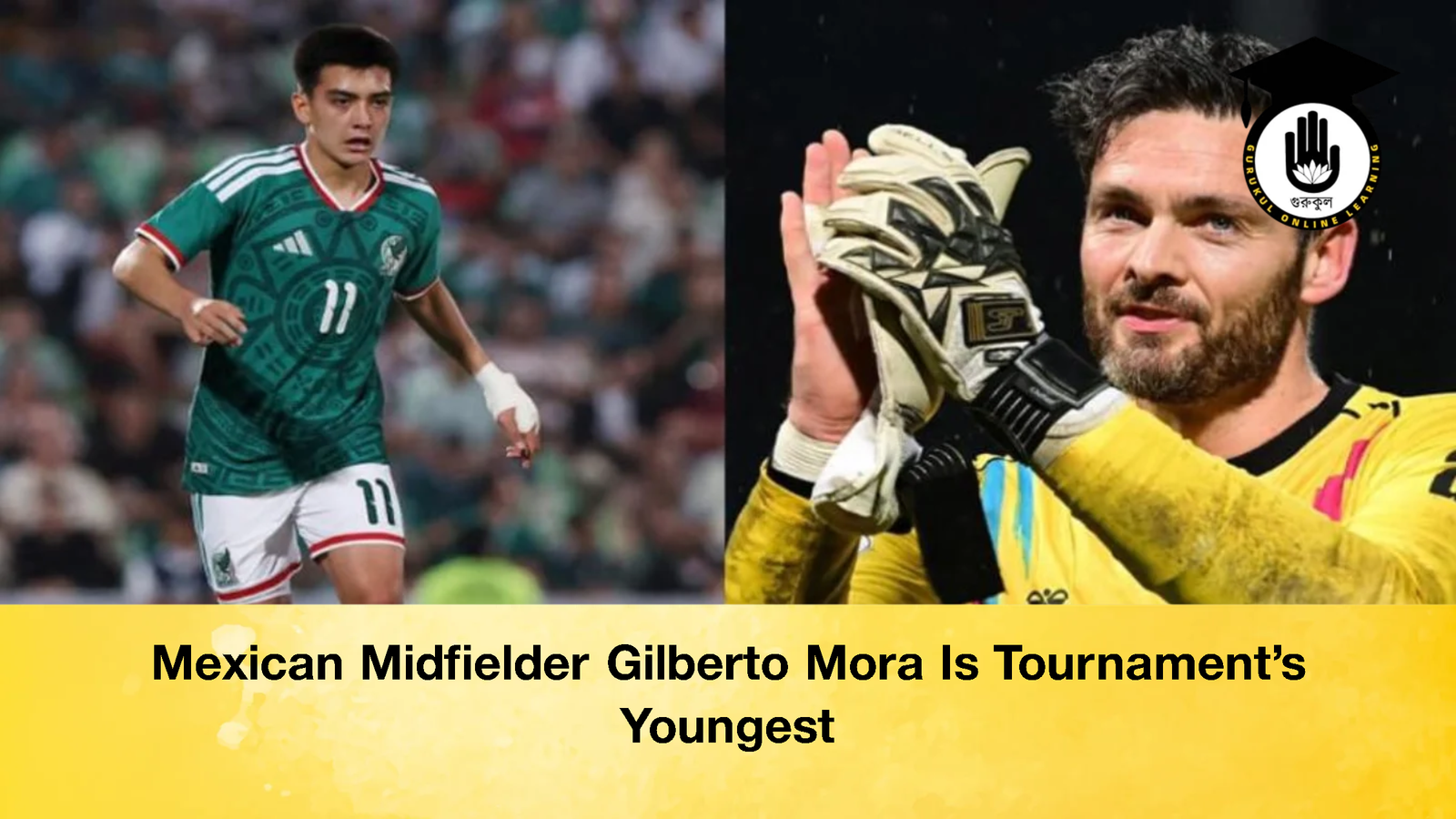

The official squad registrations released by FIFA for the upcoming 48-team global tournament have confirmed that Mexican midfielder Gilberto Mora will be the youngest football player to participate in the 2026 World Cup. When the prestigious international competition officially commences on 11 June 2026, the rising star from Liga MX side Tijuana will be precisely 17 years and 240 days old. His inclusion places him at the forefront of a fresh generation of talent set to compete on the grandest stage in North America.
According to the comprehensive data published by football’s global governing body, a record-breaking total of 1,248 players are registered to represent the 48 competing nations. Within this historic tournament pool, FIFA’s official lists show that 22 teenagers have successfully secured places in their respective national squads. Amongst this select group of adolescents, Mora stands out as the absolute youngest, presenting the young midfielder with an immediate opportunity to establish his credentials in international football history.
Historical Precedents and Teenage Breakouts
The emergence of such young talent at a World Cup naturally draws structural comparisons to iconic teenage performances from previous editions of the tournament. The historical benchmark for adolescent achievement remains held by the legendary Brazilian forward Pelé, who remains the youngest player to score in a World Cup final, achieving the feat at 17 years of age during Brazil’s triumphant 1958 campaign.
In more recent tournaments, other teenagers have similarly used the global platform to announce their world-class capabilities. During the 2018 World Cup in Russia, a 19-year-old Kylian Mbappé performed exceptionally well to help secure the trophy for France, solidifying his status as a generational phenomenon. Two decades prior to Mbappé’s success, England’s Michael Owen experienced a definitive career breakthrough during the 1998 tournament in France, where he delivered highly publicised performances at the age of just 18.
The Rising Generation of 2026
The 2026 edition features several high-profile teenagers who have earned their selection through consistent, high-level performances for prominent domestic clubs. Prominent amongst the registered youths are the Spanish duo of Lamine Yamal, aged 18, and Pau Cubarsí, aged 19, both of whom have featured regularly for Barcelona. Similarly, Germany’s 18-year-old prospect Lennart Karl has progressed rapidly through the ranks at Bayern Munich to earn his place.
Beyond the immediate teenage bracket, a layer of slightly older prospects are also poised to make their highly anticipated tournament debuts. This group includes:
Warren Zaïre-Emery (20) & Désiré Doué (21): Mainstays for French club Paris Saint-Germain, a team that enters the period as two-time defending UEFA Champions League winners.
Nico O’Reilly (21): The promising Manchester City midfielder included in England’s selection.
Arda Güler (21): The Real Madrid playmaker representing Turkey.
Nico Paz (21): The creative talent named in Argentina’s squad following a successful domestic campaign with Italian club Como.
Mora’s Rapid Ascent in Mexican Football
For Mora, the tournament capstone follows a remarkable 12-month period of rapid development within the Mexican football hierarchy. His inclusion in the final 26-man roster by head coach Javier Aguirre gives him the chance to become the youngest player ever to represent Mexico in a World Cup match. Should he receive playing time during the group stages, he will surpass a national record held for 96 years by Manuel “El Chaquetas” Rosas, who debuted at the inaugural 1930 World Cup aged 18 years and 88 days.
Mora’s international pedigree was notably enhanced during the 2025 Gold Cup, where he was a key squad member during Mexico’s victorious campaign, notably providing the decisive assist in the semi-final against Honduras. His domestic records are equally precocious; in August 2024, at the age of 15, he became the youngest player to start and score in the Mexican top flight. By January 2025, at 16, he achieved his full international debut for the senior national team.
The Longevity Spectrum: Veterans of the Tournament
In stark contrast to Mora’s youth, the 2026 World Cup will also showcase remarkable athletic longevity at the opposite end of the age spectrum. Scotland goalkeeper Craig Gordon is officially designated as the oldest player in the tournament, entering the competition at the age of 43 years and 162 days. Gordon’s inclusion by manager Steve Clarke highlights a resilient career that marks Scotland’s return to the World Cup stage for the first time since 1998.
Gordon is accompanied by an elite group of veteran competitors. Portugal’s 41-year-old captain, Cristiano Ronaldo, is set to make history as the first footballer to appear in six separate World Cup tournaments. In total, seven players aged 40 and above are scheduled to compete in this edition, including Croatia’s Luka Modrić (40) and Germany’s Manuel Neuer (40).
Ultimately, FIFA’s definitive statistics highlight a significant structural shift in squad compositions for 2026. Out of the 1,248 registered athletes, only 357 individuals possess prior World Cup tournament experience, meaning that an absolute majority of 891 players will be making their official tournament debuts during the competition.