
The late Marlon Brando, Hollywood’s legendary actor, once responded to a journalist asking how he felt about being considered one of the greatest actors of all time with the famously nonchalant remark: “So what?” Brando disliked comparisons, arguing that everyone gives their best in their own way, and success has many definitions. The work itself, he suggested, is what truly matters.
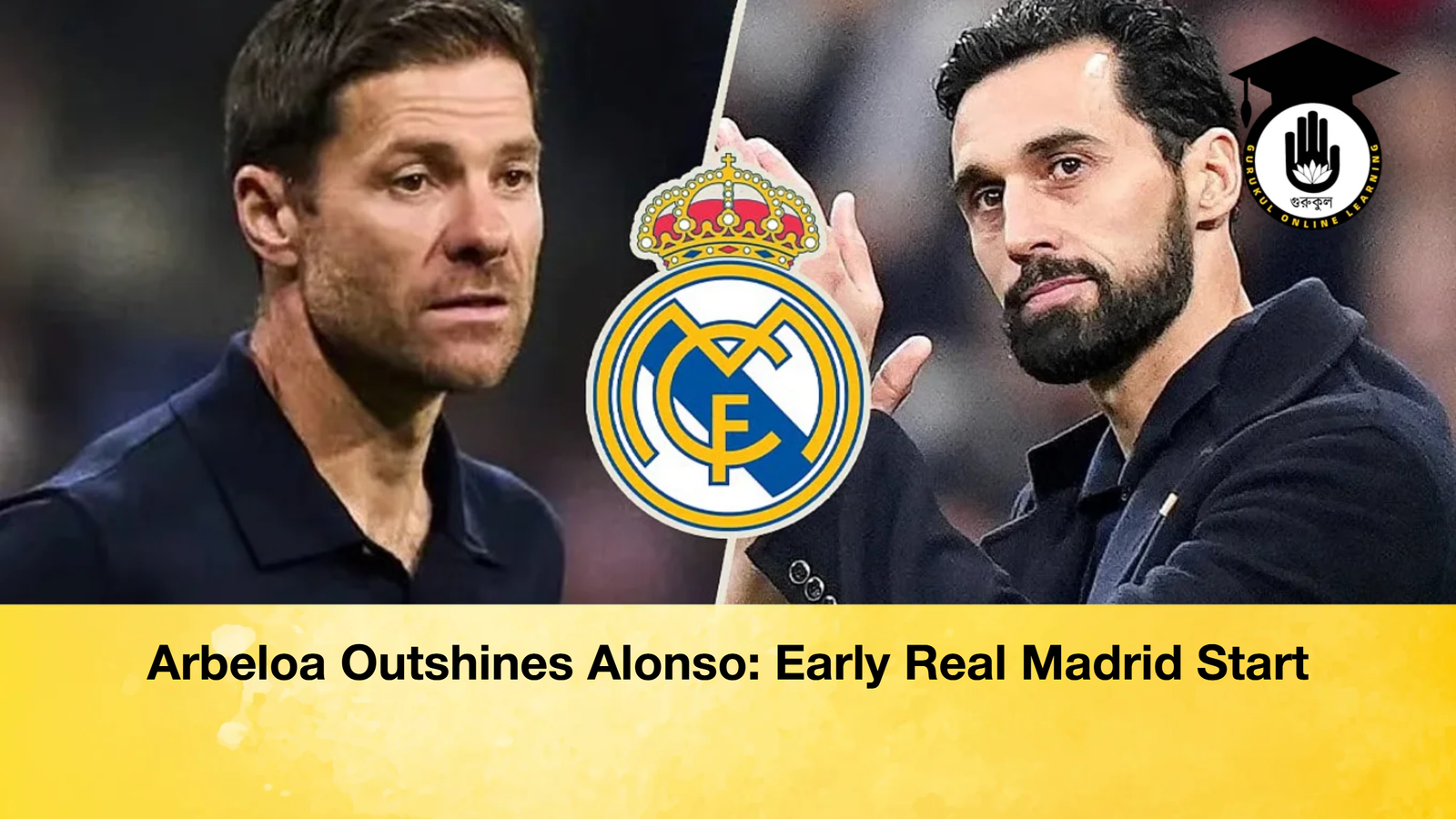
The world of football, like cinema, is creative and competitive, and comparisons are inevitable. This debate has emerged recently after Álvaro Arbeloa assumed the role of Real Madrid’s first-team coach, prompting discussions about whose start was stronger: Arbeloa or his predecessor, Xabi Alonso.
Alonso’s tenure, though now in the past, remains fresh in memory. He was dismissed from the role on 12 January after just seven months following a 3–2 defeat to bitter rivals Barcelona in the Spanish Super Cup final. During his time in charge, Real Madrid played 34 matches across all competitions, winning 24, drawing four, and losing six.
Arbeloa, previously in charge of Real Madrid Castilla (the B team) since June, took over the first team after a coaching career beginning in 2020 following his retirement in 2017. Initially, his start was disappointing, with a 3–2 Copa del Rey loss to Albacete. However, the side bounced back, winning the next three matches: two in La Liga (2–0 victories over Levante and Villarreal) and one in the Champions League (a 6–1 demolition of Monaco).
Spanish media outlet Marca suggests that Arbeloa’s initial record outshines Alonso’s, supported by statistical evidence:
| Metric | Xabi Alonso (34 matches) | Álvaro Arbeloa (first 4 matches) |
|---|---|---|
| Wins | 24 | 3 |
| Draws | 4 | 0 |
| Losses | 6 | 1 |
| Goals Scored | 72 (2.11 per match) | 12 (3 per match) |
| Goals Conceded | 12 | 4 |
| Shots on Target | 18.8 per match | 21.5 per match |
| Possession | 57.3% | 63.9% |
| Total Passes | 553 | 618.15 |
| Successful Passes | 490 | 555 |
| Successful Opponent-Half Passes | 83.4% | 86.6% |
| Shots Conceded per Match | 4.3 | 3 |
Arbeloa’s team demonstrates superior attacking output, possession, and passing accuracy compared with Alonso’s early tenure. Against Villarreal, for instance, Real Madrid registered 14 shots on target while conceding only eight, maintaining 58.1% possession. The club also recorded its largest win of the season under Arbeloa, a 6–1 thrashing of Monaco—a feat even Carlo Ancelotti could not achieve last season.
Arbeloa has achieved this progress without major squad changes, although certain players, such as Vinicius Júnior, have gained prominence. Creative midfielder Arda Güler has been reintegrated, Eduardo Camavinga has been deployed at full-back, and Franco Mastantuono remains influential in midfield.
Alonso and Arbeloa were once teammates at Real Madrid and remain close, described by Arbeloa as “brother-like friends.” Comparing their coaching immediately may be premature, as Arbeloa’s journey with the first team has only just begun, and Alonso did not receive sufficient time to fully prove himself. In Brando’s words, “Who is the best? So what? The work itself is what matters.”