Arlington Grand Prix Signals IndyCar Ambition

IndyCar’s decision to return to Texas via a street race in Arlington from 2026 is far more than a simple calendar addition. According to Penske Entertainment President and CEO Mark Miles, it represents a defining statement about where the series intends to position itself in the global sporting landscape.
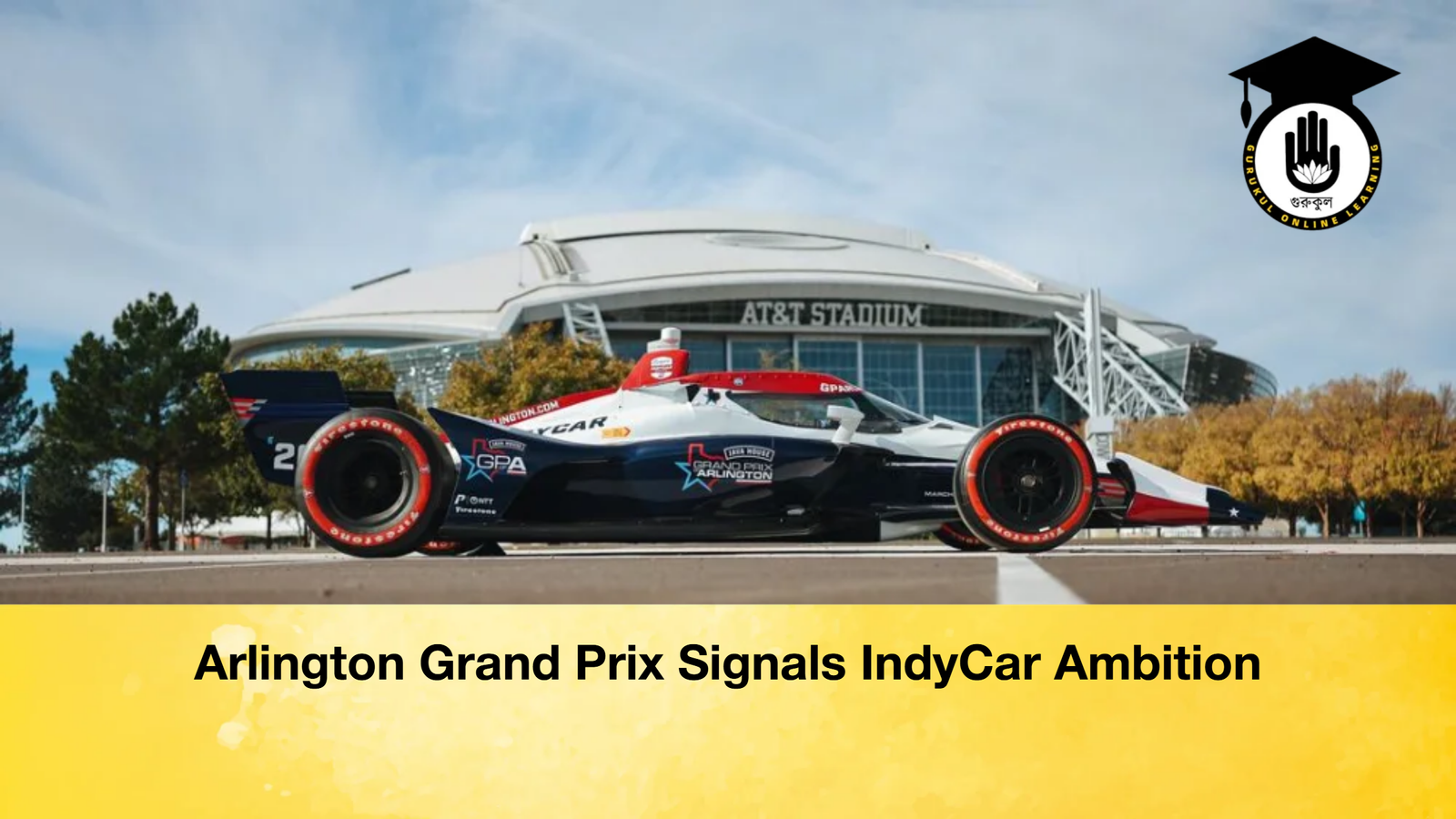
In an exclusive interview with Motorsport.com, Miles outlined the strategic thinking behind the Grand Prix of Arlington, an event delivered in partnership with the NFL’s Dallas Cowboys and REV Entertainment, the official events partner of MLB’s Texas Rangers. The race will take place on a purpose-built 14-turn, 2.73-mile temporary circuit winding through Arlington’s entertainment district, incorporating AT&T Stadium and Globe Life Field.
The scale of the venue and the stature of the partners involved underline the ambition of the project. Arlington alone sells an estimated 1.6 million event tickets annually across its sports and entertainment offerings, providing IndyCar with a platform that Miles believes elevates the championship’s visibility and commercial credibility.
Table of Contents
ToggleWhy Arlington, not Texas Motor Speedway?
Miles acknowledged that questions were inevitable following IndyCar’s departure from Texas Motor Speedway, which hosted the series from 1997 to 2023. However, he stressed that the challenge had not been racing quality, but calendar stability.
“Finding a date that was going to be reliable over time became increasingly difficult,” Miles explained. “That opened the door to thinking differently, while still keeping our desire to be in North Texas.”
The Arlington concept also aligns with a broader shift in IndyCar’s event strategy. While the series remains committed to maintaining a balanced mix of ovals, road courses and street circuits, Penske Entertainment has increasingly sought greater involvement in race promotion. By 2026, IndyCar will either promote or co-promote several events, including those in Indianapolis, Detroit, Iowa, Milwaukee and now Arlington.
A “major league” statement
Miles believes partnerships of this calibre reinforce IndyCar’s claim to be a top-tier sporting property.
“We think IndyCar deserves to be understood as a major league sport,” he said. “Sometimes you’re judged by the company you keep. Working with organisations like the Cowboys and the Rangers sends a powerful message.”
The Arlington launch event itself reflected that intent, generating what several drivers described as a “big-fight feel”, comparable to Formula 1’s Miami Grand Prix. For Miles, this is no coincidence, but a conscious effort to raise IndyCar’s profile through high-impact markets and elite collaborators.
Track design and racing philosophy
The circuit layout has been led by veteran designer Tony Cotman, supported by IndyCar’s experienced event operations team. Unlike many street races constrained by dense urban infrastructure, Arlington offers what Miles described as a “blank canvas”.
The result is a wide circuit with a near nine-tenths-of-a-mile straight, expected to produce speeds exceeding 200mph before plunging into a heavy braking zone. “Speed is a big part of our brand,” Miles noted, “and we could engineer a track that reflects that.”
Key facts: Grand Prix of Arlington
| Category | Details |
|---|---|
| First running | 2026 |
| Circuit type | Temporary street circuit |
| Length | 2.73 miles (4.39 km) |
| Corners | 14 |
| Key landmarks | AT&T Stadium, Globe Life Field |
| Promoters | Penske Entertainment, Dallas Cowboys, REV Entertainment |
| Estimated annual local event attendance | 1.6 million |
Broadcasting, growth and Hispanic outreach
Miles also addressed how the event fits within IndyCar’s new broadcast partnership with FOX Sports. While the current agreement centres on a 17-race championship calendar, he stressed that the number is a preference rather than a hard ceiling.
“We think 17 is the sweet spot,” he said, “but if there’s another Arlington out there, we’ll evaluate it.”
Of particular importance is engagement with Hispanic audiences, especially in North Texas and beyond. FOX Deportes is committed to broadcasting at least three races per season, but that figure could grow. Miles also revealed that discussions with Cowboys owner Jerry Jones highlighted shared ambitions to strengthen connections with Hispanic fans, both in the United States and Mexico.
The popularity of Mexican star Pato O’Ward is central to that vision, and Miles openly suggested that a future IndyCar race in Mexico remains a realistic possibility.
Taken together, the Grand Prix of Arlington is not simply about replacing a race lost elsewhere. It is a statement of intent — about partnerships, presentation and positioning — that Miles believes can shape IndyCar’s future for years to come.