
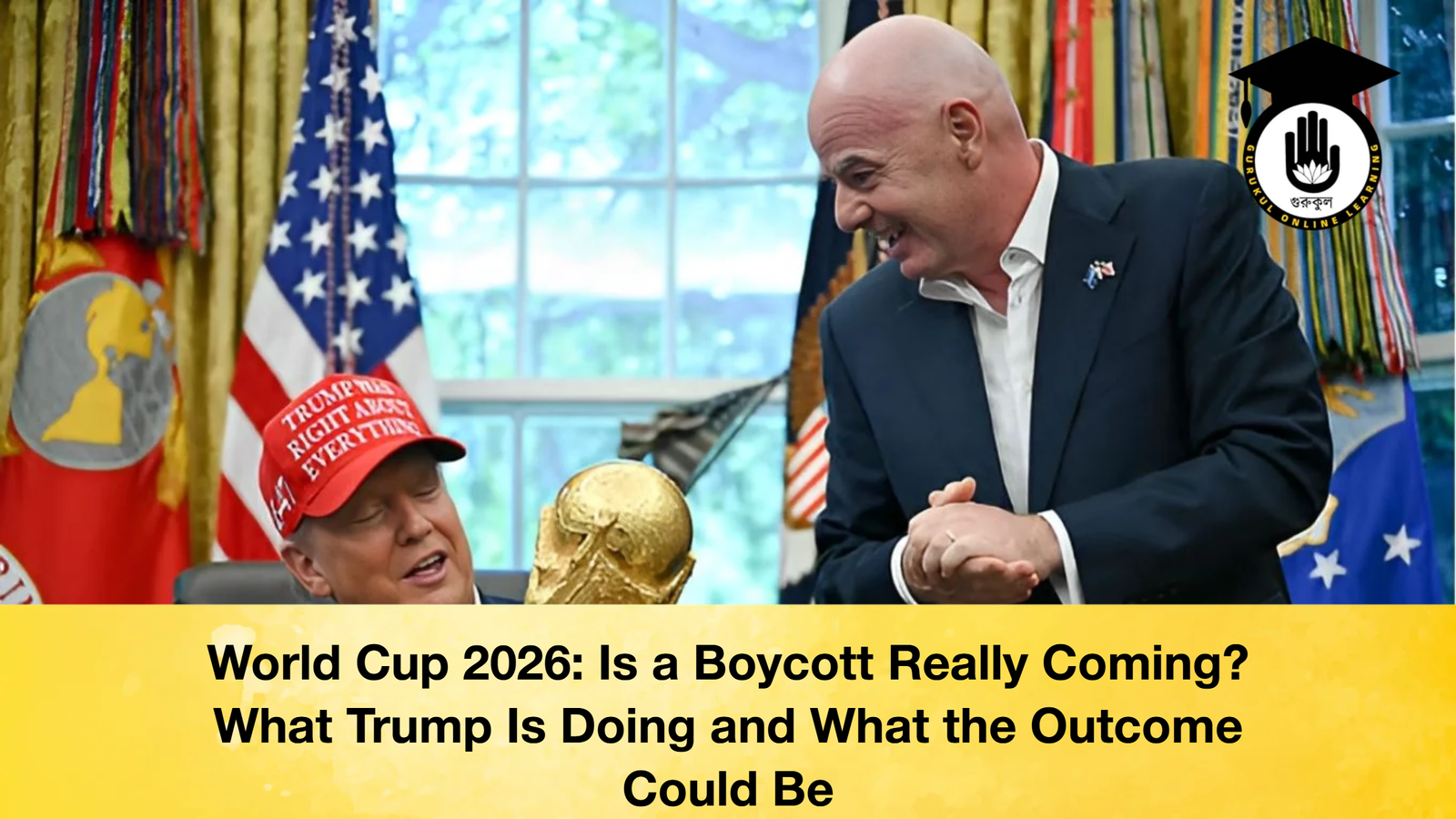
World Cup 2026: Is a Boycott Really Coming? What Trump Is Doing and What the Outcome Could Be

As the United States navigates a tumultuous political landscape, the notion of boycotting the 2026 FIFA World Cup—set to be jointly hosted by the U.S., Canada, and Mexico—has resurfaced in public discourse. Recent events, including threats by former President Donald Trump over Greenland and the deaths of two protesters in Minneapolis at the hands of government agents, have intensified calls for protest among some football fans and political commentators.
Yet, despite the loud rhetoric, the likelihood of an actual boycott remains slim. Discussions are largely confined to critics of Trump’s policies and vocal sections of the football-supporting public. Those with the authority to influence or implement a boycott—senior football officials and national leaders—have not indicated any serious interest. Nevertheless, Trump’s unpredictable approach to international affairs leaves the door open for the debate to escalate.
Why Boycott Talks Have Emerged
Speculation about a boycott began during the first year of Trump’s second term. Many football enthusiasts expressed reluctance to support a major sporting event hosted by a nation whose immigration policies and democratic norms they criticised. The situation intensified following Trump’s insistence on acquiring Greenland from Denmark, including threats of military action and economic sanctions against European allies. Though he has since softened his tone, the controversy has fuelled calls for a symbolic protest against hosting the World Cup on U.S. soil, which Trump has framed as an opportunity to bolster his public image.
Global Reactions
| Country | Position on 2026 Boycott | Key Figures/Notes |
|---|---|---|
| Germany | Mixed; some support discussion, leadership dismissive | St. Pauli president Oke Göttlich supportive; DFB president Bernd Neuendorf rejects idea |
| France | Opposed | Sports Minister Marina Ferrari & FFF President Philippe Diallo against boycott |
| England/Scotland | Neutral | Minimal public discussion |
| Spain | Neutral | No real debate within the federation |
| Austria | Neutral | Federation leadership wants to separate politics from sport |
Feasibility of a Boycott
A full boycott would require coordinated action by multiple national governments. While players and football associations are largely eager to participate, only influential political leaders—particularly heads of state—have the capacity to enforce an effective protest. Historically, the most prominent sports boycott occurred during the 1980 Moscow Olympics, when approximately 60 countries, led by the U.S., withdrew in protest of the Soviet invasion of Afghanistan.
Travis Murphy, former U.S. diplomat and CEO of Jetor Global Sports and Entertainment, notes: “If Europe’s leading nations unite behind a boycott or even a credible threat, the Trump administration would have to pay attention. Everyone knows how much they value the World Cup as a stage for their image.”
Historical Context and Supporter Reactions
While some nations have previously abstained from World Cup participation—such as Uruguay in 1934 or African nations in 1966—organized boycotts are rare. Nevertheless, certain fan groups are taking action independently. England’s LGBTQ+ supporters’ group, Three Lions Pride, has vowed to stay away from stadiums in protest of U.S. policing and free speech concerns. Former FIFA president Sepp Blatter also advised fans to watch the tournament remotely.
Outlook
For now, the risk of a 2026 World Cup boycott remains minimal. Trump has temporarily eased the Greenland dispute and signalled willingness to engage with NATO allies. However, given his unpredictability, any future international confrontation could provoke unprecedented European responses—potentially reviving boycott discussions as a last-resort measure.