Palou Dominates St Petersburg Season Opener

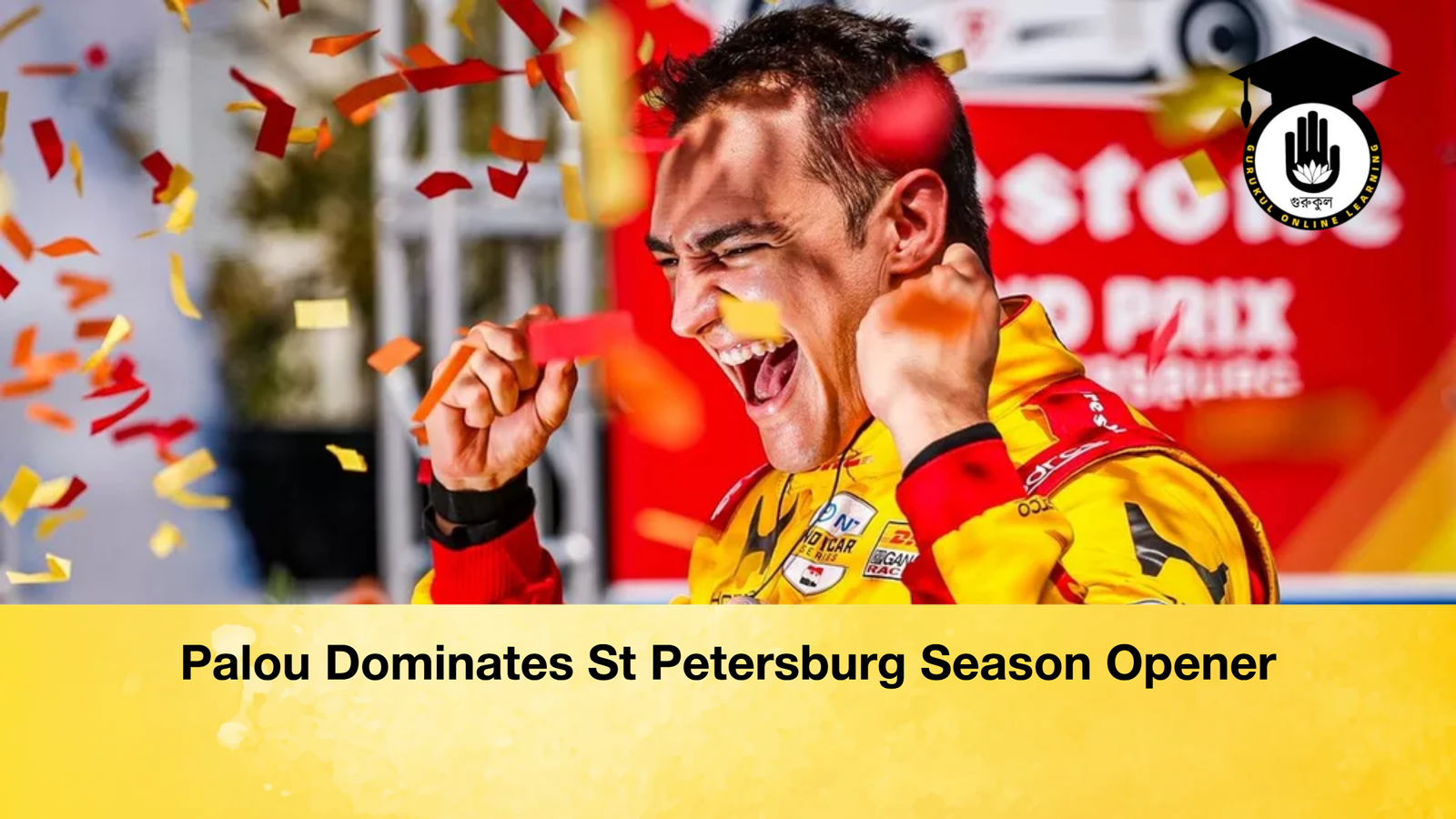
Reigning IndyCar Series champion Álex Palou began his latest title defence in emphatic fashion by winning the Grand Prix of St Petersburg, recording the largest margin of victory in the race’s history. The Spaniard produced a measured and strategically astute drive to secure victory on the tight 1.8-mile temporary street circuit in St. Petersburg, Florida.
Starting fourth on the grid in the No. 10 Honda for Chip Ganassi Racing, Palou relied on a well-timed pit strategy to seize control of the race. By executing an effective overcut strategy, he vaulted past early leaders during the pit cycle and subsequently controlled the final stages of the contest. In total, Palou led 59 of the 100 laps, eventually crossing the line 12.4948 seconds ahead of the field.
Pole-sitter Scott McLaughlin of Team Penske finished second after leading 34 laps earlier in the race. Christian Lundgaard completed the podium for Arrow McLaren after an impressive charge from 12th on the grid.
Table of Contents
ToggleChaotic Opening Laps
The race began with McLaughlin making a clean start, but chaos erupted almost immediately behind him. On the opening lap, Sting Ray Robb struck the inside kerb at Turn 4, sending his car into Santino Ferrucci. The collision forced both drivers into the tyre barrier, while rookie Mick Schumacher—making his IndyCar debut for Rahal Letterman Lanigan Racing—was launched over the rear of Ferrucci’s stranded machine. Robb continued but received a penalty for avoidable contact, while Ferrucci and Schumacher were forced to retire.
The early caution period prompted several teams to experiment with strategy, including Palou’s team-mate Scott Dixon, who made multiple pit stops to top up on fuel in anticipation of a longer first stint.
Strategic Turning Point
The race’s decisive moment arrived during the first round of pit stops around Lap 31. McLaughlin initially appeared to hold control of the race, but by extending his stint Palou managed to leapfrog the New Zealander during the pit cycle.
Dixon briefly inherited the lead due to his alternative strategy, but his race unravelled when a poorly secured right-rear wheel detached from his car on Lap 40, bringing out another caution.
Following the restart on Lap 43, Palou steadily extended his advantage. By Lap 60 he had already built a seven-second lead, showcasing the pace advantage of the Ganassi machine.
Final Stages
A late strategic battle unfolded behind the leader. Kyle Kirkwood briefly moved into contention for second place after executing an undercut and passing McLaughlin around the outside at Turn 4. However, fuel conservation forced the Andretti driver to relinquish ground in the closing laps.
Both McLaughlin and Lundgaard passed Kirkwood with six laps remaining, leaving the pair to contest second place. McLaughlin successfully defended his position despite late pressure from Lundgaard.
At the front, however, Palou remained untouchable, cruising to a comfortable and historic victory.
Top Ten Finishers – St Petersburg Grand Prix
| Position | Driver | Team | Notes |
|---|---|---|---|
| 1 | Álex Palou | Chip Ganassi Racing | Led 59 laps |
| 2 | Scott McLaughlin | Team Penske | Pole sitter |
| 3 | Christian Lundgaard | Arrow McLaren | Started 12th |
| 4 | Kyle Kirkwood | Andretti Global | Fuel saving late |
| 5 | Pato O’Ward | Arrow McLaren | Consistent run |
| 6 | Marcus Ericsson | Andretti Global | Early contender |
| 7 | Josef Newgarden | Team Penske | Started 23rd |
| 8 | Romain Grosjean | Dale Coyne Racing | Solid race |
| 9 | Rinus VeeKay | Juncos Hollinger Racing | Held off rivals |
| 10 | Dennis Hauger | Dale Coyne Racing | Rookie top ten |
Palou’s dominant victory not only provides a strong start to the championship campaign but also sends a clear warning to the rest of the field: dethroning the Spaniard will once again be a formidable challenge this season.