
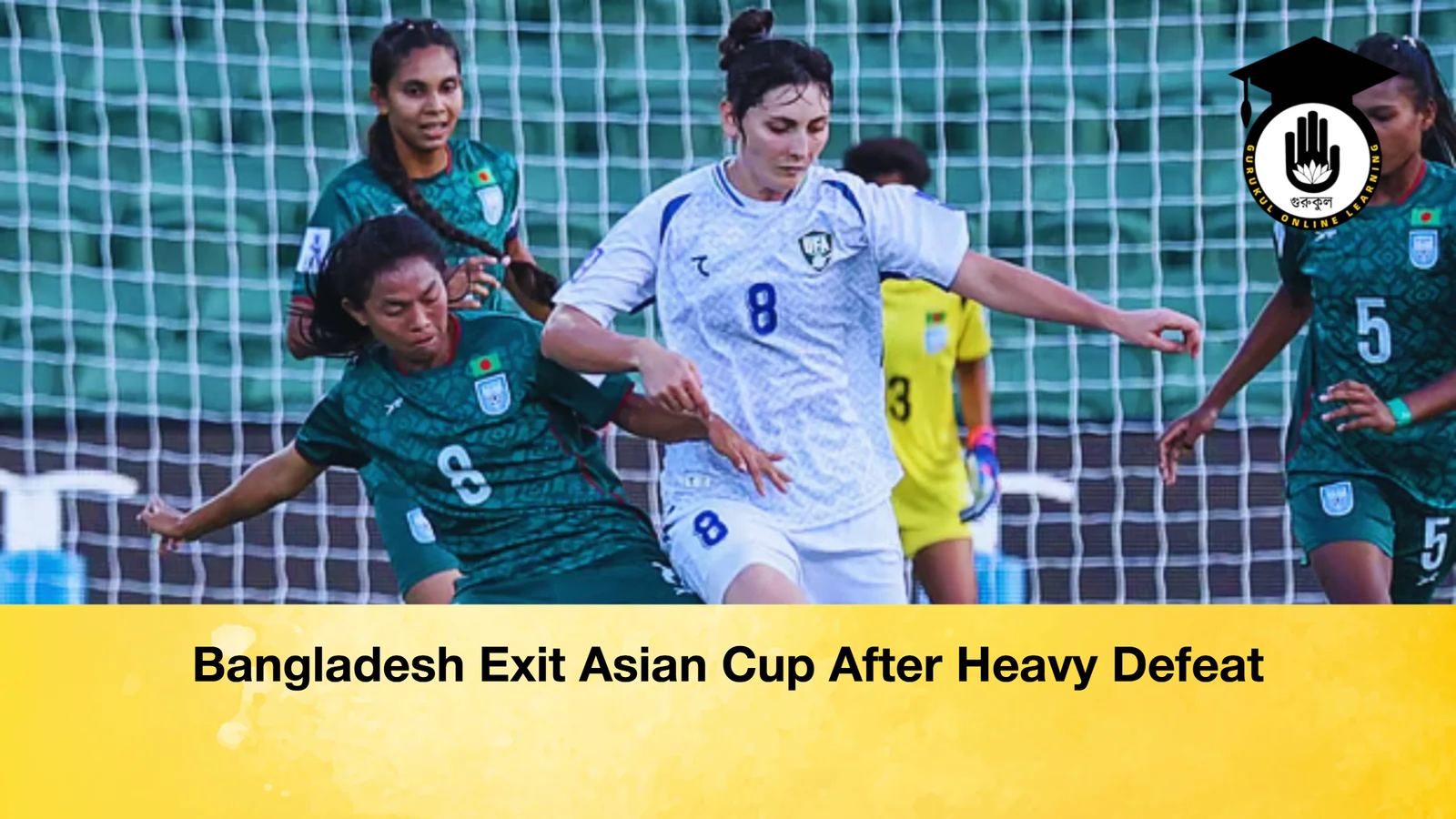

The journey spanned nearly four thousand kilometres, from Sydney to Perth. While the press box at Western Sydney Stadium was alive with the tense battle for group supremacy between China and North Korea, my gaze kept flickering to the screens showing the crucial clash in Perth—Bangladesh versus Uzbekistan.
For Bangladesh, everything hinged on this single encounter. The Monika-María-led side, making their debut in the main round of the Women’s Asian Cup, faced a daunting task: defeat Uzbekistan by a significant margin to finish among the two best third-placed teams and secure a spot in the quarter-finals. The dream was audacious but not entirely impossible; there was belief within the squad.
Yet, reality on the field proved harsh. With three personnel changes, Bangladesh suffered a 4-0 defeat at the hands of Uzbekistan, ending their campaign at the group stage. Among the 12 competing teams, Bangladesh was the first to be eliminated.
Group B Standings
| Team | Played | Won | Draw | Lost | Goal Difference | Points |
|---|---|---|---|---|---|---|
| China | 3 | 3 | 0 | 0 | +3 | 9 |
| North Korea | 3 | 2 | 0 | 1 | +4 | 6 |
| Uzbekistan | 3 | 1 | 0 | 2 | -3 | 3 |
| Bangladesh | 3 | 0 | 0 | 3 | -4 | 0 |
Uzbekistan’s victory secured their survival from the group, though their progression to the quarter-finals will only be confirmed after the final matches in Group C—Vietnam vs Japan and India vs Chinese Taipei. Meanwhile, in Sydney, China, trailing early, defeated North Korea 2-1 to finish top of the group with nine points, while Bangladesh’s delegation watched on, heavy-hearted.
From the outset, Bangladesh had targeted the Uzbekistan match as their ‘make-or-break’ fixture. Despite Uzbekistan being 63 places higher in the rankings, the team believed a draw, at the very least, was achievable. On Perth’s turf, that belief was shattered.
Bangladesh’s debut at Asia’s premier stage was already a historic achievement. Crossing South Asia’s borders to compete on a continental platform marked a first for the nation’s women’s football. Yet the level of competition quickly exposed the gulf in experience and physicality. Following a 2-0 loss to nine-time champions China and a 5-0 defeat against North Korea, hope persisted for a strong finish against Uzbekistan—but the Central Asian side proved dominant.
In the match, Uzbekistan asserted control early, with Diyorkhon Khabibullayeva scoring in the 10th minute. Bangladesh attempted to respond, with Rituporna Chakma’s strike in the 31st minute blocked, and defensive lapses prevented goal opportunities in the first half. Coach Peter Butler introduced Sweden-based Anika Rania Siddiqui to bolster attacks, yet the midfield was overrun. Goals in the 62nd and 66th minutes effectively ended Bangladesh’s hopes, followed by a fourth in the 82nd minute. A late effort from Suravi narrowly missed, leaving the team goalless.
While the quarter-final path was closed, Bangladesh leaves Perth with invaluable lessons. The experience of competing on Asia’s top stage provides a foundation for growth, and the knowledge gained will inform future campaigns. One day, on this very platform, Bangladesh’s dreams and reality may finally converge.