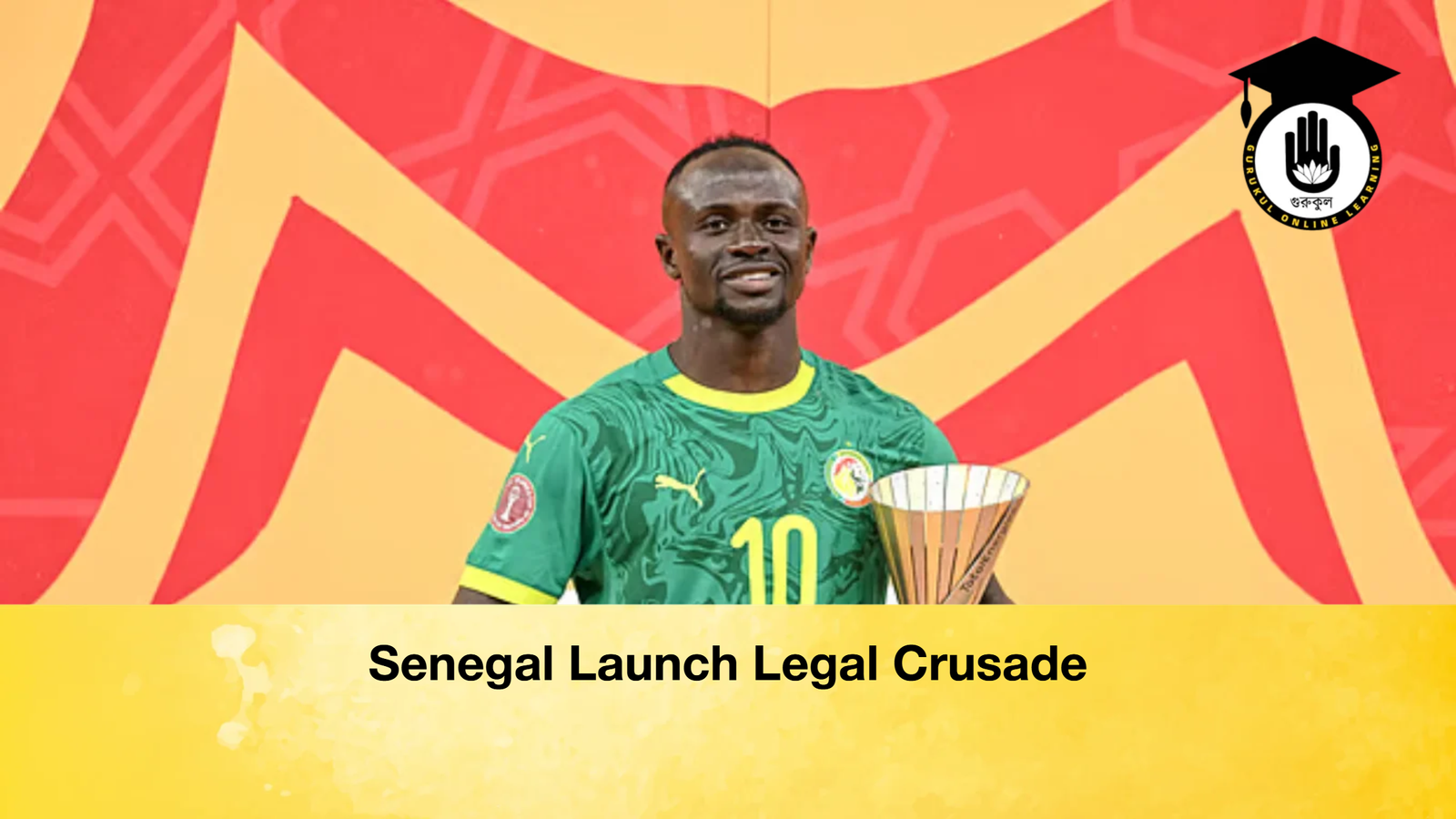

Senegalese football authorities have launched an unprecedented legal offensive following a highly contentious decision by the Confederation of African Football (Confederation of African Football) to strip Senegal of their Africa Cup of Nations title and award the championship to Morocco. The ruling has triggered widespread outrage in Dakar, with officials describing the decision as nothing short of “administrative robbery”.
The Senegal Football Federation (Senegal Football Federation) has now escalated the matter to the Court of Arbitration for Sport (Court of Arbitration for Sport), launching what it has termed a full-scale legal “crusade” to reclaim the trophy. The case has rapidly evolved into one of the most controversial governance disputes in modern African football, raising serious questions about disciplinary authority, procedural fairness, and the finality of refereeing decisions.
Origins of the dispute
The controversy stems from the Africa Cup of Nations final held in Rabat on 18 January, where the Morocco national football team faced the Senegal national football team. During the match, Senegalese players briefly walked off the pitch in protest against a disputed penalty decision awarded to Morocco. Although the team later returned to complete the match, Morocco went on to secure a 1–0 victory after extra time.
However, in a dramatic post-match development, CAF ruled that Senegal had effectively abandoned the fixture, classifying the incident as a forfeiture. On that basis, the governing body revoked Senegal’s title and awarded the championship to Morocco—a decision that immediately ignited legal and political backlash.
Legal escalation
The FSF, led by its president Abdoulaye Fall, has vowed not to accept what it calls an unjust ruling. “We will not yield to this administrative robbery,” Fall declared, insisting that Senegal will pursue both moral and legal remedies until justice is restored.
Senegal’s legal team, coordinated from Paris, includes prominent sports lawyer Juan de Dios Crespo Pérez. He has publicly condemned the CAF decision, arguing that it is fundamentally incompatible with the principles of sporting justice. According to him, the ruling contradicts the universally accepted doctrine that referees’ decisions on the field should remain final, except in strictly regulated disciplinary contexts.
Another member of the defence team, Serge Vitotz, stated that CAF’s appeal committee has failed to provide any coherent legal justification for stripping Senegal of the title. He further argued that a decision lacking transparent reasoning cannot be considered legally valid, maintaining that Senegal should still be regarded as the rightful champions.
CAS proceedings and wider implications
Senegal has requested an expedited hearing at CAS, despite the fact that such proceedings typically take between nine and twelve months. Legal experts suggest that the outcome could have far-reaching consequences for international sport governance, potentially redefining the boundary between on-field authority and post-match judicial review.
| Key Event | Date | Outcome |
|---|---|---|
| AFCON Final, Rabat | 18 January | Morocco win 1–0 after extra time |
| On-field protest | Same match | Senegal temporarily leave pitch |
| CAF ruling | Post-match | Senegal declared to have forfeited |
| Title decision | Following review | Morocco awarded championship |
| CAS appeal | Ongoing | FSF requests expedited hearing |
Political and sporting tension
The dispute has intensified emotions across Senegal, where public sentiment strongly supports the national team. Critics of CAF argue that overturning a tournament result in such circumstances risks undermining the credibility of African football governance.
Meanwhile, Senegal, which has already secured qualification for the next FIFA World Cup, continues its preparations. The national side is scheduled to face Peru in a friendly at the Stade de France in Paris. When asked whether the disputed trophy would be publicly displayed at the event, Fall responded cryptically: “We shall see on 28 March at the Stade de France.”