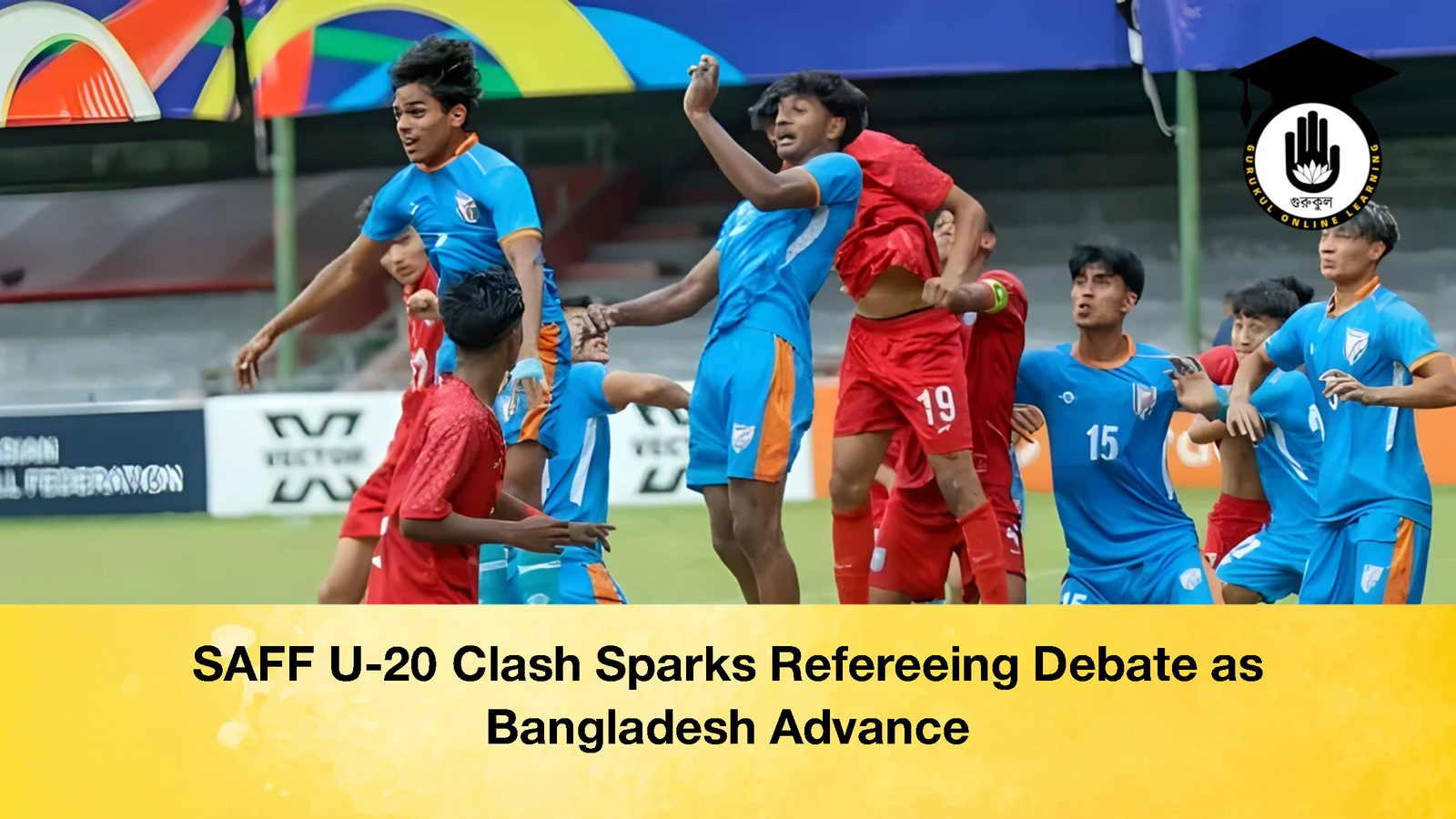

A fiercely contested 1–1 draw between Bangladesh and India in the SAFF Under-20 Championship has reignited debate over refereeing standards in South Asian football, following a heated encounter in the Maldives that saw disciplinary action taken against both coaching benches.
The match, played at high intensity from the opening whistle, produced goals at either end but was ultimately overshadowed by controversy on the touchline. The situation escalated to the point where Bangladesh head coach Mark Cox was shown a red card, ruling him out of the post-match press conference.
In his absence, assistant coach Atiqur Rahman Mishu addressed the media and urged the South Asian Football Federation (SAFF) to carry out a formal review of refereeing standards in major fixtures. He emphasised that concerns over consistency and neutrality in matches involving Bangladesh and India are long-standing and should be addressed at institutional level rather than left to public speculation.
While avoiding direct accusations, Mishu noted that perceptions of bias in such high-profile encounters continue to affect confidence in officiating across the region, particularly in fixtures involving traditional rivals.
Despite the controversy, Bangladesh had positives to take from the match, particularly the performance of midfielder Ronan Sullivan. The American-born playmaker, who previously scored twice against Pakistan earlier in the tournament, once again proved influential by delivering the corner that led to Bangladesh’s equaliser against India. His set-piece delivery and creativity were widely recognised as key attacking assets.
From a tactical perspective, Bangladesh endured a difficult start, conceding first after struggling to cope with India’s aggressive pressing and early tempo. However, the coaching staff felt the team gradually settled after the first 20–25 minutes, improving possession retention and overall structure.
Mishu highlighted that Bangladesh produced a far more organised display in the second half, showing improved midfield control and defensive discipline that limited India’s attacking threat. This adjustment enabled Bangladesh to grow into the contest and secure a valuable draw.
The result ensured both sides progressed to the semi-finals, with Bangladesh finishing second in the group on goal difference and setting up a meeting with Nepal. India, as group winners, will face Bhutan in the other semi-final.
Group Stage Summary
| Team | Result vs India | Points | Position | Semi-final Opponent |
|---|---|---|---|---|
| India | 1–1 | 4 | Group winners | Bhutan |
| Bangladesh | 1–1 | 4 | Runners-up | Nepal |
Looking ahead, the Bangladesh camp has adopted a measured and analytical approach to preparation. The coaching staff confirmed they will conduct detailed reviews of Nepal’s previous three matches, alongside an assessment of their own performance against India, as part of a structured build-up to the knockout stage.
However, some squad decisions have also attracted quiet scrutiny, particularly the continued absence of defender Declan Sullivan, which remains officially unexplained and has prompted internal questions regarding selection policy and tactical preference.
Overall, while Bangladesh’s progression to the semi-finals reflects continued improvement at youth level, the match also exposed ongoing concerns regarding officiating consistency and sideline discipline. Focus now shifts firmly to the semi-final, where tactical precision, composure, and emotional control will be decisive factors in their pursuit of a place in the final.