
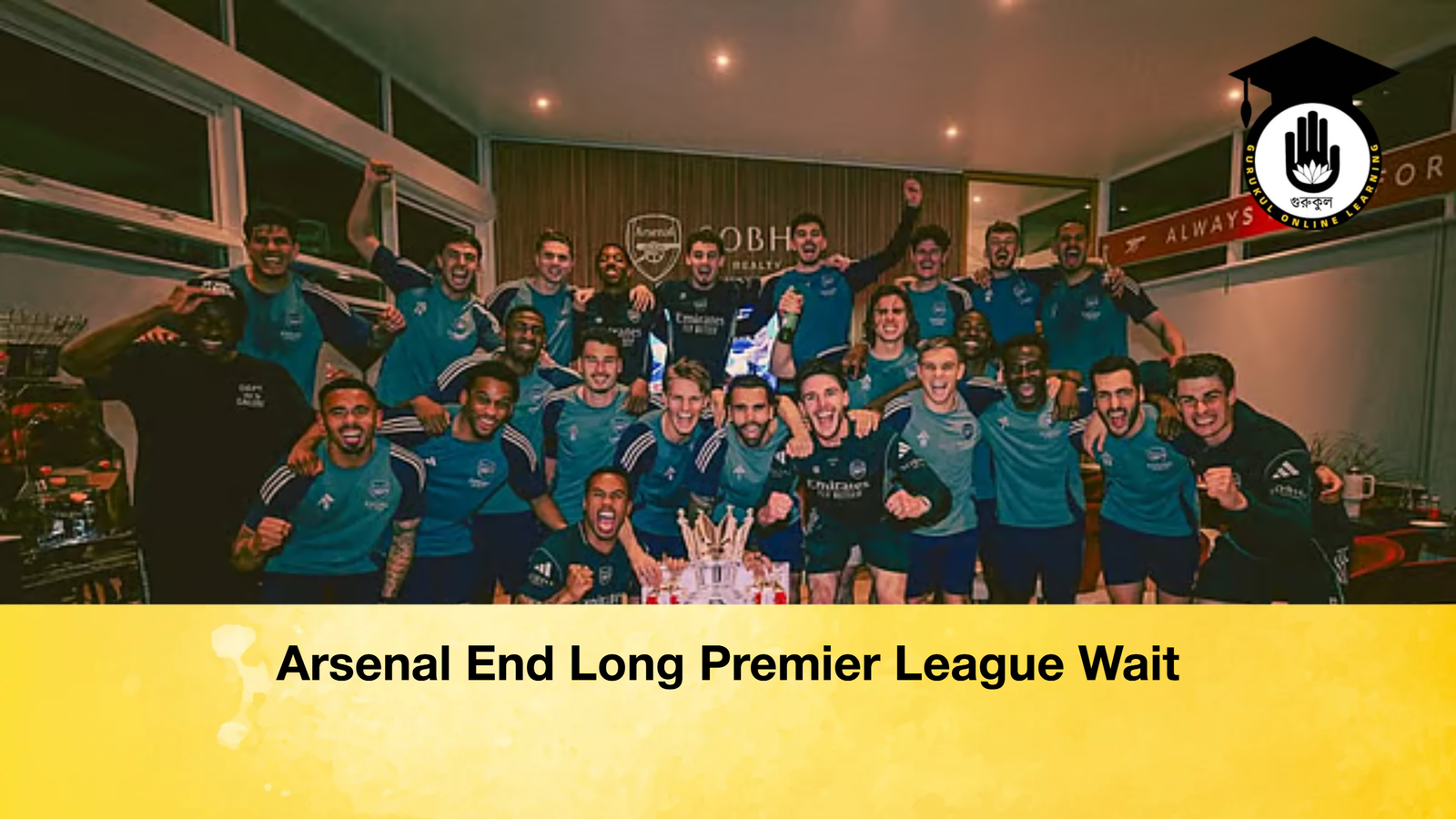

A total of 8,060 days elapsed between Arsenal’s two Premier League titles, marking one of the longest gaps in the club’s modern history. During this period, significant managerial changes occurred. Arsène Wenger, who had overseen the club’s last league triumph in 2004, departed after a prolonged attempt to secure another title. His successor, Unai Emery, also left after failing to meet expectations. Mikel Arteta, appointed later, initially endured a challenging period marked by inconsistency and near misses.
Arsenal finished as runners-up in the Premier League for three consecutive seasons, raising doubts about whether Arteta could guide the club to a title. Questions also emerged regarding the effectiveness of a long-term, process-driven approach to squad development. However, those doubts were resolved when Manchester City drew away at Bournemouth, a result that mathematically confirmed Arsenal as league champions after a 22-year interval.
The title reflects a sustained period of competitive performance. Under Pep Guardiola, Manchester City had dominated English football, winning six Premier League titles in ten seasons. Their consistency established a benchmark for excellence, and only intermittent challenges—most notably from Liverpool—interrupted their run. The current outcome, however, signifies a shift, with Guardiola experiencing a second consecutive season without a league title for the first time in his managerial career.
Arsenal’s achievement also ends a long wait since Wenger’s “Invincibles” secured the title in the 2003–04 season. Comparable long-term title droughts in recent football history include Liverpool’s 30-year wait for a league title, Napoli’s 33-year gap before reclaiming Serie A, and Argentina’s 36-year interval between FIFA World Cup victories. Arsenal’s latest success places them among clubs and teams that have re-established themselves after extended periods.
Arteta’s tactical approach has been defined by balance. Unlike Wenger’s highly fluid attacking style or José Mourinho’s defensively focused Chelsea sides, Arsenal have combined structured defending with controlled attacking play. Emphasis has been placed on defensive solidity and efficiency in set-piece situations, both of which have contributed significantly to results.
The following statistics illustrate Arsenal’s performance in the current Premier League season:
| Category | Statistic |
|---|---|
| Goals conceded | 26 |
| Clean sheets | 19 |
| Wins by 1–0 margin | 8 |
| Goals from set pieces | 24 |
| Goals from corners | 18 |
In addition, Arsenal have scored more than 35 goals from set pieces across all competitions this season. Since the 2011–12 campaign, only Real Madrid (38 in 2012–13) and Atlético Madrid (37 in 2014–15) have recorded higher totals in this category among Europe’s top clubs.
The 2025–26 season is not yet complete for Arsenal. They still have a Premier League fixture against Crystal Palace and are scheduled to face Paris Saint-Germain in the UEFA Champions League final on 30 May. These remaining matches provide further opportunity to consolidate what has already been a successful campaign.
Arteta’s emphasis on defensive organisation and effective use of set pieces reflects a pragmatic interpretation of modern football. While recent successful teams under Guardiola and Jürgen Klopp have prioritised expansive, high-intensity attacking play, Arsenal have relied on structural discipline and efficiency.
The end of a 22-year wait for the league title represents a significant milestone for Arsenal. It also establishes a foundation from which sustained success may be pursued in the coming seasons.