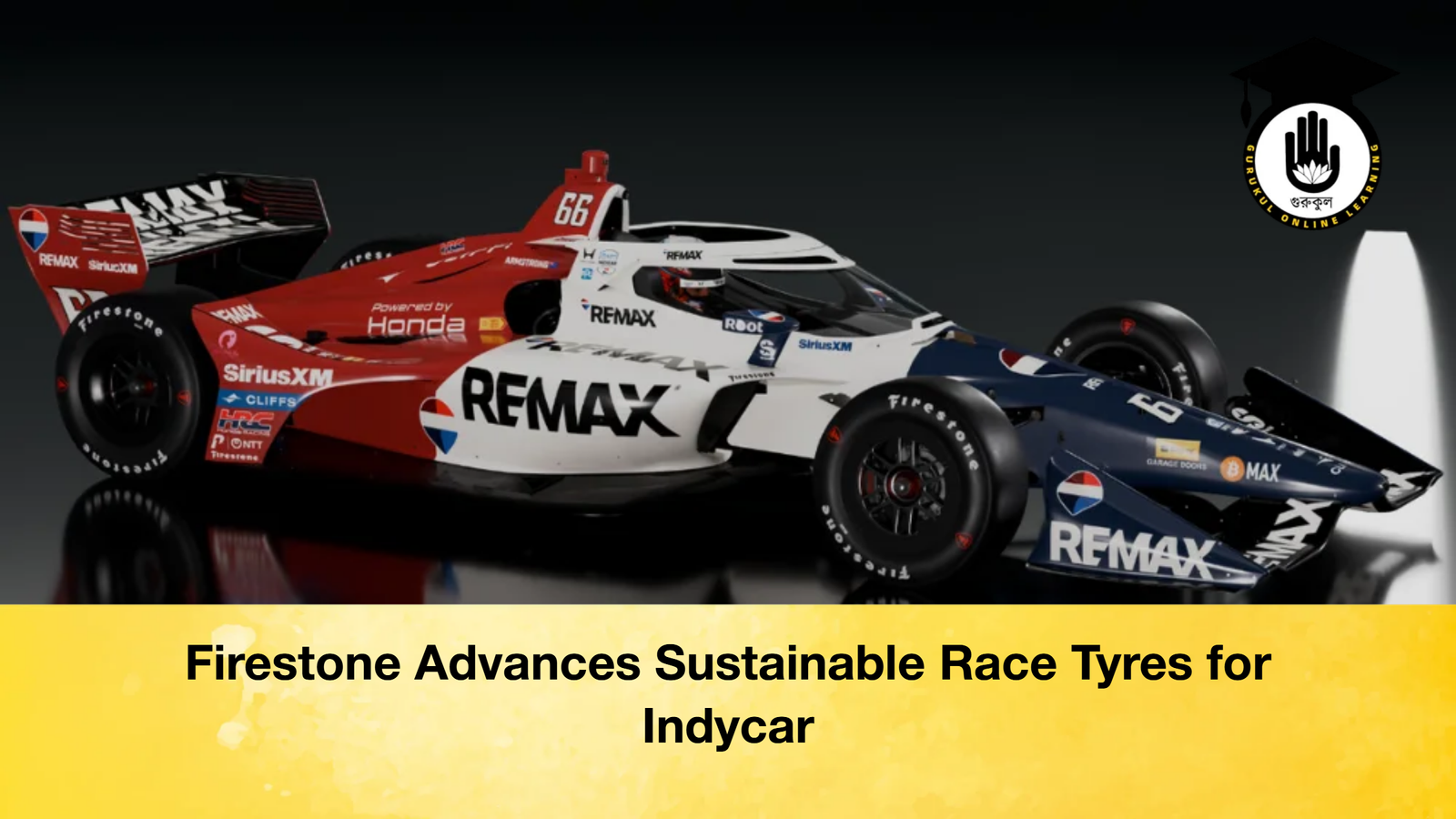
Firestone Racing is set to usher in a new technological chapter for the IndyCar Series and Indy NXT in 2026, with the introduction of its sustainability-focused ENLITEN™ Technology across the full Firehawk race tyre range. The rollout begins with this weekend’s season-opening Grand Prix of St Petersburg, signalling a decisive step in the brand’s environmental strategy without compromising competitive performance.
Announced by Bridgestone Americas, the initiative will see Firestone Race Tire Engineering (RTE) design, develop and supply an estimated 37,000 Firehawk ENLITEN Technology tyres during the 2026 campaign. Of these, more than 32,000 tyres will serve the IndyCar Series across 18 rounds, spanning oval circuits, permanent road courses and temporary street tracks. A further 5,000 tyres will be allocated to Indy NXT, supporting emerging talent across the same calendar.
In total, engineers will produce 60 distinct tyre specifications for IndyCar machinery and 18 separate specifications for Indy NXT, reflecting the wide variation in circuit characteristics, from high-speed superspeedways to tight urban layouts.
At the heart of ENLITEN Technology is a suite of advanced materials intended to enhance resource efficiency and material circularity. Among the principal components are renewable soybean oil, which replaces traditional petroleum-based oils in tyre compounds; recycled steel for bead wire, anchoring the tyre securely to the wheel rim; and recycled carbon black, recovered from end-of-life tyres and reused as a reinforcing agent. These measures are designed to reduce reliance on virgin raw materials while maintaining the durability, grip and thermal stability demanded by top-tier single-seater racing.
Lisa Boggs, Director of Motorsports at Bridgestone Americas, described Firestone Racing as a “mobile laboratory”, capable of validating cutting-edge materials under extreme competitive conditions. She emphasised that the adoption of ENLITEN Technology reflects a commitment to sustainable innovation without sacrificing on-track excellence.
Firestone’s environmental efforts have been building steadily. Over the past three seasons, alternate tyres used on street circuits have featured sidewalls made with guayule-derived natural rubber. Meanwhile, recent Indianapolis 500 race tyres incorporated materials sourced from difficult-to-recycle plastics and palm oil waste residues. The 2026 Indianapolis 500 specification will again utilise ISCC PLUS-certified bio-based monomers, including butadiene and bio-styrene derived from palm processing by-products, alongside recycled steel bead wire.
Beyond material sourcing, Firestone continues to refine its end-of-life strategy. Nearly all tyres used across IndyCar and Indy NXT are now recycled into secondary applications such as playground surfaces, sports flooring and industrial rubber products, moving the programme beyond energy recovery towards genuine circularity.
2026 Firehawk ENLITEN Tyre Overview
| Category | IndyCar Series | Indy NXT | Combined Total |
|---|---|---|---|
| Estimated tyres supplied | 32,000+ | 5,000 | 37,000 |
| Number of specifications | 60 | 18 | 78 |
| Key sustainable materials | Soybean oil, recycled steel, recycled carbon black | Same core materials | Portfolio-wide integration |
| Recycling rate post-use | Nearly 100% | Nearly 100% | Nearly 100% |
As motorsport faces increasing scrutiny regarding environmental responsibility, Firestone’s 2026 programme illustrates how elite competition can serve as a proving ground for sustainable technologies with potential applications far beyond the circuit.