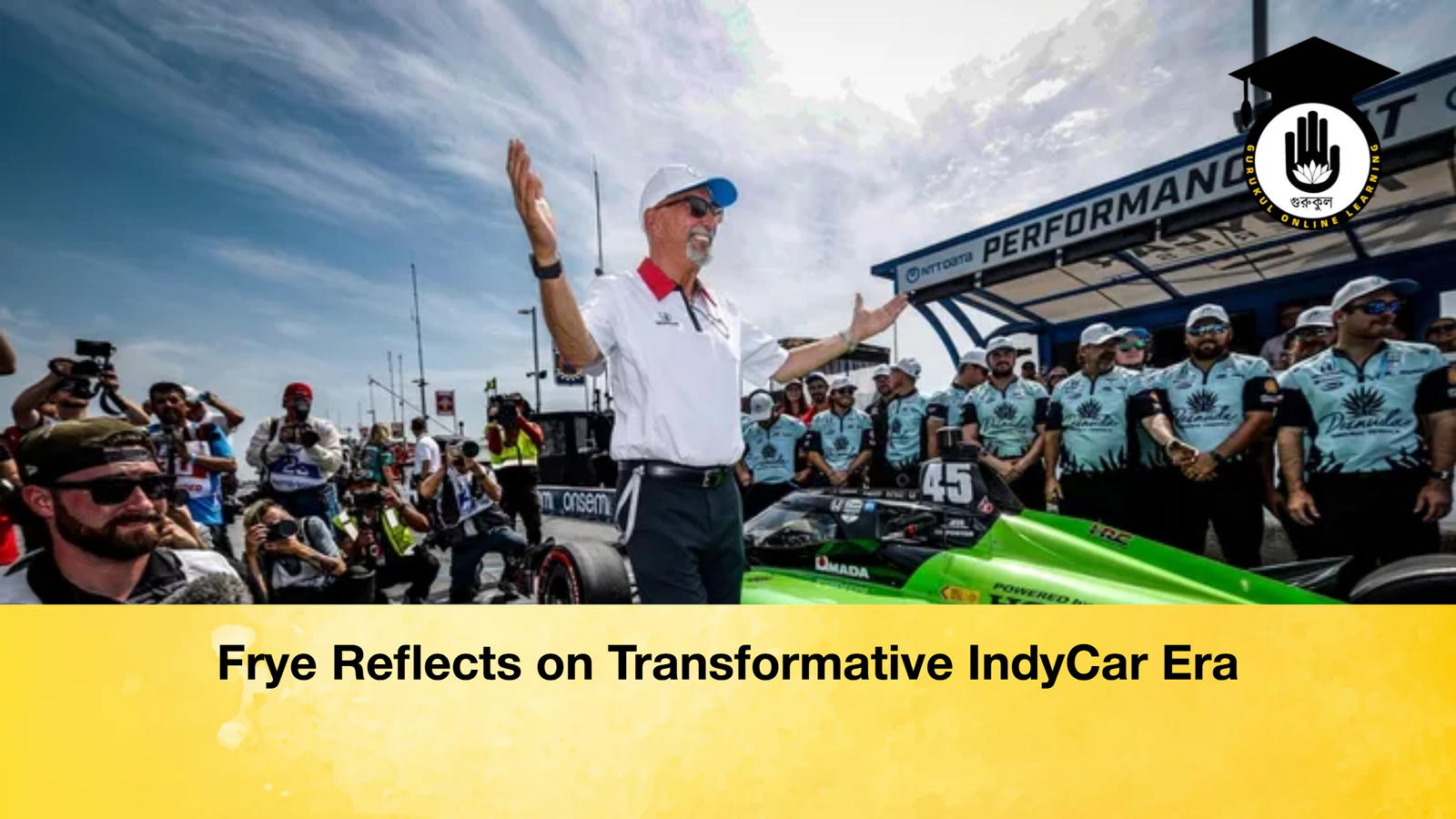
One year on from his departure as president of IndyCar, Jay Frye speaks with the perspective of a man who believes he left the championship stronger than he found it.
11 February 2025 marked the end of Frye’s tenure at the helm of North America’s premier open-wheel series. In the immediate aftermath, Penske Entertainment appointed Doug Boles as his successor, expanding Boles’s remit alongside his existing role as president of the Indianapolis Motor Speedway. By 1 April, Frye had resurfaced as president of Rahal Letterman Lanigan Racing (RLL), beginning a new chapter within the paddock he once governed.
“It’s been a whirlwind year,” Frye reflected. “In sport and business you have different runs. We had a really good 10-year run at IndyCar.”
Table of Contents
ToggleA Decade of Change
Frye joined the championship in 2013 as Chief Revenue Officer, rising to President of Competition and Operations in 2015 before assuming the presidency outright in late 2018. His leadership spanned the final years of Hulman & Company’s stewardship and the subsequent acquisition by Roger Penske.
Among the initiatives he holds closest is the introduction of the aeroscreen cockpit protection system—developed in collaboration with Red Bull Advanced Technologies, PPG, Pankl and Dallara. Conceived in March 2019 and fully deployed across the grid by February 2020, the project was completed in just eight months.
“It was a total driver cockpit safety solution,” Frye said. “The drivers’ safety meant more to me than anything.”
The innovation proved pivotal not only in safety terms but also in perception. High-profile converts such as Jimmie Johnson and Romain Grosjean joined the series after its introduction—moves Frye believes may not have occurred without the additional protection.
Another milestone was securing a title sponsor following Verizon’s exit after 2018. A late-season meeting at Sonoma led to a rapid agreement with NTT Data, culminating in the birth of the NTT IndyCar Series within months.
Key Milestones Under Frye
| Year | Initiative | Impact |
|---|---|---|
| 2018 | New universal aero kit | Restored classic open-wheel identity |
| 2019–20 | Aeroscreen introduction | Major safety enhancement |
| 2019 | NTT title sponsorship | Commercial stability |
| 2020 | Transition to Penske ownership | Organisational continuity |
Equally significant, Frye argues, was fostering consensus within the paddock—“harnessing the power of the paddock”, as he termed it—by consulting team owners and stakeholders before implementing change.
Building Anew at RLL
That collaborative ethos eased his transition to RLL, co-owned by Bobby Rahal, Mike Lanigan and David Letterman. What began as an offer to assist a friend evolved into a strategic rebuild.
The team has since recruited notable figures, including Mick Schumacher, senior executive Brian Barnhart, and engineering adviser Gavin Ward.
“We’ve targeted really good people,” Frye said. “Part of it is changing the culture.”
If his IndyCar presidency was defined by structural reform and safety innovation, his RLL tenure appears centred on regeneration. Reflecting on a decade of stewardship, Frye’s guiding principle remains simple: leave the sport better than you found it—and build the next chapter with the same conviction.