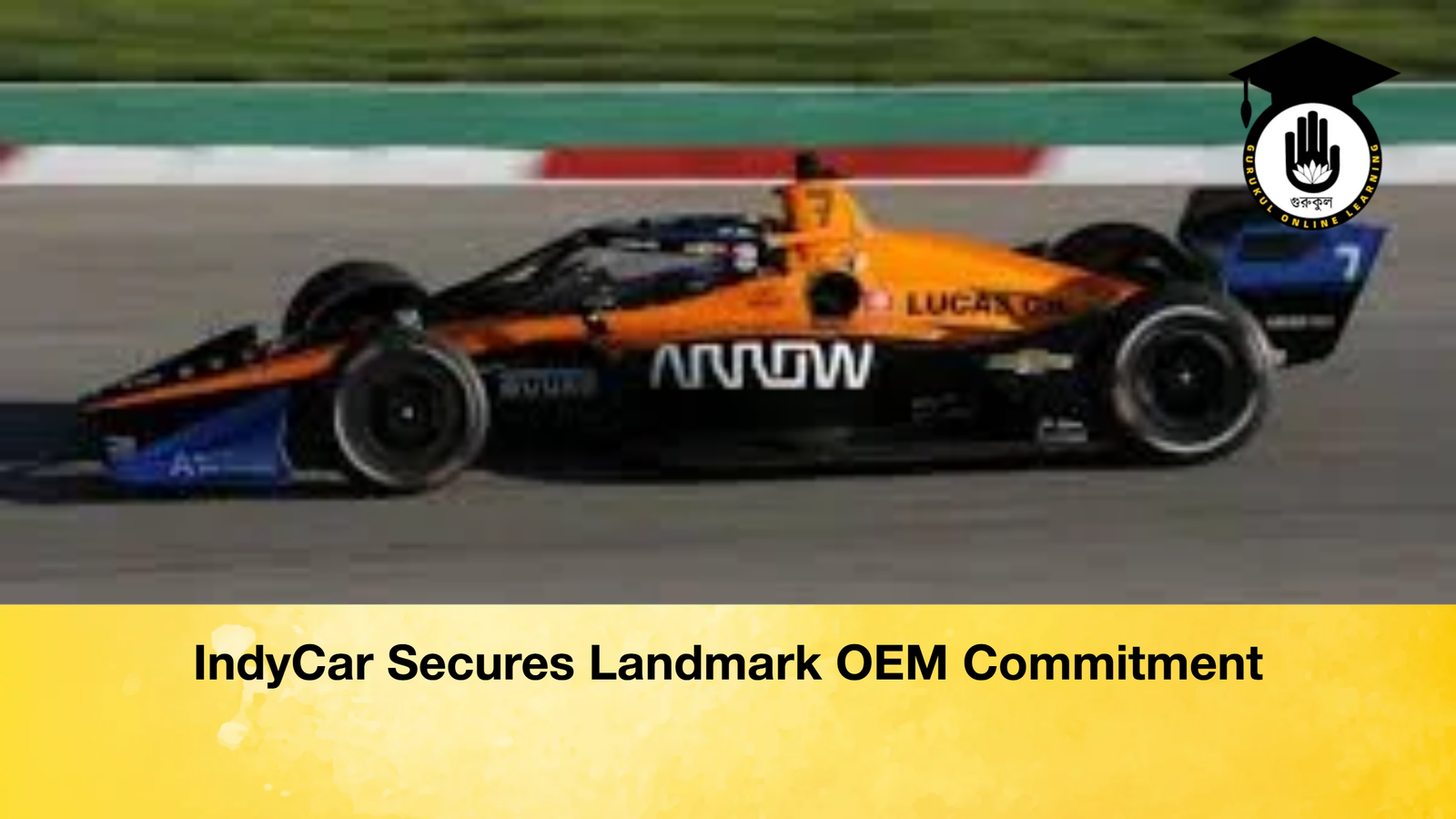
IndyCar has confirmed a historic multi-year agreement with Chevrolet and Honda Racing Corporation US, ensuring both manufacturers remain as the championship’s official engine suppliers well into the next technical era.
The new arrangement commences in 2027 and spans multiple seasons, reinforcing stability at the top level of North American open-wheel racing. Beyond a straightforward supply contract, the agreement grants each manufacturer a charter from 2028 — the year in which IndyCar’s next-generation chassis and power unit are scheduled to debut.
A Strategic Reset for 2028
The forthcoming regulations will introduce a new 2.4-litre twin-turbocharged V6 engine package incorporating hybrid technology, paired with an all-new car. Both Chevrolet and Honda will collaborate closely with IndyCar in shaping the competition and engine ruleset, marking a deeper technical integration than previously seen.
J. Douglas Boles, President of IndyCar, hailed the agreement as “a monumental day” for the series, crediting both manufacturers with playing a pivotal role in sustaining the championship’s upward momentum following a strong 2025 campaign.
The addition of charters represents a structural shift. From 2028, Chevrolet and Honda will not merely supply engines but will also have the option to field a factory-aligned entry under the series’ charter system — aligning them more closely with team stakeholders and governance.
Manufacturer Legacy in IndyCar
Both marques boast deep roots in the championship.
| Manufacturer | First IndyCar Entry | Current Era Since | Manufacturer Titles* | Notable Achievements |
|---|---|---|---|---|
| Honda | 1994 | Continuous (incl. sole supplier era) | 11 (multi-OEM era) | 30+ years participation |
| Chevrolet | 1986 (earlier era) | 2012 (return) | 9 since 2012 / 16 total | Multiple Indy 500 wins |
*Figures refer to championships in multi-manufacturer competition where specified.
Honda’s presence dates back to 1994, and the Japanese manufacturer has enjoyed periods as sole engine supplier while also thriving in competitive eras, securing 11 manufacturers’ titles in multi-supplier competition — five of them within the past eight seasons.
HRC US President David Salters described the continuation as a matter of pride and progression. He emphasised the brand’s commitment to technological development and talent cultivation at “the pinnacle of open-wheel racing in North America,” while also acknowledging the growing broadcast partnership with FOX as a catalyst for future expansion.
For Chevrolet, the extension carries equal significance. Having rejoined IndyCar in 2012, the General Motors marque has amassed nine manufacturers’ championships in the modern era. Mark Reuss, President of General Motors, underscored the value of technological transfer from circuit to road and the competitive spectacle produced across street circuits, permanent road courses and ovals.
Stability and Innovation
The agreement offers rare long-term certainty in global motorsport, where manufacturer commitments can fluctuate. By tying engine development, commercial alignment and charter participation together, IndyCar has secured a foundation for its 2028 transformation.
Technical specifications for the hybridised 2.4-litre power unit will be released at a later date. Yet the broader message is already clear: with two entrenched manufacturers committing resources, engineering expertise and promotional muscle, IndyCar enters its next chapter with both stability and ambition firmly in place.