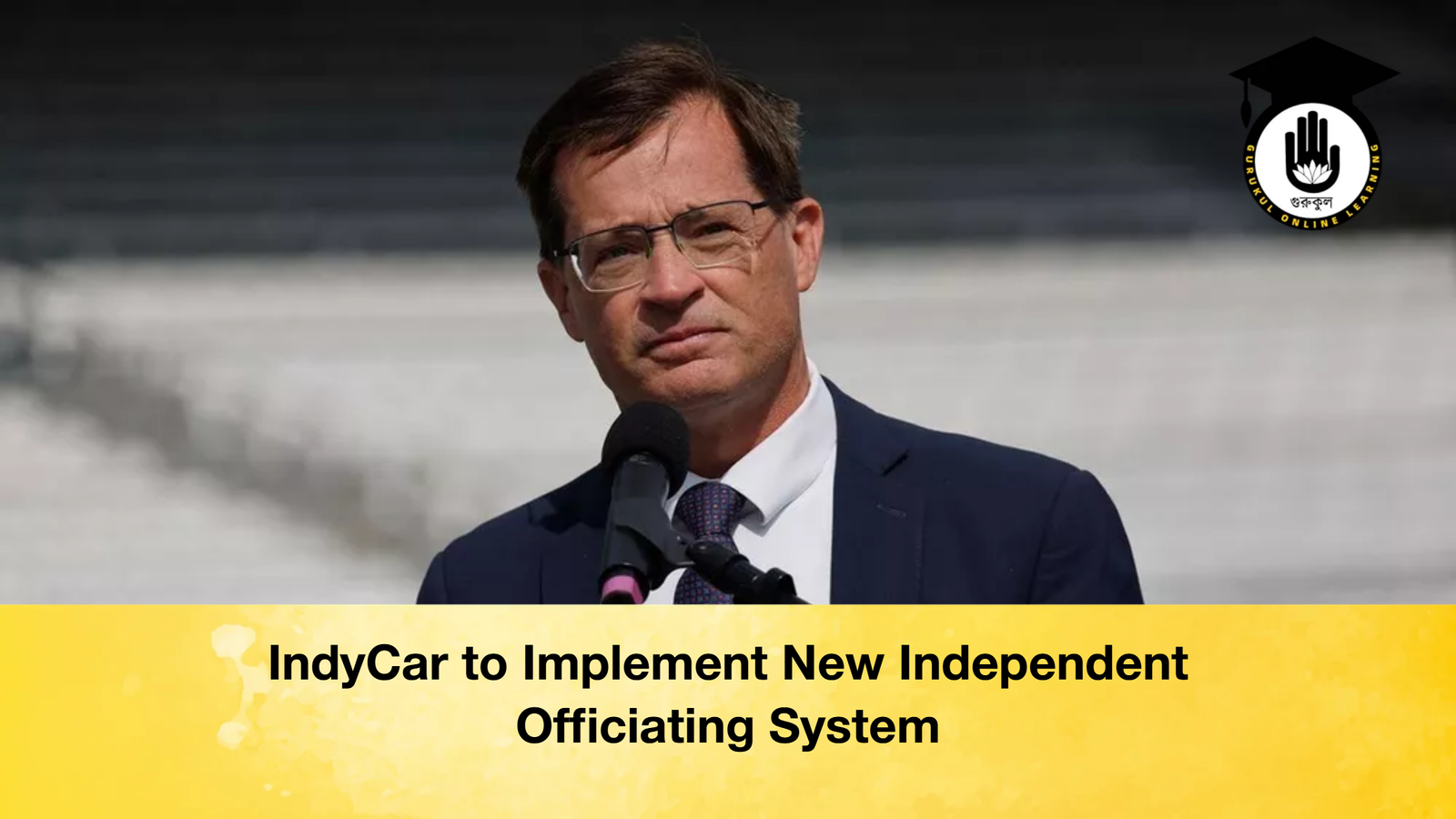
Doug Boles, President of IndyCar and the Indianapolis Motor Speedway, recently shared more details on the sport’s forthcoming officiating system, which is set to launch in 2026. This new structure, designed to ensure impartiality and transparency, will see the establishment of a three-member Independent Officiating Board (IOB) that will oversee the operations of INDYCAR Officiating Inc., a newly created non-profit entity. The move comes after extensive consultation with teams and motorsport stakeholders, as well as collaboration with the FIA, and aims to introduce a clear separation between race management and series ownership.
The Formation of the Independent Officiating Board (IOB)
IndyCar announced last Thursday that the IOB would consist of three members, two of whom were elected by team owners, and the third appointed by the FIA. The selected board members are Ray Evernham, a motorsports legend, Raj Nair, an automotive industry veteran, and Ronan Morgan, who was nominated by the FIA. According to Boles, team owners played a crucial role in the selection process, with an emphasis on choosing individuals with no recent affiliations to race teams or series. The owners were given the autonomy to nominate candidates, followed by a rigorous vetting process to ensure the integrity of the selections.
“The FIA came to visit us at the Milwaukee race to evaluate the system,” Boles explained in a recent appearance on the Off Track with Hinch & Rossi podcast. “Their feedback was positive; they believed the system wasn’t broken but acknowledged that we needed to establish a firewall between the series ownership and the decision-making process.” This led to the creation of the IOB, which will ultimately oversee the hiring of a Managing Director of Officiating (MDO), who will handle the day-to-day operations related to race management and rule enforcement.
Role of the MDO and the Officiating Board
The primary responsibility of the MDO will be to implement the race rules, manage technical inspections, and oversee the stewards and race directors at events. Although the IndyCar series will continue to write the rulebook, INDYCAR Officiating Inc. will be empowered to propose rule changes, which will then be reviewed and considered by IndyCar officials. Importantly, the MDO will operate independently of IndyCar, with no interference from series ownership in matters of race officiating.
Boles clarified that IndyCar’s involvement would be limited to off-track issues that could impact the sport’s integrity. “In contrast to F1, where the FIA holds full authority, we wanted to ensure that the independent board would not have absolute control,” he said. “The MDO will work with us on rule implementations, but we will jointly decide when changes should be made.”
The Independent Officiating Board will also manage the budget for INDYCAR Officiating Inc., ensuring that resources are allocated appropriately to run the system efficiently. The MDO will be given the freedom to appoint additional officials as needed, such as assistant race directors or additional stewards, and can adjust the structure of the officiating system as required.
Key Points of the New Officiating Structure
| Element | Details |
|---|---|
| Officiating Body | Independent Officiating Board (IOB) |
| Board Members | 2 elected by team owners, 1 appointed by FIA |
| Managing Director of Officiating (MDO) | Oversees race management, inspections, rule enforcement |
| Independence | MDO and IOB operate independently from IndyCar ownership |
| Rulebook Responsibility | IndyCar writes the rulebook; IOB can suggest changes |
| Appeals Process | Managed by MDO and IOB, not IndyCar |
| Budget Control | IOB is responsible for the officiating budget |
| Personnel Adjustments | MDO has authority to adjust staffing as needed |
Looking Ahead
While the new system marks a significant shift in how IndyCar will operate, Boles expressed confidence that it will improve the sport. “The goal is to enhance fairness, transparency, and accountability,” he said. “Once fully implemented, we believe it will help us move forward and strengthen the competition.”
As the system rolls out in the lead-up to the 2026 season, the IOB will be tasked with overseeing its implementation and ensuring that officiating is carried out with the utmost professionalism and integrity. With a clear separation between the series owners and the officiating process, Boles hopes this overhaul will improve both the sport’s credibility and the fan experience, ensuring a more balanced and impartial environment for all involved.