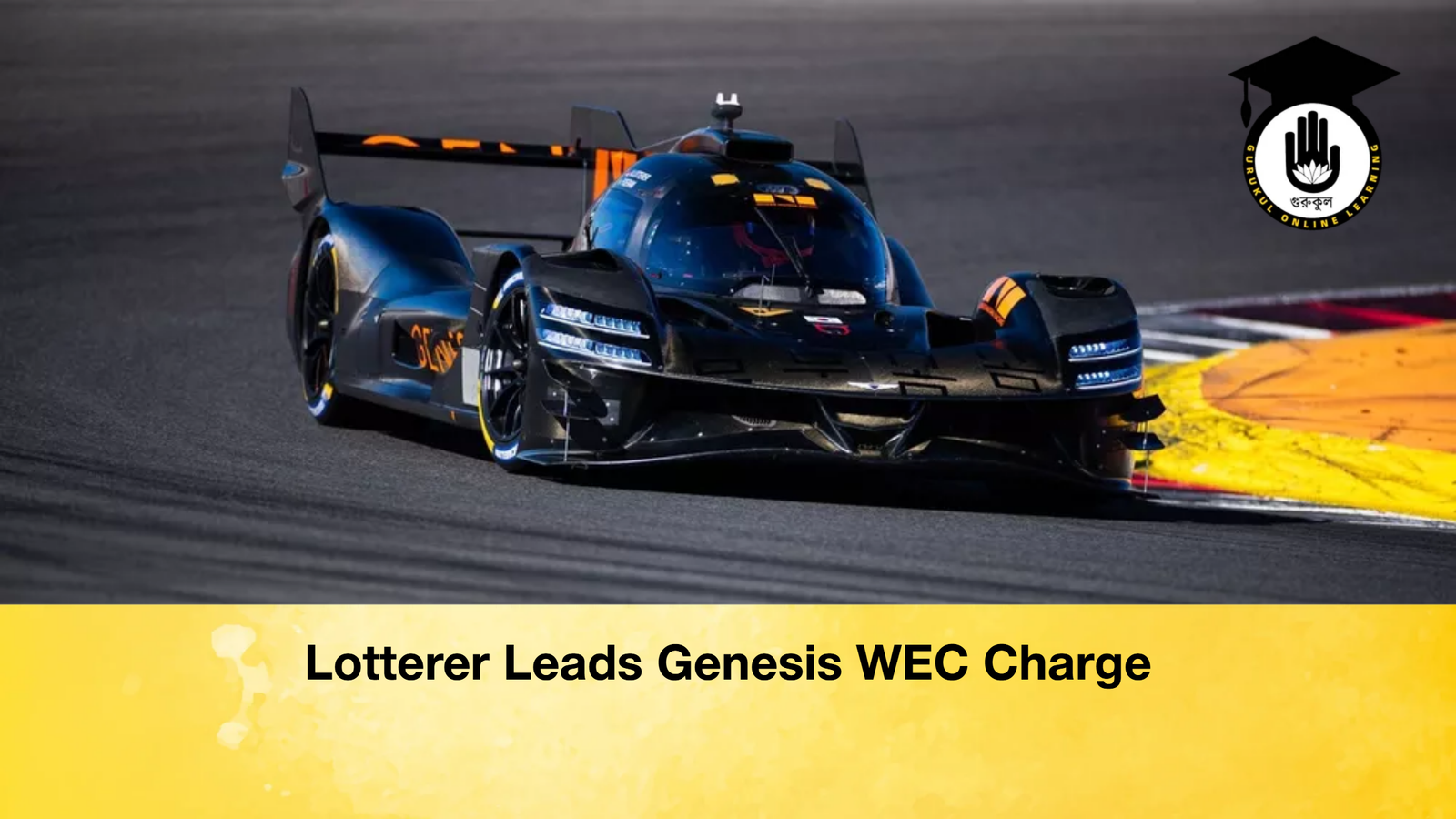
The arrival of Genesis in the FIA World Endurance Championship marks one of the most intriguing new chapters in modern sportscar racing. At the centre of this ambitious undertaking stands Andre Lotterer, a three-time winner of the 24 Hours of Le Mans, tasked with shaping a programme built entirely from the ground up.
For a driver accustomed to joining established, championship-winning operations, this project represents a profound shift. Rather than stepping into a refined system, Lotterer has been immersed in the painstaking process of creating one—from the earliest engineering concepts to the finer details of team culture.
Building from First Principles
The Genesis LMDh initiative, centred around the GMR-001 prototype, formally began in 2024. From the outset, it demanded not only technical expertise but also patience and adaptability. Lotterer made the notable decision to step away from a full-time race seat in 2025, dedicating himself almost entirely to development work.
This sacrifice underscores the scale of the undertaking. Unlike established outfits such as Porsche or Audi’s former LMP1 programme, Genesis had no pre-existing infrastructure or race-proven systems to rely upon. Instead, processes—from supply chains to communication structures—had to be created and refined in real time.
Lotterer has described this phase as one of the most creatively fulfilling of his career. The sense of ownership, he notes, is far greater when success is built from the “first bolt” rather than inherited.
Lean Structure, Agile Thinking
Despite being part of the vast Hyundai Motor Group, the racing programme operates with a notably lean and agile structure. Under the leadership of Cyril Abiteboul and Gabriele Tarquini, the team has fostered a culture of openness and direct communication.
A key figure in the broader vision is Luc Donckerwolke, whose oversight of the “Magma” performance identity ensures strong alignment between the racing effort and Genesis’ brand ambitions. This close connection to senior leadership has accelerated decision-making and reinforced the sense that the programme is central to the company’s future.
Technology Then and Now
Lotterer’s experience provides a unique lens through which to compare eras. The notoriously complex LMP1 hybrids of the mid-2010s—particularly during his time with Audi—were plagued by reliability concerns and escalating costs.
By contrast, the current LMDh regulations prioritise efficiency and durability. Even in its infancy, the Genesis prototype has demonstrated a level of robustness that would have been unthinkable a decade ago, enabling extensive testing programmes within a compressed development timeline.
| Era / Category | Key Characteristics | Challenges | Development Timeline |
|---|---|---|---|
| LMP1 Hybrid | अत्य complex, high-tech systems | Reliability, soaring costs | 2+ years |
| LMDh Hypercar | Simplified, standardised components | Fine-tuning performance | < 12 months |
Human Foundations
Beyond engineering, the project’s strength lies in its people. The presence of Tarquini—renowned for his calm demeanour and deep understanding of driver psychology—provides a stabilising influence during high-pressure race weekends.
For Lotterer, this combination of technical innovation and human cohesion is what defines the Genesis effort. The immediate objective is modest: complete races cleanly and build experience. Yet the long-term ambition is unmistakable—to challenge the established order and, ultimately, contend for outright victory at Le Mans.
As the programme prepares for its competitive debut, Genesis enters the championship not merely as a participant, but as a carefully constructed contender—one shaped by experience, ambition, and the willingness to start anew.