
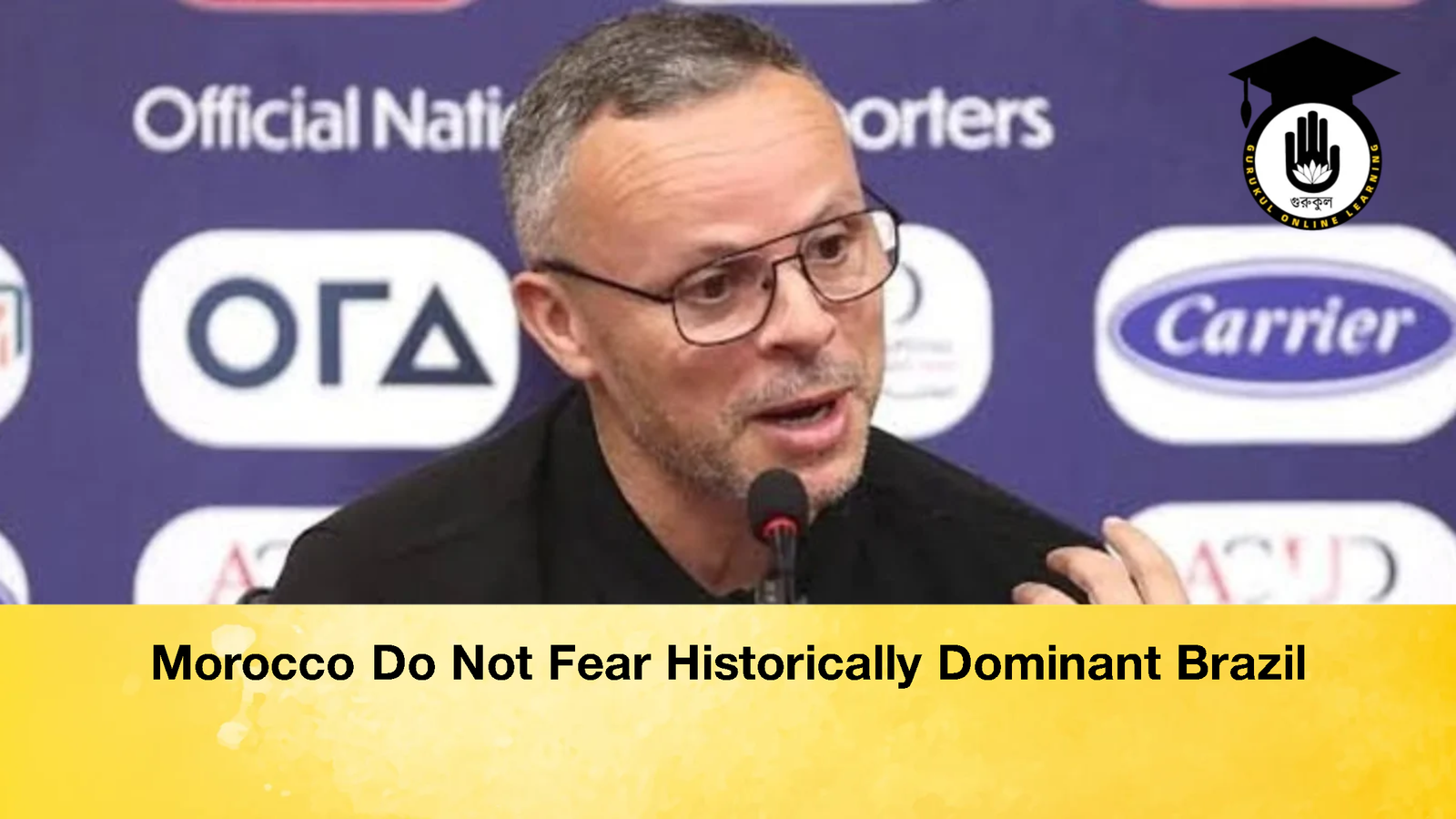

The Morocco national football team are prepared to face Brazil in their upcoming international tournament fixture, with head coach Mohamed Wahbi asserting that his squad harbours no fear of their South American opponents. Historically, the competitive track record between the two footballing nations is limited, having met only once before within the official framework of a global tournament. That inaugural encounter took place during the 1998 World Cup group stage, where Brazil secured a definitive 2-0 victory over the North African side.
However, the structural dynamic between the two teams shifted significantly during their most recent competitive encounter. In an international friendly fixture contested in 2023, Morocco defeated Brazil with a final scoreline of 2-1, marking the first and only footballing victory for the North African nation against the multi-time world champions. Building upon the momentum of that historic win and their subsequent progression to the semi-final stage of the previous World Cup tournament, Morocco aim to replicate their winning performance in this highly anticipated matchup.
Psychological Preparedness And Technical Focus Explained
Speaking at an official pre-match press conference ahead of his team’s opening fixture of the current tournament, Coach Mohamed Wahbi emphasised the absolute necessity of psychological resilience and mental fortitude required to overcome a high-profile opponent like Brazil. The head coach explicitly stated that his players possess the requisite athletic and tactical capabilities, alongside a collective belief that they can achieve another positive result against the South American side.
Wahbi clarified that whilst Morocco maintain a deep professional respect for Brazil’s historical footballing pedigree, his squad will not alter their core preparations or deploy extraordinary tactical anomalies for this specific match. Instead, the team remains strictly focused on their pre-established primary objectives. The coach described his players as notably calm, composed, and structurally confident, affirming that the squad will approach the high-stakes encounter with the exact same focus and intensity as if it were their definitive debut appearance on the global tournament stage.
Shift In Global Status And Institutional Respect
The head coach further noted that the evolution of Moroccan football has structurally altered how the international community perceives his team. Wahbi observed that just as Morocco do not harbour fear toward Brazil, the Brazilian squad approaches the fixture with a mutual understanding of Morocco’s competitive threat. He stated that the Brazilian national team respects Morocco in equal measure to the respect they receive, reflecting a broader macro-level transition for the North African side on the international sports stage.
According to Wahbi, Moroccan football has successfully ascended to an entirely different competitive tier within the global sporting infrastructure, earning widespread administrative and athletic deference from opposing nations worldwide. The head coach described this newfound international standing as highly motivating for the squad. He expressed a strong institutional desire to sustain this global sporting reputation, ensuring that irrespective of the specific international tournament or geographic location in which Morocco compete, the national team commands absolute professional respect from all global contenders.
International Tournament Framework and Team Regulations
In accordance with standard FIFA international tournament regulations, teams competing at this elite level are subject to rigorous operational frameworks, including standardised match lengths consisting of two 45-minute halves, precise player substitution quotas, and strict disciplinary tracking governed by caution cards. To ensure absolute competitive equity, matches are overseen by neutral officiating crews designated by the tournament’s technical committee, alongside the integration of advanced technologies such as the Video Assistant Referee (VAR) system to review critical on-field incidents.
The preparation phase for international tournament matches requires national football federations to manage extensive logistics, including localised training camp acclimatisation, tactical video analysis of opposition playstyles, and comprehensive medical screenings to verify match fitness. For Morocco, sustaining their position at this elevated international tier involves continuous structural coordination between corporate sponsors, technical coaching staff, and senior athletic directors. This collaborative framework is engineered to optimise player performance on the pitch, allowing the squad to systematically challenge historically dominant footballing superpowers like Brazil in high-visibility international competitions.