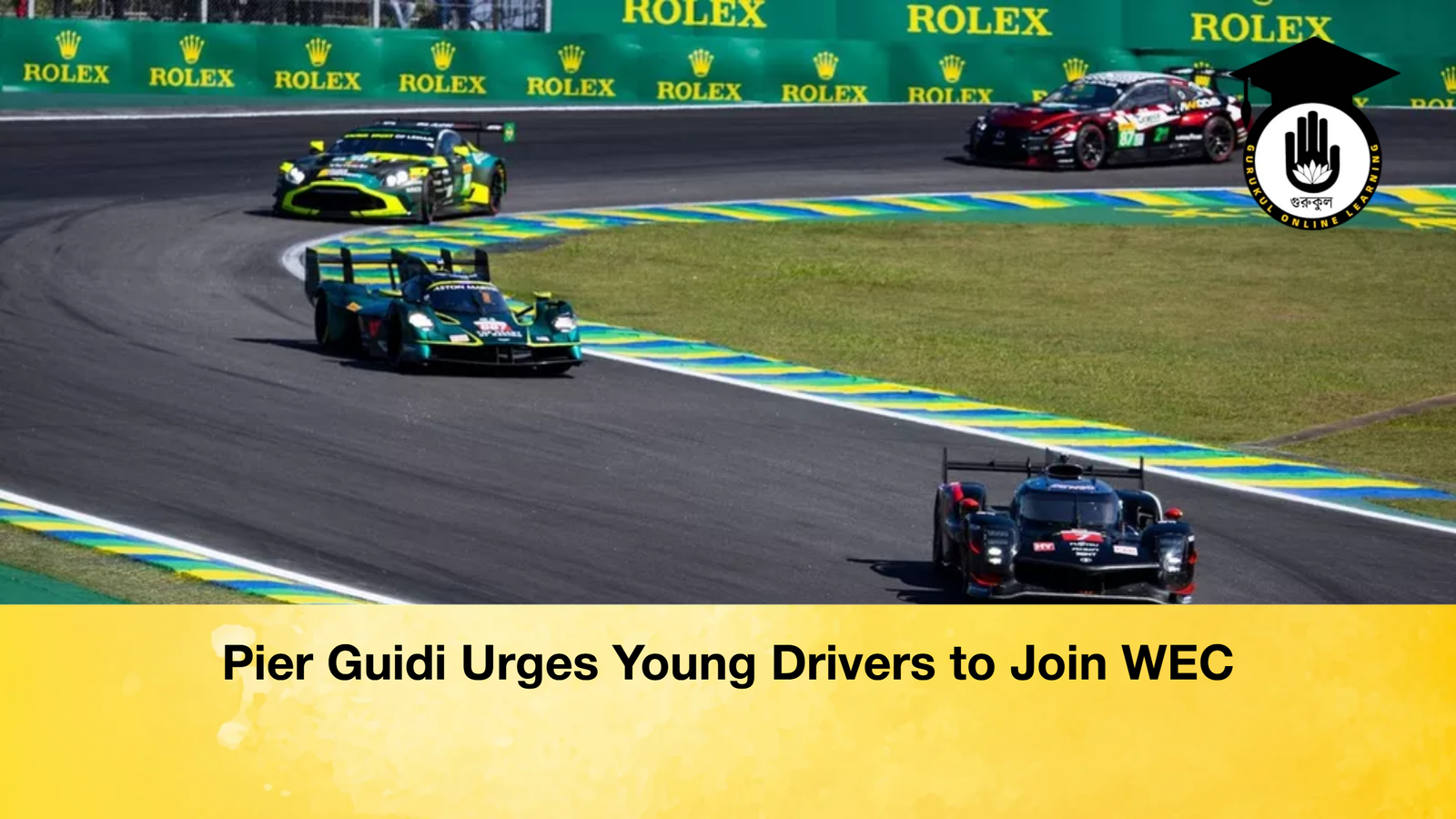
Ferrari ace Alessandro Pier Guidi believes the World Endurance Championship (WEC) has evolved into a credible alternative to Formula 1, offering young drivers a platform to showcase their talent at the highest level. The 42-year-old Italian, a multiple Le Mans winner and Hypercar world champion, insists the series is now the “second-biggest championship” in terms of international motorsport exposure, trailing only F1.
Endurance racing has gained prominence in recent years, boosted by the introduction of LMDh and LMH regulations, which have drawn major manufacturers such as Ferrari, Porsche, Peugeot, and Cadillac into the top categories of the WEC and IMSA SportsCar Championship. These programmes have elevated both the technical sophistication of the cars and the overall competitiveness of the series, creating opportunities for drivers who might otherwise struggle to secure a Formula 1 seat due to limited availability and prohibitive costs.
Pier Guidi pointed to the example of Italian talent Leonardo Fornaroli, the 2025 Formula 2 champion, who found himself without a racing programme for the following season. “When I was younger, I decided to start [in] endurance racing,” Pier Guidi said. “Endurance racing saved my career. Because I had no chance in the single-seater for many reasons. Actually, the money was the biggest one.
“But now the championship is growing so much. Thanks to Ferrari for coming back in the overall class, the championship grew with it. At the moment, after Formula 1, it is the biggest championship in terms of car racing. I feel that we are closing the gap with F1, whereas many years ago we were further behind.”
Pier Guidi, who began his career in single-seaters before transitioning to sportscars in the early 2000s, has competed in the FIA GT Championship and Blancpain Endurance Series (now GT World Challenge Europe). Since joining Ferrari as a factory driver in 2017, he has become a leading figure in prototype racing, claiming an overall victory at the Le Mans 24 Hours and a Hypercar world title.
He also challenged the notion that endurance racing is merely about “managing” the car. “Sometimes it’s even better than single-seater racing because we can push more,” he said. “People think endurance is just managing, but it’s not true. At tracks like Le Mans, degradation is very low, tyres are consistent, and we push flat out from the first lap to the end. As a driver, you enjoy pushing more than managing.”
| Aspect | Formula 1 | WEC Hypercar / LMDh |
|---|---|---|
| Car Complexity | Extremely high, single-seaters | Very high, hybrid prototypes |
| Race Duration | ~1.5–2 hours | 6–24 hours |
| Team Size | 50–300 personnel | 60–200 personnel |
| Manufacturer Involvement | High | Increasingly high |
| Driver Development | Limited seats | Multiple pathways for talent |
| Career Accessibility | Expensive, competitive | More accessible alternative |
Pier Guidi concluded that WEC now offers young drivers a legitimate pathway to top-level professional motorsport. “It’s really attractive for many young guys. For sure, I would suggest coming here if they have no chance to go to F1. The level of competition, the technology, and the manufacturing involved is not far behind.”