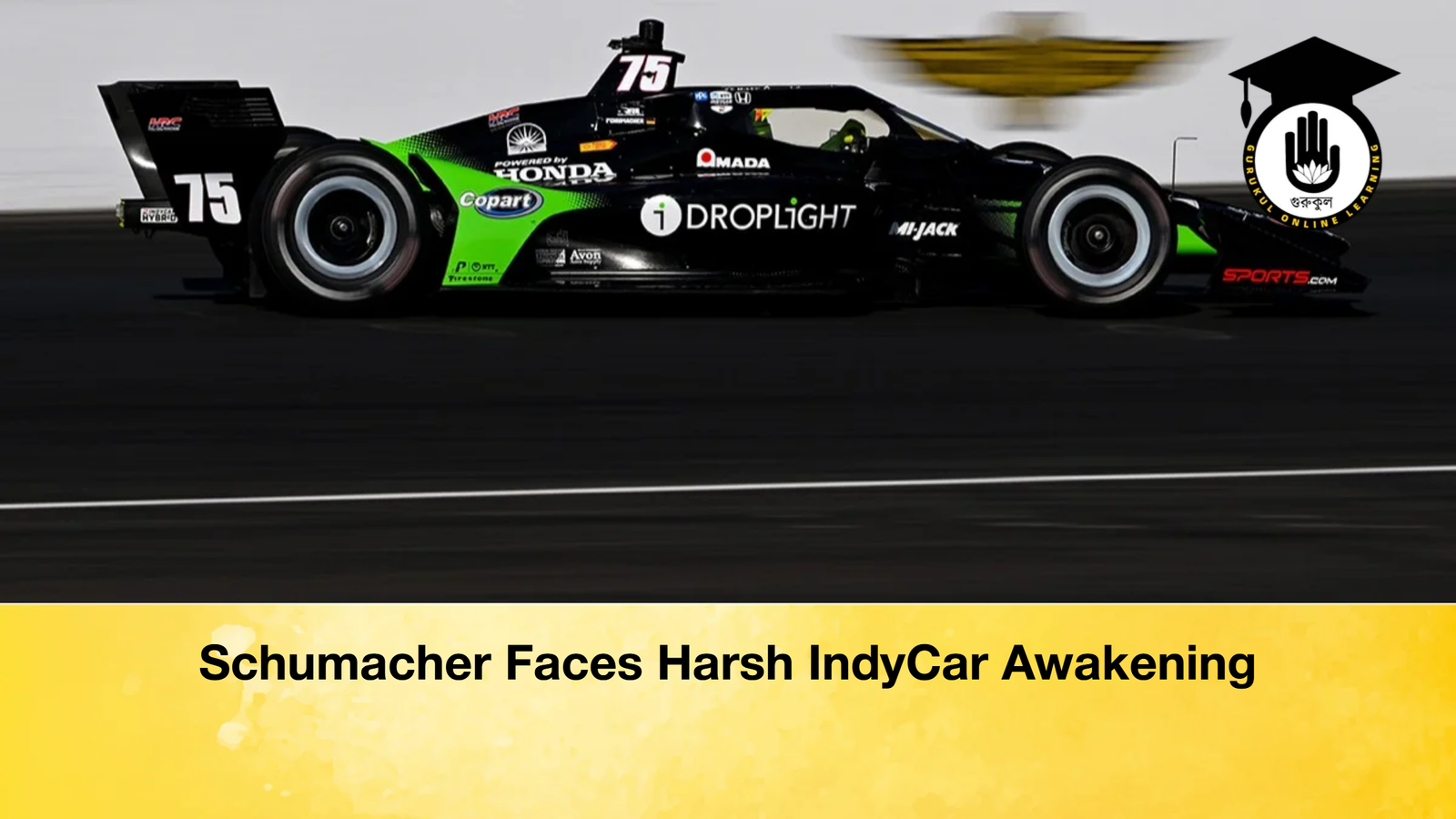
For Mick Schumacher, the transition to the IndyCar Series has proven to be a far sterner test than anticipated. Despite arriving in the United States with a strong European résumé—including a Formula 1 career and a Formula 2 title—the 27-year-old has candidly admitted that his early expectations did not match reality.
“I thought I was ready,” Schumacher reflected in a recent video diary, “but I wasn’t.”
Culture Shock On and Off Track
Even before turning a wheel in anger at St. Petersburg, Schumacher encountered a vastly different racing culture. Unlike the regimented and controlled pre-race environments typical of European series, IndyCar’s grid is open, vibrant, and, at times, chaotic. Fans and guests populate the pit lane freely, creating an atmosphere that can overwhelm newcomers.
“It was very different,” Schumacher explained. “There were people everywhere, and I was just trying to find my car and my crew.”
Beyond the spectacle, practical differences also demanded swift adaptation. The shift from metric to imperial measurements—miles, PSI, and Fahrenheit—added another layer of complexity to an already steep learning curve.
Early Results: A Mixed Beginning
Schumacher’s opening three race weekends have provided a mixture of frustration and valuable experience:
| Event | Key Moment | Outcome | Lesson Learned |
|---|---|---|---|
| St. Petersburg | Lap 1 collision | Retirement | Limited race exposure, but valuable insight into race starts |
| Phoenix Raceway | Qualified 4th (oval debut) | Midfield finish after pit issue | Racecraft on ovals differs dramatically from road courses |
| Arlington | Caught in early incident | Back-of-field result | Importance of positioning in chaotic openings |
At St. Petersburg, his race ended almost as soon as it began, caught in a first-lap incident. However, it was the following round at Phoenix Raceway that delivered the most profound lesson.
The Oval Reality Check
Making his oval debut, Schumacher impressed initially by qualifying fourth. Yet the race itself exposed a critical difference: outright speed over a single lap is only part of the equation.
“I wasn’t ready for how hectic it would be,” he admitted. “Cars coming from everywhere—it was intense.”
Once he settled into a rhythm near the top ten, his confidence grew. However, a pit stop issue—caused by a malfunctioning wheel gun—undermined his progress. Despite the setback, the experience proved invaluable.
Working closely with his driver coach, Ryan Briscoe, Schumacher has been analysing each session in detail, identifying areas for improvement and refining his approach.
Pressure and Perspective
As the son of Michael Schumacher, expectations inevitably follow him. Schumacher acknowledges the scrutiny but remains composed.
“Pressure has always been part of my life,” he said. “If anything, I put more pressure on myself than anyone else ever could.”
Looking Ahead
With the iconic Indianapolis 500 looming, Schumacher faces yet another challenge—this time on a high-speed superspeedway. Notably, Phoenix marked his only oval preparation before Indianapolis, making the step even more significant.
Before then, however, he will return to more familiar terrain at Barber Motorsports Park and the Indianapolis road course, offering opportunities to rebuild confidence.
“The most important thing,” Schumacher concluded, “is that everything starts to feel natural. Once that happens, you can focus purely on going faster.”
For now, his IndyCar journey remains a work in progress—demanding, humbling, yet rich with potential.