
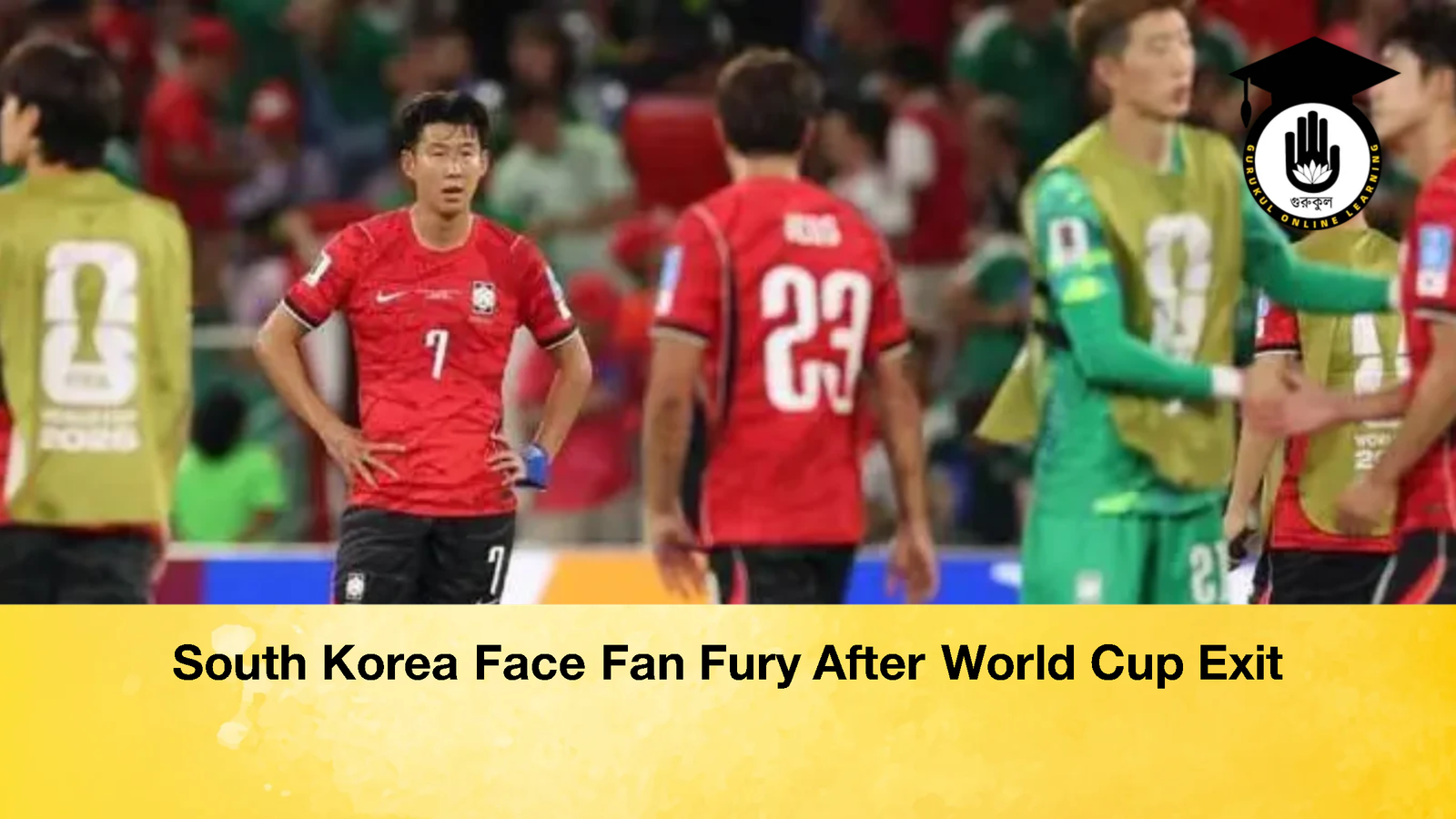

South Korea’s national football team are preparing for an angry homecoming after a dismal FIFA World Cup campaign sparked widespread public outrage and intensified criticism of the country’s football leadership.
Frustrated supporters have threatened to hurl eggs and traditional Korean sweets at players, coaches and officials when they arrive at Incheon International Airport, blaming not only the team’s early elimination but also long-standing administrative turmoil within the Korea Football Association (KFA) and a series of controversial decisions surrounding head coach Hong Myung-bo.
The prospect of such protests has prompted authorities and football officials to tighten security at the airport. A comprehensive security operation is being planned to shield the returning delegation from angry crowds, with barriers expected to separate supporters from players and officials. Contingency measures, including the possible use of alternative exit routes, are also under consideration should the situation become volatile.
The backlash reflects months of growing frustration rather than disappointment over a single tournament. Critics have repeatedly questioned the KFA’s handling of internal disputes, while Hong’s appointment and tactical decisions have remained the subject of intense debate. Many supporters believe the instability behind the scenes has had a direct impact on the national team’s performances on the pitch.
South Korea began their World Cup campaign in encouraging fashion with a 2-1 victory over the Czech Republic in their opening Group A fixture. Expectations rose after that promising start, but a narrow 1-0 defeat to Mexico left the team under pressure heading into their final group-stage match.
That decisive encounter against South Africa ultimately proved fatal to South Korea’s hopes of progressing. Entering the match as clear favourites, Hong made the surprise decision to leave captain and star forward Son Heung-min on the bench throughout the first half. Although the Tottenham Hotspur forward was introduced after the interval, the tactical gamble failed to change the course of the game, and South Africa secured a shock 1-0 victory.
Even after the defeat, South Korea retained a slim mathematical chance of reaching the knockout stage as one of the tournament’s best third-placed teams. Those hopes were eventually extinguished when the final standings confirmed they ranked tenth among the third-placed sides, ending their World Cup campaign at the group stage.
The threat of a hostile reception is not without precedent. South Korea’s national team encountered similar public anger following disappointing performances at the 2014 and 2018 FIFA World Cups, when frustrated supporters greeted players and officials with fierce criticism at the airport. On both occasions, some fans threw eggs as a symbolic expression of their dissatisfaction.
In South Korean culture, throwing eggs or sweets at public figures is widely regarded as an act of public humiliation rather than physical aggression. It is intended to convey profound disappointment, shame and a complete loss of confidence in those being targeted. Calls for another round of what supporters have dubbed “egg therapy” have spread rapidly across social media in recent days, illustrating the depth of public anger over the team’s latest failure.
Football analysts believe the greatest challenge for the returning squad may extend well beyond the airport. Players, coaches and KFA officials are expected to face relentless scrutiny from the media and sustained criticism from supporters, while renewed questions are likely to be raised about the future direction of South Korean football. The psychological burden of returning to such an unforgiving atmosphere may prove as difficult to overcome as the defeats suffered during the tournament itself.
As preparations continue for the team’s return, attention is now centred on how South Korea’s players and football authorities will respond to one of the most hostile receptions in recent memory. With unprecedented security measures in place and public anger showing little sign of easing, the homecoming is set to become another defining moment in the continuing debate over accountability, leadership and the future of South Korean football.