
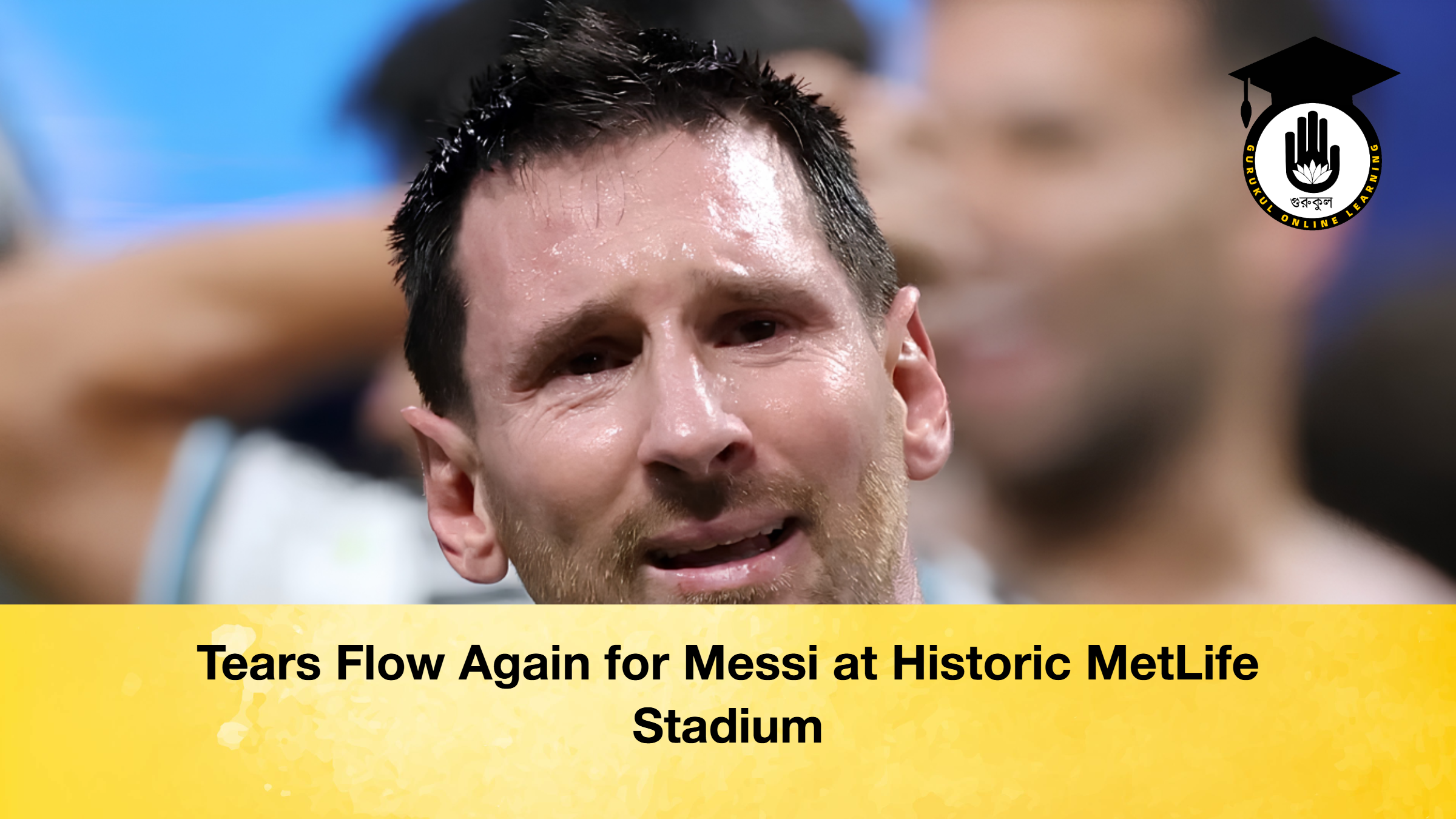

New Jersey’s MetLife Stadium has long stood as a silent witness to some of the most dramatic chapters in Lionel Messi’s international career. A decade ago, the iconic arena saw the Argentine captain break down in tears after a crushing Copa America final defeat. In a poignant twist of fate, the talismanic forward found himself tearful once more at the very same venue. While the context of his latest emotional display differed vastly from the ghosts of his past, the sheer depth of feeling remained unmistakably familiar.
The stadium carries an undeniable historical weight, forever linked to a night of profound sporting heartbreak. On 26 June 2016, during the final of the Copa America Centenario against Chile, Messi uncharacteristically missed his penalty in a decisive shootout. The miss proved catastrophic, costing Argentina the tournament. Overwhelmed by despair, a visibly shattered Messi announced his retirement from international football immediately after the match. Wiping away his tears, he famously lamented that he had tried his absolute best, but concluded that winning a major trophy for his nation was simply not meant to be.
Overcoming the Chants of Criticism
The dramatic exit in 2016 was not an isolated incident; it was the boiling point of years of intense pressure. Prior to that fateful night, Messi had endured the bitter taste of defeat in the 2014 World Cup final against Germany, followed by another painful loss to Chile in the 2015 Copa America final. Facing three consecutive defeats in major international finals, the maestro found his patriotism questioned by sections of the Argentine public and media. The constant scrutiny and subsequent heartache took a severe psychological toll on the forward, rendering his sudden retirement at MetLife Stadium a manifestation of deep-seated exhaustion.
Fortunately for the footballing world, the departure proved short-lived. Moved by the overwhelming pleas of the Argentine public, the desperate urgings of his teammates, and his own unyielding desire to succeed, Messi reversed his decision a few months later.
What followed was a historic transformation. He led the national side to a long-awaited Copa America triumph in 2021, ending a painful 28-year trophy drought for the country. This breakthrough paved the way for an extraordinary era of dominance, which included victories in the Finalissima and a legendary World Cup triumph in Qatar, cementing his status as the most successful captain in Argentine history.
A Venue of Striking Contrasts
MetLife Stadium remains a complex theatre of memories for Messi, blending immense sorrow with flashes of pure brilliance. Beyond the heartbreak of 2016, the ground hosted one of his finest individual performances in an international shirt. In 2012, Messi netted a spectacular hat-trick against fierce rivals Brazil, driving Argentina to a thrilling 4-3 victory. Having made five appearances at the venue and scoring four times, the stadium represents a unique intersection of career highs and lows.
As the legendary forward enters the twilight of his international career, every match in the famous blue and white stripes carries an added layer of sentimentality. Although he has not set an official date for his final departure from the international stage, seeing him emotional at this particular ground naturally evoked memories of his darkest hour a decade prior.
The narrative, however, has fundamentally shifted. The footballer who once walked away from his country out of a sense of perceived failure has returned to the same spot as a world champion and an immortal icon. The tears shed at MetLife Stadium this time around did not signal the end of a tragic pursuit, but rather served as a quiet reflection on a journey that has achieved absolute fulfillment.