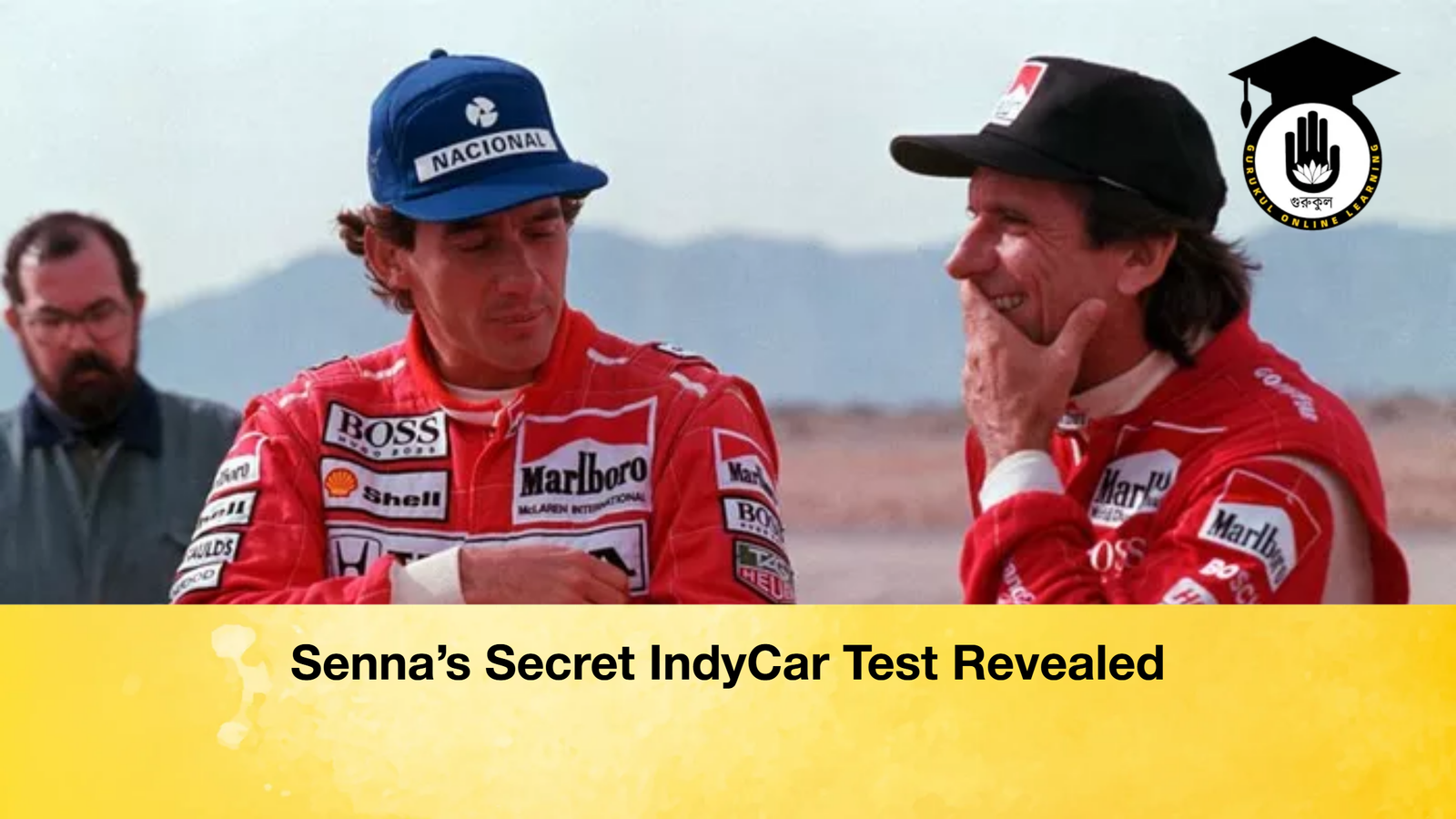

A little-known chapter in the career of Ayrton Senna offers a fascinating glimpse into what might have been, had the three-time Formula 1 World Champion chosen a different path. In December 1992, amid uncertainty over his Formula 1 future, Senna quietly tested a Penske IndyCar—an experience that left a lasting impression on those present.
At the time, Senna faced a daunting 1993 season. His McLaren team had lost its dominant Honda engines, leaving him with less competitive Ford power against the formidable Williams-Renault package driven by rival Alain Prost. Seeking clarity on his next move, Senna turned his attention to IndyCar, intrigued by its raw, less electronically dependent machinery.
The test, organised with the assistance of Emerson Fittipaldi and Marlboro, took place at Firebird Raceway West in Arizona. According to engineer Nigel Beresford, the arrangement came together at the last moment, lending an almost clandestine air to the proceedings.
Test Day Comparison
| Driver | Car Specification | Best Lap Time |
|---|---|---|
| Emerson Fittipaldi | 1992 Penske (baseline) | 49.7s |
| Ayrton Senna | 1992 Penske (baseline) | 49.09s |
| Emerson Fittipaldi | 1993 Penske (new car) | 48.5s |
The day began with Fittipaldi establishing a benchmark in the 1992 Penske chassis. Conditions were far from ideal—cold temperatures and a slippery surface challenged grip—but the Brazilian veteran managed consistent laps in the high 49-second range.
When Senna took to the track, expectations were high. Surprisingly, his initial laps were cautious. Unlike Formula 1 cars of the era, the IndyCar featured a sequential gearbox and turbocharged engine, both requiring adjustment. Beresford recalled that Senna occasionally halted on track to reset the gearbox—a rare sight for a driver of his calibre.
However, it did not take long for Senna to find his rhythm. After 14 laps, he posted a 49.5-second lap, already edging ahead of Fittipaldi’s benchmark. With further adjustments—including softer rear suspension settings and additional fuel weight—Senna returned for another run and delivered a remarkable 49.09 seconds.
Despite driving a year-old car on used tyres, Senna came within six-tenths of a second of Fittipaldi’s best time in the newer 1993 machine. The performance underlined his extraordinary adaptability and raw speed.
Reflecting on the day, Beresford described Senna as “amazingly quick,” noting how rapidly he acclimatised to an unfamiliar car. For Senna, the test was brief but decisive. After completing his programme, he simply remarked that he had learned all he needed to know.
Ultimately, Senna remained in Formula 1 for 1993, producing one of his most celebrated seasons. Yet this fleeting IndyCar test stands as a tantalising “what if”—a moment when two worlds of motorsport nearly converged, led by one of the greatest drivers in history.