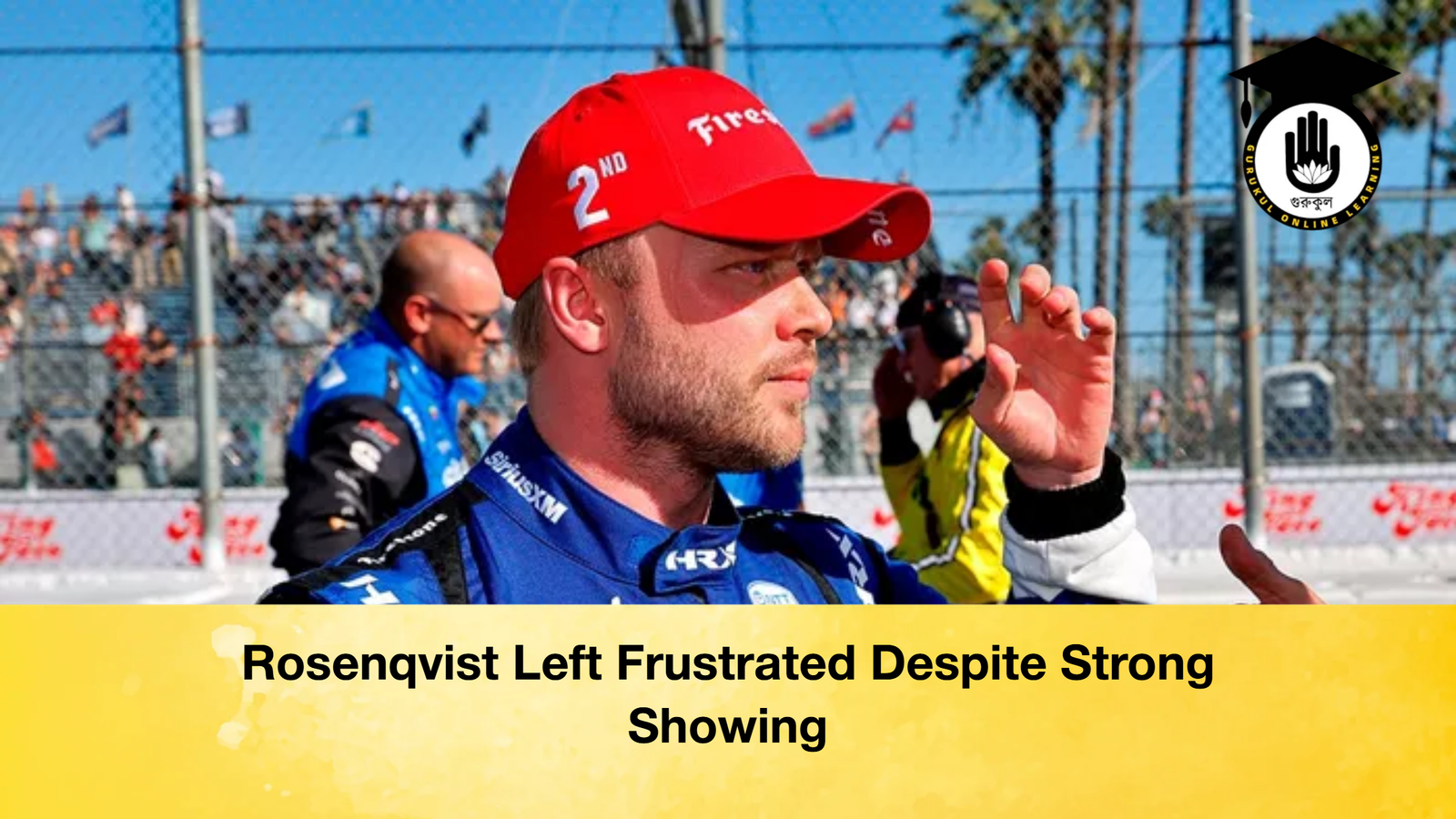

Felix Rosenqvist cut a reflective figure after narrowly missing out on victory at the Acura Grand Prix of Long Beach, conceding that a single pivotal moment in the pits ultimately denied him a richly deserved win.
The Swedish driver, representing Meyer Shank Racing, delivered one of the most commanding performances of his IndyCar career. Starting from pole position, he controlled proceedings with authority, leading a race-high 51 of the 90 laps and maintaining a comfortable margin over championship leader Alex Palou for much of the afternoon.
However, the complexion of the race changed dramatically on lap 57 when debris at Turn 3 triggered a full-course caution—the first at Long Beach since 2024. This neutralised Rosenqvist’s advantage of over two seconds and set the stage for a decisive final round of pit stops.
Despite executing what appeared to be a clean stop, Rosenqvist emerged from the pit lane behind Palou, whose crew at Chip Ganassi Racing delivered a marginally quicker turnaround. From that point onwards, track position proved decisive. Although Rosenqvist remained within striking distance after the restart, he was unable to mount a serious challenge, eventually finishing 3.966 seconds adrift.
Key Race Comparison
| Metric | Felix Rosenqvist | Alex Palou |
|---|---|---|
| Starting Position | 1st (Pole) | 3rd |
| Laps Led | 51 | 32 |
| Final Position | 2nd | 1st |
| Gap at Finish | +3.966s | — |
| Decisive Moment | Lost lead in final pit stop | Gained lead in final pit stop |
Speaking after the race, Rosenqvist struck a balanced tone, acknowledging both the disappointment of losing a probable victory and the broader positives of a highly competitive weekend.
“I’m just relieved the pit stop didn’t ruin our race entirely,” he remarked. “I felt we had enough of a cushion to stay ahead, even if it wasn’t perfect. But Alex and his crew executed better at that crucial moment—that’s where the race was decided.”
The result marks Rosenqvist’s strongest showing of the season so far, a significant turnaround after a difficult start to the campaign in which he failed to register a top-10 finish in the opening four rounds. It also represents the highest number of laps he has led in a single IndyCar race—an indication of his growing confidence and competitiveness.
Nonetheless, the sense of missed opportunity was palpable. “It’s a mix of emotions,” he admitted. “You have to be pleased with the performance, but when you’re that close to winning, it does sting.”
Rosenqvist also pointed to subtle factors that may have influenced the outcome, including traffic in the pit lane and tyre performance in the closing stint. While his pace on the softer compound tyres was particularly strong, he conceded that Palou held the advantage on the harder rubber during the decisive phase.
In the broader context, the performance signals a resurgence for Meyer Shank Racing and reinforces Rosenqvist’s credentials as a genuine contender. Yet, as this race demonstrated, in modern IndyCar competition, even the smallest margins—fractions of a second in the pit lane—can define the difference between victory and second place.