Peugeot targets 2027 Hypercar reset

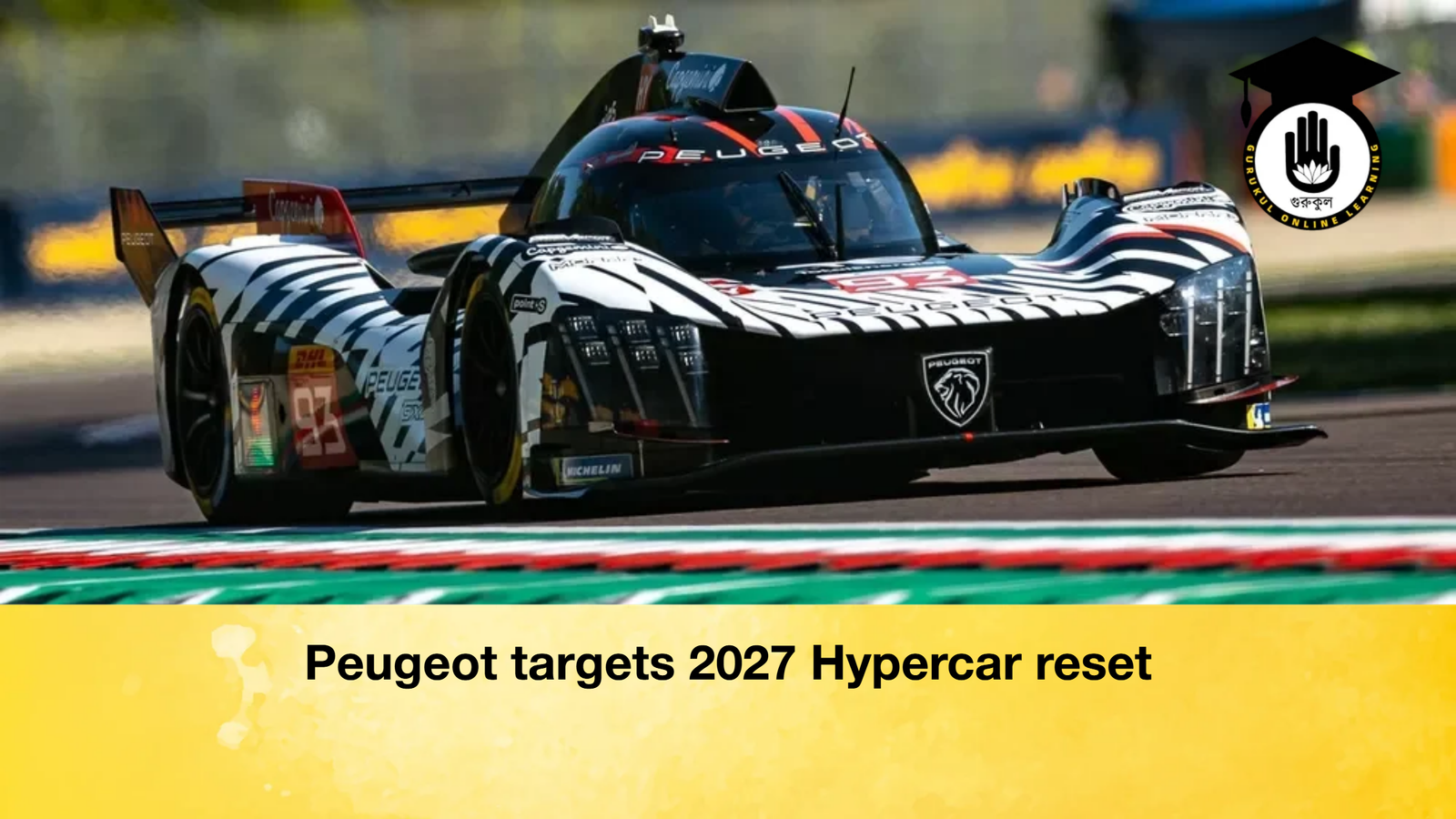
Peugeot is preparing a fresh homologation programme for 2027 as it seeks to re-establish itself as a consistent front-runner in the World Endurance Championship Hypercar category, with its long-term commitment now extending through to the end of 2029.
Despite introducing a significant evolution of its 9X8 LMH in 2024, the French manufacturer has continued to struggle for outright competitiveness against established rivals. Those difficulties had fuelled speculation about its long-term future in the series. However, Peugeot has now confirmed a renewed strategic push, anchored by regulatory stability and a revised technical direction.
Chief executive Alain Favey outlined the plan during discussions with journalists at Imola, confirming that Peugeot will remain in Hypercar for at least the next three seasons before the next major rule change in 2030.
“We want to stay until the end of 2029, and to be competitive we must work on developing the current car,” Favey explained. “We’ve used up all the Joker Evo options available for the 9X8, so we’ll have to homologate a car from scratch.”
While the new machine will not be an entirely clean-sheet design, it will reuse selected proven elements from the current programme. A structured testing phase is expected over the coming months, with track running targeted to ensure readiness for the 2027 season.
Peugeot Hypercar roadmap
| Phase | Objective | Key focus |
|---|---|---|
| 2024–2026 | Current 9X8 evolution | Reliability and incremental performance gains |
| 2027 | New homologation cycle | Revised car introduction and competitiveness reset |
| 2028–2029 | Stability window | Consistent top-four contention target |
Favey confirmed that Peugeot is also engaged in ongoing discussions with the FIA and ACO regarding future technical convergence between LMH and LMDh regulations, though the brand’s immediate focus remains on maximising the current framework.
“The important thing for us was to have a three-year plan based on stable rules,” he said. “We’ll assess what happens next from a strategic perspective.”
Internally, Peugeot has set an ambitious performance benchmark of regular top-four finishes across both the World Championship and the 24 Hours of Le Mans. However, Favey stressed that continued participation beyond 2029 will depend on whether those objectives are achieved.
“Our ambition is to be consistently in the top four; should that not happen, we will see if and how to proceed.”
He also underlined the symbolic importance of endurance racing to the brand, particularly at Le Mans, where Peugeot marks the centenary of its first appearance.
“It is important for a brand to have a history,” he added. “Peugeot does not want to be the one constantly entering and leaving championships.”
While the World Championship remains a priority, Le Mans retains a special status.
“For Peugeot, the 24 Hours of Le Mans is undoubtedly more important than the world championship,” Favey said. “It is a huge celebration in France and carries special significance.”
With a new car programme, regulatory stability, and a defined performance target, Peugeot’s next three seasons are now framed as a decisive chapter in its modern endurance racing story—one that will determine whether its Hypercar project ultimately delivers a sustained return to the front of the field.