Toyota’s Century in Endurance Racing

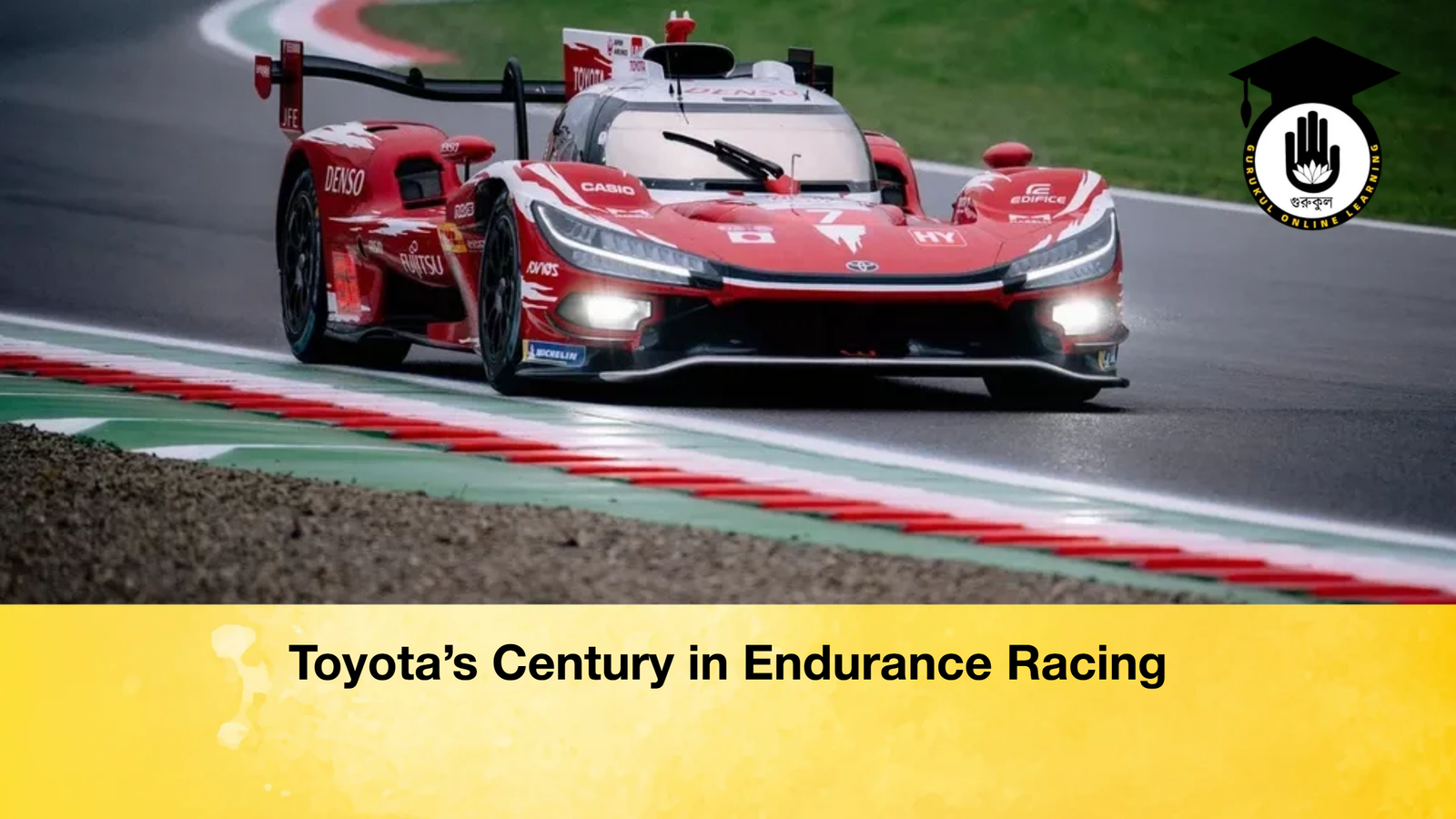
As FIA World Endurance Championship prepares for its Imola round, Toyota stands on the brink of a remarkable milestone: 100 race starts since the championship’s rebirth in 2012. Few manufacturers have demonstrated such unwavering commitment to top-level endurance racing, navigating eras of both fierce competition and relative solitude while continually evolving their technology and philosophy.
From the thunderous, complex days of LMP1 to today’s tightly regulated Hypercar class, Toyota’s journey has been anything but linear. Early promise was repeatedly undone by cruel misfortune—none more so than the devastating final-lap loss at the 24 Hours of Le Mans in 2016. Yet that heartbreak ultimately forged the resilience that would underpin one of the most dominant periods in modern endurance racing.
Toyota’s WEC Record at a Glance
| Category | Statistic |
|---|---|
| WEC Debut | 2012 (Le Mans) |
| Total Starts | 100 (Imola 2026) |
| Race Wins | 49 |
| Pole Positions | 42 |
| Manufacturers’ Titles | 7 |
| Drivers’ Titles | 6 |
| Le Mans Wins | 5 (since 2018) |
From Struggles to Supremacy
Toyota’s early campaigns were defined by near-misses. The TS030 Hybrid showed flashes of brilliance in 2012, securing a maiden victory later that season in São Paulo, but consistency remained elusive against established rivals like Audi. By 2014, however, Toyota had matured into a title-winning force, claiming both the drivers’ and manufacturers’ championships.
The watershed moment, paradoxically, came in defeat. The 2016 Le Mans collapse—when victory slipped away in the closing minutes—became a psychological turning point. As former driver and now executive Kazuki Nakajima has reflected, that race proved Toyota could perform at the highest level, even if the result did not follow.
What followed was both redemption and dominance. Toyota secured its long-awaited Le Mans victory in 2018, beginning a streak of success that coincided with reduced factory competition after the withdrawals of Audi and Porsche. Critics may note the diminished field, but Toyota’s operational excellence and reliability were undeniable.
The Hypercar Challenge
The arrival of the Hypercar era in 2021 marked a new chapter. Toyota introduced the GR010 Hybrid and quickly set the benchmark, but the landscape has since shifted. The resurgence of manufacturers such as Ferrari has restored the competitive intensity that had once defined LMP1.
Now, as Toyota debuts its updated TR010 Hybrid at Imola, the challenge is no longer dominance—it is adaptation. The team must balance innovation with consistency in a field where margins are razor-thin.
Milestone with Meaning
Reaching 100 races is more than a numerical achievement; it reflects institutional endurance. Backed by leadership figures such as Akio Toyoda, Toyota has maintained a long-term vision that extends beyond trophies, incorporating technological ambitions such as hydrogen development.
Yet the ethos remains unchanged: compete, evolve, and win. As Nakajima succinctly puts it, milestones are secondary to performance. The next target is not 200 races—it is the next chequered flag.
In a championship now brimming with manufacturers, Toyota’s legacy is secure. The question, as ever in endurance racing, is not what has been achieved—but what comes next.