Temerario GT3 Faces Early Growing Pains

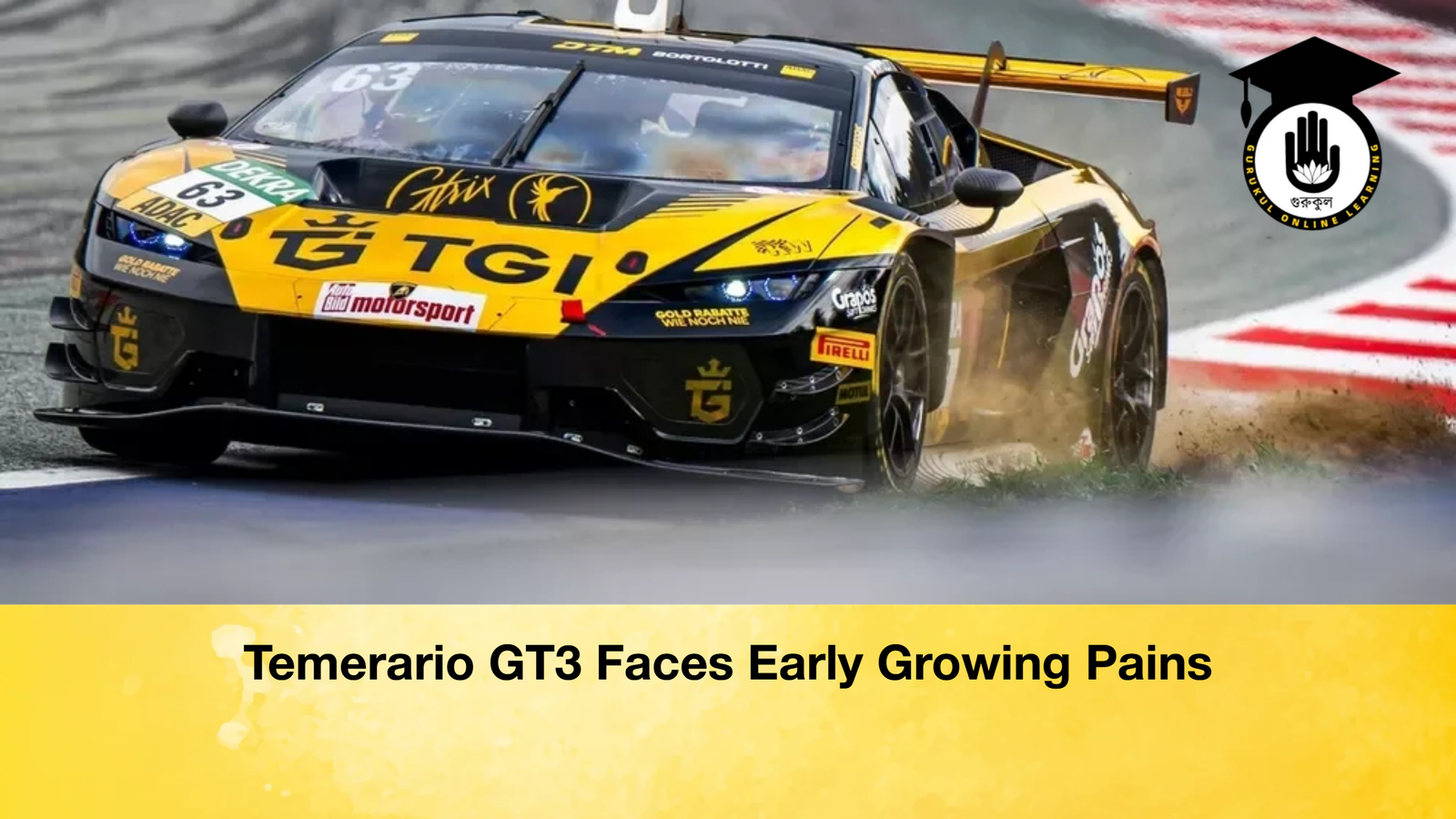
Lamborghini has entered the 2026 GT3 season with high expectations for its all-new Temerario GT3, yet early indications suggest the marque faces a demanding development phase before it can challenge at the sharp end of the grid.
The Temerario replaces the highly successful Huracán GT3 Evo2, a car that delivered consistent results across multiple championships. However, its successor represents a radical departure in both philosophy and engineering. Developed entirely in-house at Sant’Agata Bolognese—without the technical collaboration of Audi that underpinned the Huracán programme—the Temerario introduces a twin-turbocharged V8 engine in place of the outgoing model’s naturally aspirated V10.
Factory driver Mirko Bortolotti has been candid about the challenges. The reigning 2024 DTM champion acknowledged that early competitiveness may be limited, particularly at the start of the season. Restricted testing opportunities in series such as Deutsche Tourenwagen Masters (DTM) have only heightened the pressure to extract performance quickly.
Early Assessment of Temerario GT3
| Area | Current Status | Key Observations |
|---|---|---|
| Performance Pace | Below leading rivals | Up to ~1 second deficit in testing |
| Braking Stability | Inconsistent | Drivers report instability under heavy braking |
| Corner Entry | Weak | Lack of responsiveness on turn-in |
| Tyre Management | Problematic | Difficulty reaching optimal operating window |
| Reliability | Strong | Completed endurance races without major faults |
One of the most pressing concerns lies in drivability. Both drivers and engineers have highlighted issues under braking and a lack of front-end precision when turning into corners. These characteristics have made it difficult to extract consistent lap time, particularly in race conditions where tyre management becomes critical.
Team principal Gottfried Grasser has pointed to setup and suspension as likely contributors, noting that the team is still searching for a stable baseline configuration. This lack of a refined setup has been compounded by the late delivery of cars to customer teams, leaving limited time for preparation ahead of competitive outings.
Despite these setbacks, there is one clear positive: reliability. The Temerario has successfully completed demanding endurance events such as the 12 Hours of Sebring and the GT World Challenge Europe opener at Circuit Paul Ricard without significant mechanical issues. This robustness has enabled teams to accumulate valuable mileage, which may prove crucial in accelerating development.
Testing at Red Bull Ring offered cautious optimism. While the pace deficit remains notable, incremental gains suggest that improvements are possible, particularly as teams better understand tyre behaviour and aerodynamic balance.
Nevertheless, the transition to sprint-focused championships such as DTM presents a stern challenge. Unlike endurance racing, where reliability and strategy can offset outright pace, sprint formats demand immediate performance. As Bortolotti succinctly put it, without speed, success will remain elusive.
In many respects, Lamborghini’s current situation mirrors the early development phase of the Huracán GT3 programme over a decade ago. Then, as now, patience and sustained engineering effort were required before results followed.
The coming months will be decisive. Whether the Temerario evolves into a front-running contender or remains a work in progress will depend on how swiftly Lamborghini can resolve its current shortcomings and unlock the car’s underlying potential.