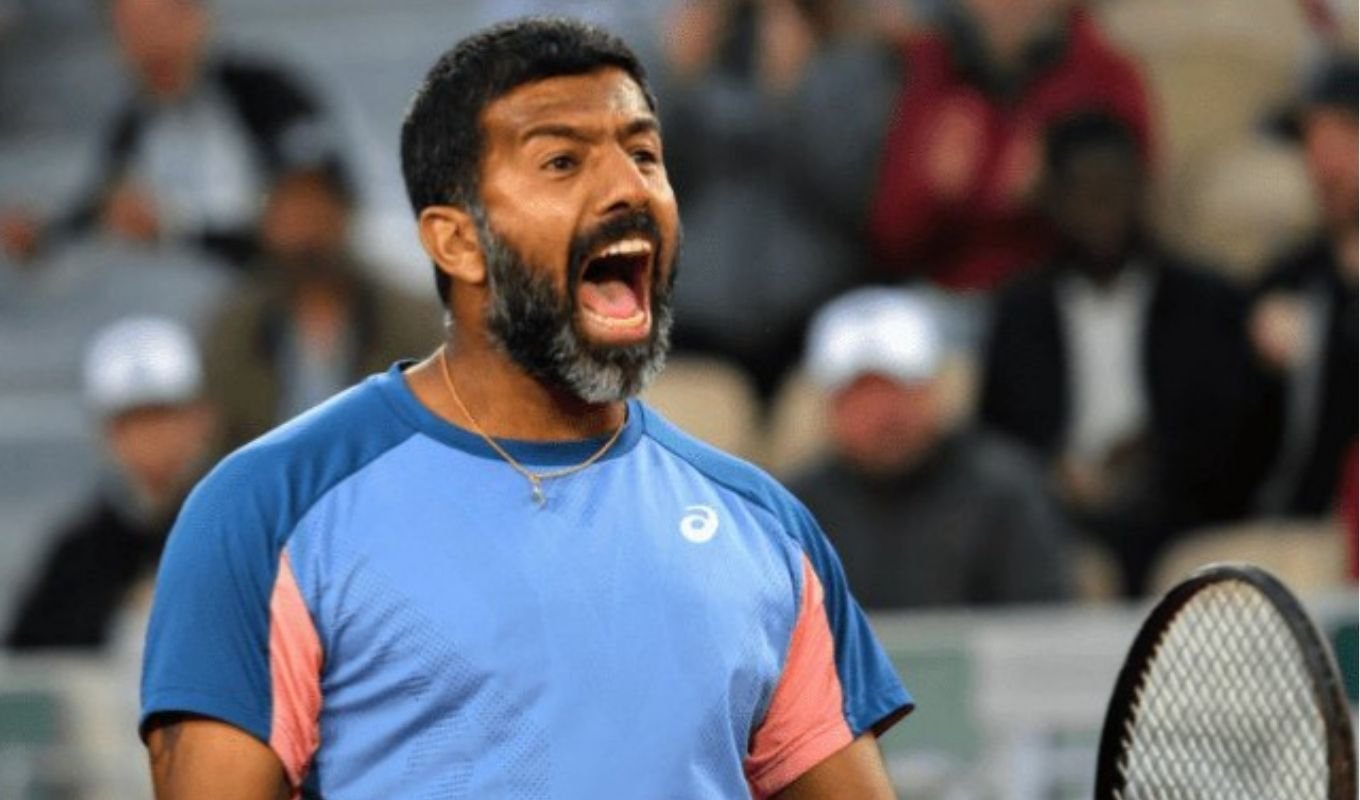
Somewhere around 2019, Rohan Bopanna, India’s celebrated tennis star, appeared poised to hang up his racket for good. The cause was a severe lack of cartilage in his knees — a condition so debilitating that he relied on two to three painkillers a day merely to compete. Yet, through unwavering perseverance, Iyengar Yoga, and skilled physiotherapy, Bopanna defied the odds. At the age of 43, he captured his first Men’s Doubles Grand Slam title and became the oldest first-time World No. 1 in ATP Tour history — an extraordinary feat at an age when most athletes have already embraced retirement.
Behind every sporting triumph lies a private battle the public seldom sees. In the unforgiving world of professional tennis, adversity extends beyond injuries — it encompasses financial struggles too, particularly for those outside the top-100 rankings. There was a time when Bopanna endured a winless streak spanning five months on tour. Sitting comfortably in a chair, one could easily coin a multitude of adjectives to describe his persistence, yet even after leafing through countless pages of a dictionary, it is nearly impossible to find a single word that fully encapsulates Bopanna’s relentless, 22-year pursuit of excellence on the ATP circuit.
At just 11 years old, Bopanna first took an interest in tennis. However, it was not until the age of 19 that he set his sights on a professional career, entering the global tennis stage in 2003. That same year, he won his maiden Davis Cup match, defeating Japan’s Jun Kato. Soon after, he formed a formidable doubles partnership with Pakistan’s Aisam-ul-Haq Qureshi — a duo affectionately known as the “Indo-Pak Express.” In 2007, the pair enjoyed a breakthrough season, claiming four Challenger titles.
Three years later, as Rafael Nadal lifted his first US Open singles trophy, Bopanna and Qureshi were battling the legendary Bryan Brothers in the men’s doubles final. The Indo-Pak pair displayed stunning volleys and retrievals, pushing the Americans to a tense tiebreak in the opening set. Watching it unfold was pure nail-biting drama.
The question lingering on every viewer’s mind — could they hold their composure against perhaps the greatest doubles duo in history? For a fleeting moment, they did. Bopanna produced a breathtaking single-handed backhand return to gain a mini-break, followed by Qureshi’s own spectacular reply. The crowd erupted in support of the Indo-Pak duo. Then came a booming ace from Bopanna. Yet, at the decisive moment, the Bryans wrested back control and clinched the tiebreak.
The second set followed a similar pattern of razor-thin margins. The Indo-Pak team seized an early edge, with Bopanna hammering a backhand to force an error at the net. But once again, the Bryan Brothers prevailed in the tiebreak to secure the Grand Slam. Despite the defeat, one of Bopanna’s dazzling overhead smashes — struck over his shoulder while retrieving a lob — drew comparisons to Roger Federer’s famous between-the-legs shot. Still, the bigger story was that the long-awaited Grand Slam victory continued to elude him.
By 2012, Bopanna had teamed up with Indian tennis icon Mahesh Bhupathi. The partnership, however, fell short of expectations — notably at the London Olympics, where they lost to France’s Julien Benneteau and Richard Gasquet. One might have wondered whether the old adage, “nice guys finish first,” really applied. But Bopanna refused to give in. Fourteen years into his career, his perseverance bore fruit. Partnering with Gabriela Dabrowski, he captured his first Grand Slam — the French Open Mixed Doubles title.
Still, one trophy wasn’t enough. Bopanna’s hunger for success remained insatiable. Yet, he had to wait seven more seasons for his maiden Men’s Doubles Grand Slam triumph. At the age of 43, in the Australian Open final, his shoulders drooped slightly, his beard sprinkled with grey — but his determination burned undimmed. Together with partner Matthew Ebden, Bopanna dominated the first set with a flawless 7–0 tiebreak.
The defining moment came when Bopanna patiently waited for his opponents to commit before sealing the point with a perfectly timed forehand volley — a masterclass in traditional doubles play. In the second set, his lightning-quick reflexes produced a stunning lunging volley at a crucial juncture. Moments later, victory was theirs.
Bopanna collapsed to the ground, overcome with emotion. Years of injury, sacrifice, and investment had finally culminated in a men’s doubles triumph. Imagining his emotions at that moment is nearly impossible — two decades of toil had at last yielded the reward he so richly deserved.
Yet, sport seldom grants everything an athlete desires. A few months later, Bopanna narrowly missed out on an Olympic medal in Paris. And within a year, he announced his retirement from the sport.
To truly appreciate Rohan Bopanna, one must look beyond mere statistics. Off the court, he embodied humility; on it, he was a fierce competitor who channelled his aggression into disciplined excellence. These are the very traits one might wish to gift someone embarking on their first day of work. In the end, Rohan Bopanna was more than just a champion — he was, and will remain, the people’s champion.