
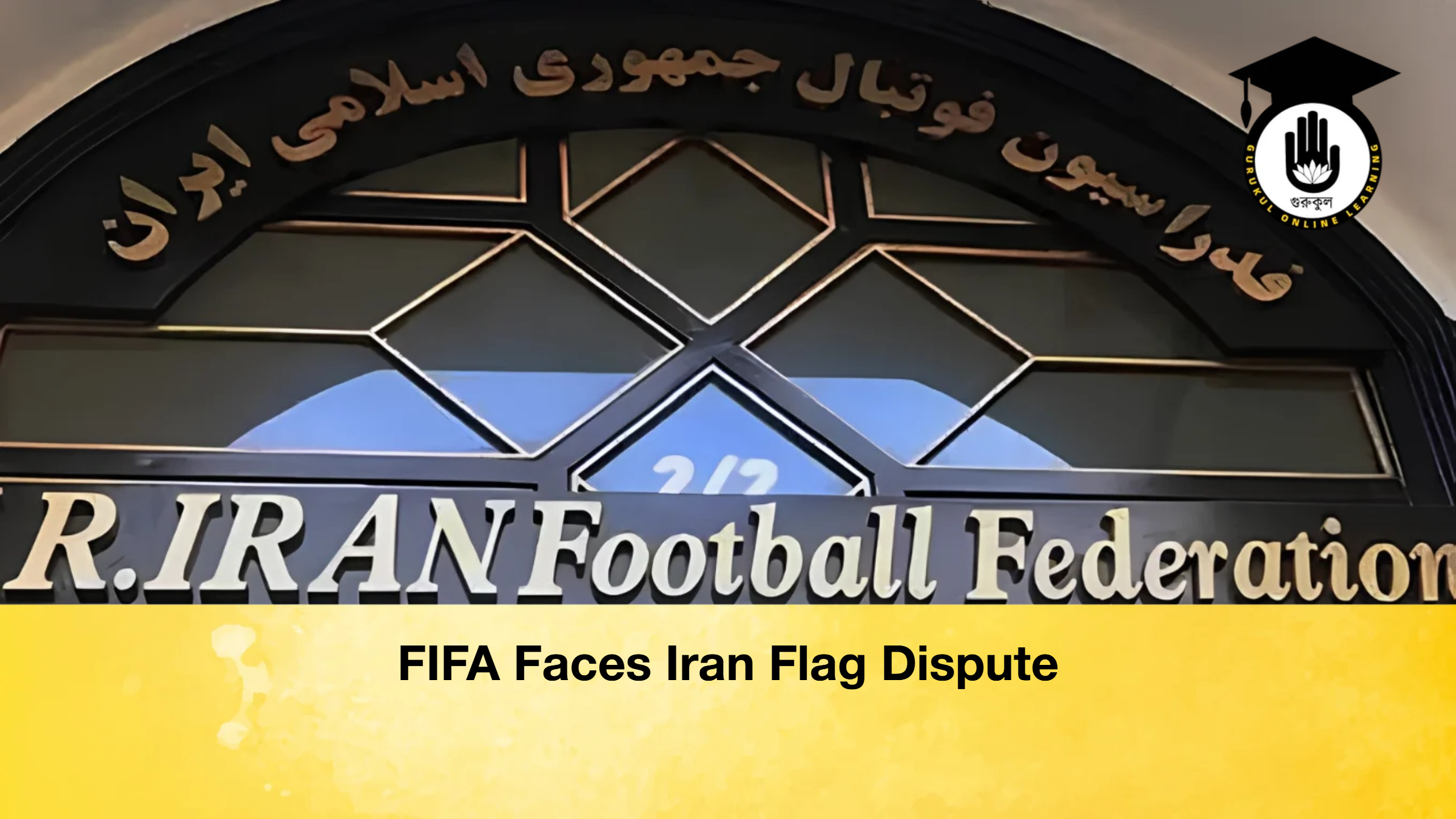

Following the recent attacks on Iran by the United States and Israel, and the subsequent escalation of conflict in the Middle East, uncertainty had emerged regarding Iran’s participation in the 2026 FIFA World Cup. That uncertainty has since eased to some extent. However, the global governing body, FIFA, is now confronted with a separate and potentially complex issue involving Iran, which may lead to legal challenges.
Reports suggesting that FIFA is considering banning Iran’s pre-revolution “Lion and Sun” flag at World Cup venues have prompted threats of legal action against the organisation. At the same time, the president of Iran’s football federation, Mehdi Taj, has formally requested FIFA to prohibit the display of that flag during the tournament.
The 2026 FIFA World Cup is scheduled to begin on 11 June and will be jointly hosted by the United States, Mexico, and Canada. Iran has been drawn in Group G, and all three of its group-stage matches will be played in the United States—two in California and one in Seattle. A significant proportion of the Iranian diaspora in the United States resides in California, including a segment that opposes Iran’s current political system.
This group, which is opposed to the 1979 Islamic Revolution, has indicated plans to display the historic “Lion and Sun” flag during World Cup matches. In response, Mehdi Taj previously stated that Iran’s participation in the tournament is subject to several considerations, including the presence of unauthorised flags. Subsequent reports have claimed that FIFA may include restrictions on the pre-revolution Iranian flag within its venue regulations.
Concerns over such a potential ban have been raised by the organisation “Institute for Voices of Liberty”. The group has warned that any move to prohibit the flag could lead to formal legal proceedings in state or federal courts in California. This development raises the possibility that FIFA could face litigation in connection with its tournament policies.
Legal adviser Shahrokh Mokhtarzadeh stated towards the end of last week that no response had been received from FIFA despite three days having passed since formal communication. He said, “If FIFA attempts to exclude the ‘Lion and Sun’ flag, we are prepared to initiate appropriate legal proceedings.”
When approached for clarification, FIFA responded by sharing its general list of prohibited items. According to this guidance, any materials deemed “political, offensive and/or discriminatory in nature” are banned within World Cup venues. However, FIFA did not specify how the “Lion and Sun” flag might fall under these categories or which aspect of the flag would constitute a violation.
It is understood that while FIFA may not explicitly publish a ban on any specific flag, relevant instructions could be incorporated into venue-level operational guidelines.
According to the official schedule, Iran will play its opening Group G match against New Zealand on 15 June in the United States. Their other group opponents are Belgium and Egypt. Initially, Iran had planned to establish its base camp in Arizona for the tournament, but that arrangement was later revised, with the team relocating its base to Mexico.
The following table summarises key details regarding Iran’s participation in Group G:
| Category | Details |
|---|---|
| Tournament | 2026 FIFA World Cup |
| Start Date | 11 June 2026 |
| Group | G |
| First Match | 15 June vs New Zealand |
| Other Opponents | Belgium, Egypt |
| Match Locations | United States (California, Seattle) |
| Initial Base Camp | Arizona, United States |
| Revised Base Camp | Mexico |
This situation presents FIFA with a governance challenge that involves balancing tournament regulations with potential legal implications arising from political sensitivities linked to participating nations.