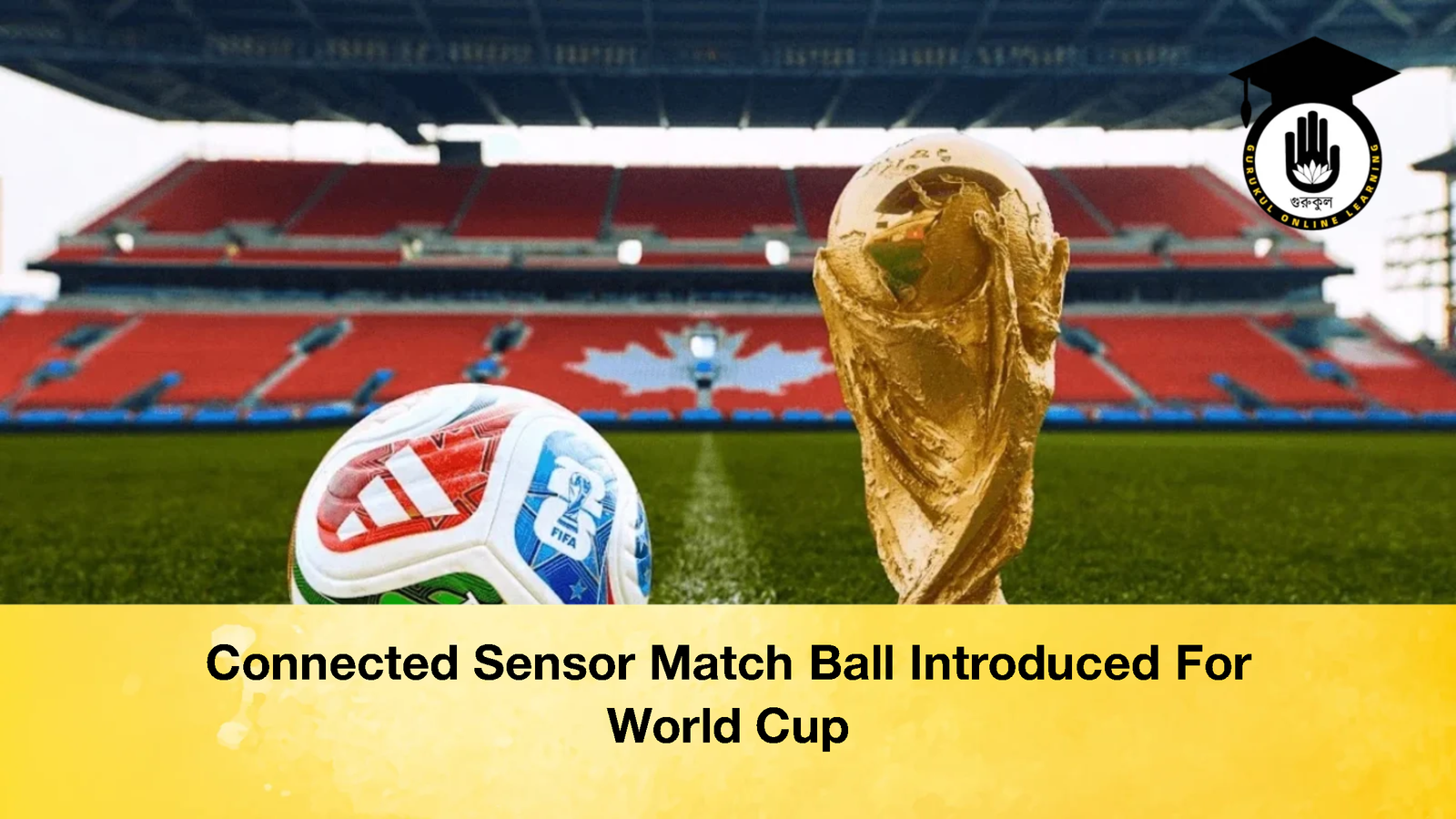
The upcoming FIFA World Cup, set to be hosted across the United States, Mexico, and Canada, will establish an unprecedented milestone as the first tournament in history to expand its format to 48 participating national teams. Alongside this structural evolution, the tournament is poised to transform football officiating through a major technological leap. The competition’s official match ball, developed by German sportswear manufacturer Adidas and named the “Adidas Trionda”, will feature an internal battery-powered microchip system specifically engineered to optimize the accuracy of Video Assistant Referee (VAR) operations.
Technical Specifications and Real-Time VAR Integration
The core of the Adidas Trionda’s technological architecture is a highly sophisticated 500 Hz connected-ball motion sensor securely suspended at the absolute geometric centre of the ball. This internal sensor system continuously tracks and transmits granular telemetry data—capturing every individual touch, velocity spike, aerial trajectory, and precise spatial movement at a continuous rate of 500 data transmissions per second.
This high-frequency tracking mechanism automatically broadcasts the collected movement data directly to the centralized VAR video operating room. By providing an instantaneous data synchronization link between the physical actions on the pitch and the digital officiating review software, the system drastically enhances the capabilities of match officials. This live data feed allows referees to make rapid, definitive, and highly accurate determinations regarding complex, high-stakes incidents. The real-time tracking will be utilized primarily to assess marginal offside positions, verify potential handball infractions, and resolve critical boundary-line crossings, effectively mitigating human error and eliminating prolonged review disruptions during match play.
Power Infrastructure and Hibernation Protocols
To ensure the uninterrupted functionality of the 500 Hz internal motion sensor, the tournament match balls undergo a systematic electrical power routine prior to competitive deployment. Adidas has manufactured custom-designed inductive wireless charging stations where the official match balls are docked to receive a full battery charge ahead of every individual fixture.
Official performance data released by the manufacturer indicates that a fully charged internal cell provides up to six hours of continuous active power and uninterrupted data transmission under intense match conditions. To prevent unnecessary energy depletion and manage thermal output, a proprietary power-management system has been integrated into the ball’s internal casing.
The moment a ball leaves the active field of play or remains stationary outside the boundaries, the motion sensor shifts automatically into a low-power “hibernation mode.” This automated power-saving protocol drastically prolongs the standby longevity of the internal electronic components, allowing a single charge to remain perfectly stable and preserved over multiple days of warehouse storage without needing an immediate return to the inductive charging dock.
Symbolic Visual Elements and Cultural Naming Concept
Beyond its internal electronic framework, the external aesthetics and graphic layouts of the Adidas Trionda pay deliberate tribute to the three co-hosting North American nations. The outer skin features a vibrant graphical composition utilizing a structured palette of red, green, and blue.
Expertly integrated into the geometric panelling of the outer casing are specific, recognizable cultural emblems: the maple leaf representing Canada, the traditional golden eagle symbolizing Mexico, and the iconic stars representing the United States. The naming convention of the ball reflects this unified multilateral partnership. The designation “Trionda” is derived from the conceptual translation of “Three Waves,” a creative title selected by the engineering team to capture both the fluid movement of the sport and the tri-nation alliance hosting the matches across the continent.
Commercial Distribution, Certification, and Consumer Tiers
The public unveiling of the official World Cup ball has triggered immediate market demand across international sporting goods channels. Adidas has structured the retail rollout of the Trionda into four distinct commercial tiers designed to meet the requirements of different competitive levels, ranging from professional leagues to casual grassroots football.
The premium “Pro” model is an exact structural replica of the connected match ball that will be used on the pitch by international players during the tournament. This top-tier version contains the identical integrated sensor hardware and carries the prestigious “FIFA Quality Pro” certification. This official endorsement confirms that the model has successfully completed rigorous laboratory evaluations governing uniform weight distribution, moisture absorption, aerodynamic shape retention, and precise circumference.
To guarantee broad accessibility for casual players and football fans who do not require internal electronic tracking capabilities, the standard “League” and “Club” iterations have been launched without the internal microchip, keeping retail pricing positioned between $25 and $60. The global distribution of all four models has been strategically scheduled to coincide with the opening phases of the pre-tournament promotional tour.