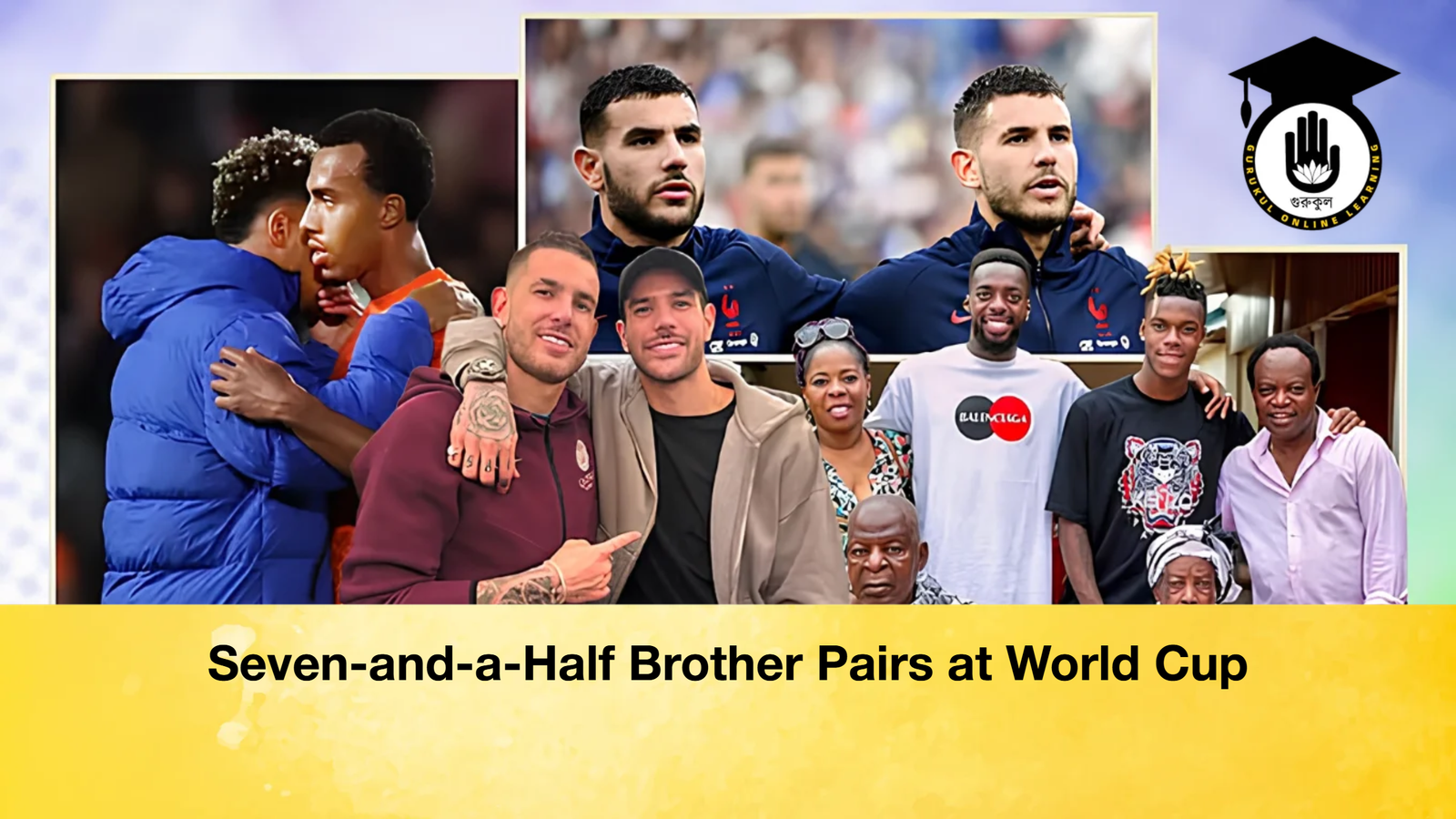
Throughout the history of the FIFA World Cup, the participation of brothers has occasionally occurred. However, direct on-pitch confrontations between siblings representing opposing nations remain exceptionally rare. Historically, only one pair of brothers has faced each other as adversaries in a World Cup fixture: Jérôme Boateng and Kevin-Prince Boateng. During the 2010 World Cup group stage, Germany defeated Ghana 1–0, a match featuring the younger brother, Jérôme, in the German line-up, whilst his elder brother, Kevin-Prince, represented Ghana. Four years later, during the 2014 World Cup group stage, the siblings faced each other once more under identical international alignments, resulting in a 2–2 draw.
Sibling Allocations in the Current Tournament
For the current edition of the World Cup, a total of eight pairs of brothers were initially projected to participate. However, due to a groin injury that ruled out Dutch defender Jurriën Timber, this figure has been reduced to “seven and a half pairs”—signifying that one sibling from a projected pair has been excluded from tournament play. Within this remaining contingent, four pairs are registered within the same national squads, whilst the other four pairs are divided across different national teams.
The four pairs representing identical national teams include Lucas Hernandez and Theo Hernandez for France. The squads of World Cup debutants Curaçao and Cape Verde also feature siblings: Leandro Bacuna and Juninho Bacuna represent Curaçao, while Laros Duarte and Deroy Duarte play for Cape Verde. Conversely, for the Netherlands, Quinten Timber remains in the squad without his twin brother, Jurriën, following the latter’s medical disqualification.
Siblings Representing Differing National Squads
The upcoming tournament features four specific pairs of brothers who have elected to represent different national teams based on heritage and citizenship:
Guéla Doué and Désiré Doué: Both brothers were born in France. The elder brother, Guéla, opted to play for the Ivory Coast—the birthplace of his father—whilst the younger brother, Désiré, represents France.
Inaki Williams and Nico Williams: Born in the Basque region of Spain, the 32-year-old elder brother, Inaki, plays for Ghana, the homeland of his parents. His 23-year-old brother, Nico, represents Spain.
Derrick Luckassen and Brian Brobbey: Ghanaian centre-back Derrick Luckassen’s brother, Brian Brobbey, is a backup striker for the Netherlands. The two share the same mother but have different fathers.
Harry Souttar and John Souttar: Born in Aberdeen, Scotland, to an Australian mother, the elder brother, John, plays for Scotland. The younger brother, Harry, obtained Australian citizenship seven years ago and serves as a centre-back for Australia.
The table below summarizes the distribution and status of the sibling pairs involved in the current World Cup cycle:
| Sibling Pair | National Team Alignment | Status / Tournament Context |
| Lucas Hernandez & Theo Hernandez | France (Shared) | Both selected in the definitive French squad. |
| Leandro Bacuna & Juninho Bacuna | Curaçao (Shared) | Part of the squad for Curaçao’s debut tournament appearance. |
| Laros Duarte & Deroy Duarte | Cape Verde (Shared) | Included in the official Cape Verde selection. |
| Quinten Timber & Jurriën Timber | Netherlands (Shared) | Jurriën Timber was ruled out due to a groin injury; Quinten remains. |
| Guéla Doué & Désiré Doué | Ivory Coast / France (Split) | Faced each other in a recent warm-up match. |
| Inaki Williams & Nico Williams | Ghana / Spain (Split) | Inaki represents Ghana; Nico represents Spain. |
| Derrick Luckassen & Brian Brobbey | Ghana / Netherlands (Split) | Maternal half-brothers representing different confederations. |
| John Souttar & Harry Souttar | Scotland / Australia (Split) | John represents Scotland; Harry plays for Australia. |
Migration Patterns and Squad Compositions
The World Cup is scheduled to commence on 11 June. Based on the official group stage schedules, there are no fixtures where these split sibling pairs will face each other directly on the pitch. However, a recent warm-up match between France and the Ivory Coast provided a preliminary meeting, ending in a 2–1 victory for France. Guéla Doué scored for the Ivory Coast during the match, while his brother, Désiré, observed the proceedings from the stands. Reflecting on the event, Guéla stated: “Yes, we had some banter before the match. But at the end of the day, we are one family and we are extremely happy for each other.”
The presence of these split sibling pairs underscores a broader demographic shift in international football. Over the past few decades, migration patterns to Europe have created a substantial talent pool for African nations, which are increasingly integrating diaspora-born players into their ranks. In current 26-man tournament squads for nations such as Algeria, Cape Verde, the Democratic Republic of Congo, Morocco, Senegal, and Tunisia, players born in Europe outnumber those born within the territories of their respective national associations.