
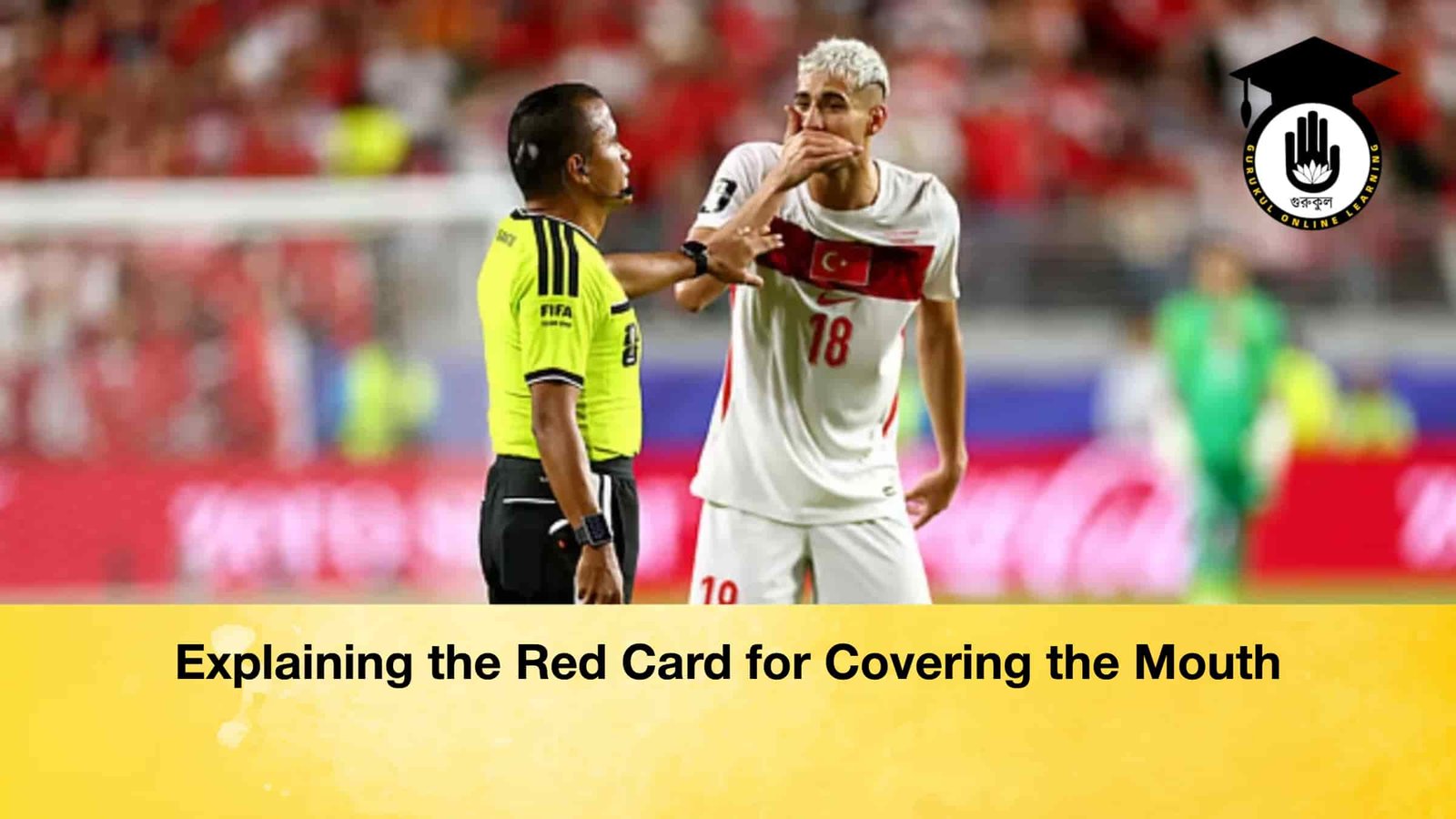

Paraguay midfielder Miguel Almirón made football history during his side’s World Cup fixture against Turkey, becoming the first player to be sent off under a newly implemented directive targeting players who cover their mouths on the pitch. Almirón committed no dangerous tackle, delivered no elbow, and did not exceed boundaries whilst arguing with the match official. Nevertheless, he was shown a straight red card by El Salvadoran referee Iván Barton during first-half stoppage time, leaving both the player and spectators in visible astonishment.
The dismissal occurred after Almirón covered his mouth whilst speaking during an altercation with Turkish defender Mert Müldür, who subsequently complained to the referee. This act directly violated the stringent regulatory guidelines enforced for the 2026 World Cup, which mandate severe disciplinary action for concealing speech during on-field disputes.
The Origin and Purpose of the Regulation
While tactical whispering and psychological gamesmanship have long been part of football, the practice of deliberately hiding one’s mouth with a shirt or hand has drawn scrutiny from football’s lawmakers. The rule was catalysed by a controversial incident in February during a UEFA Champions League fixture.
In that match, Benfica’s Argentine winger Gianluca Prestianni covered his mouth with his jersey whilst speaking to Real Madrid’s Brazilian forward Vinícius Júnior. Although lip-reading and television cameras could not initially verify the remarks, allegations of racial abuse surfaced. Following a formal investigation, Prestianni was found guilty of homophobic behaviour and handed a six-match ban by UEFA.
Because modern broadcasting captures almost every moment on the pitch, concealing the mouth prevents authorities from verifying whether racist, discriminatory, or hateful language has been used. According to FIFA President Gianni Infantino, the rule serves as a deterrent. Infantino stated:
“If there is nothing to hide, there is no need to cover the mouth.”
Implementation and Referee Discretion
The International Football Association Board (IFAB) has clarified that a red card is not automatically brandished the moment a player covers their mouth. Instead, match officials assess each situation individually. If a referee deems the behaviour suspicious, provocative, or contrary to the spirit of the game, they hold the authority to issue a straight red card.
| Date of Implementation | Key Initiating Incident | Governing Bodies Involved | Primary Objective | Maximum Penalty |
| 2026 World Cup | Prestianni vs Vinícius Jr. (Feb 2026) | FIFA & IFAB | Prevention of hidden discriminatory or hateful abuse | Straight Red Card |