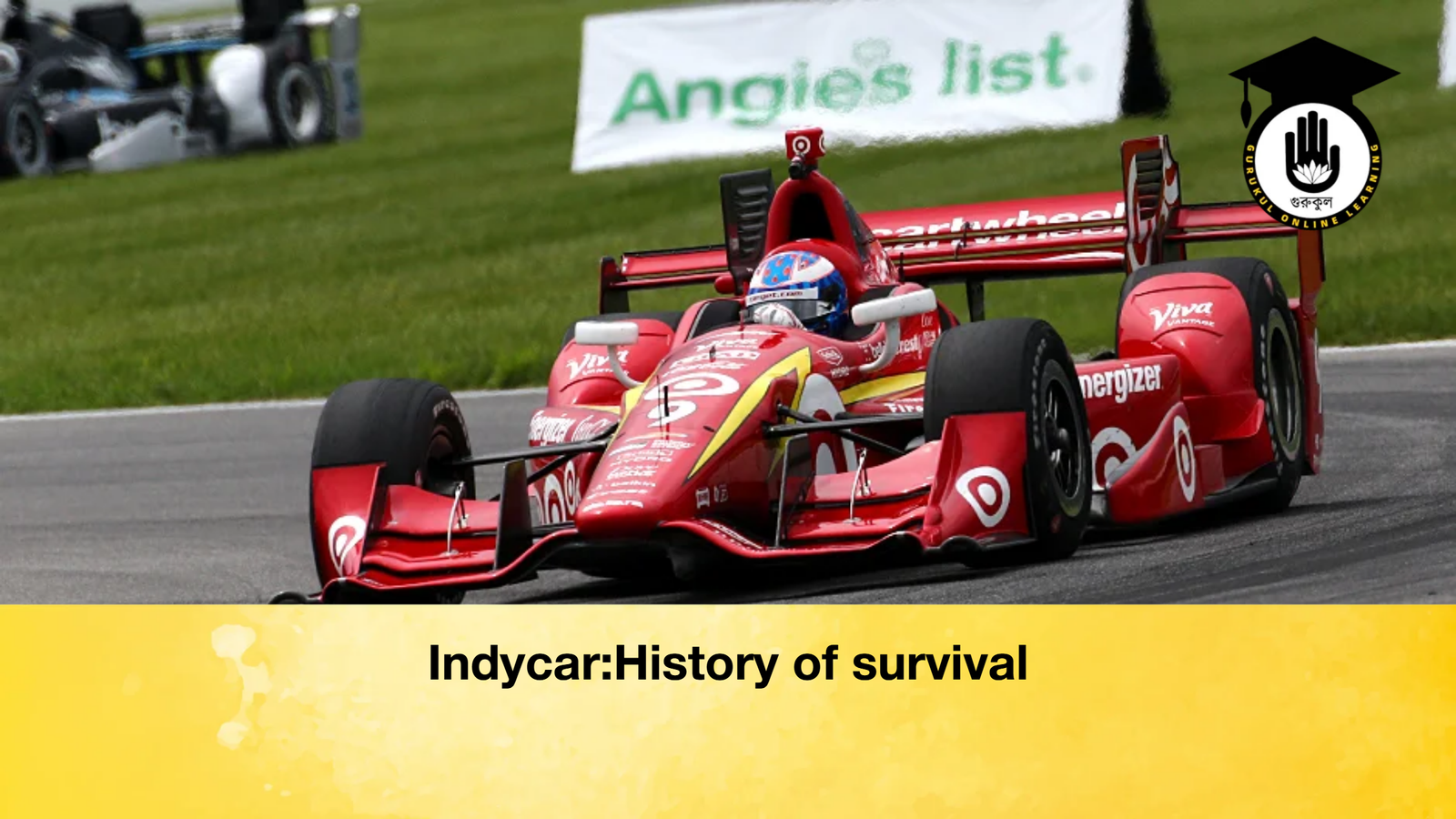
Indycar:History of survival

Table of Contents
ToggleFrom Roadsters to Reunification
A previous feature on the Indianapolis Motor Speedway prompted a deeper question: how did IndyCar racing itself evolve? The answer is a story of innovation, rivalry, tragedy and eventual reunification—one that reshaped American open-wheel competition over seven decades.
Post-War Foundations
In the years following the Second World War, American “Indy” racing was defined by front-engined roadsters competing primarily on oval tracks. The developmental ladder comprised sprint cars and midgets, feeding talent into the national championship. By the late 1960s, however, the sport had undergone a technological revolution. Rear-engined, Formula-style machinery—pioneered in part by British constructors—rendered the traditional roadster obsolete.
From 1955 to 1978, the United States Auto Club (USAC), established by Speedway owner Tony Hulman, sanctioned top-level Indy car racing. During this period, speeds escalated sharply, innovation flourished and costs soared. Although ovals remained central, select road courses were introduced to broaden the series’ appeal. Dirt tracks were dropped from the national championship in 1970, signalling a decisive shift towards modernity.
Crisis and the Birth of CART
By the mid-1970s, spiralling expenses strained traditional entrants. New powerhouse teams—such as those led by Roger Penske and Bruce McLaren—brought professional road-racing expertise and heightened expectations. Friction with USAC management intensified amid declining attendances outside Indianapolis and limited television exposure.
The situation worsened following Hulman’s death in 1977 and a devastating 1978 plane crash that claimed the lives of eight USAC officials. By year’s end, leading team owners had formed Championship Auto Racing Teams (CART), effectively assuming control of the championship.
The “Split” Era (1982–2003)
For a time, stability returned. CART ran the national championship, while USAC continued to sanction the Indianapolis 500 as a stand-alone event contributing points to the CART title.
In 1994, Tony George founded the Indy Racing League (IRL), launching a rival championship in 1996 with the Indianapolis 500 as its centrepiece. A controversial rule granting automatic Indy 500 entries to IRL teams led CART outfits to boycott the 1996 race—marking the beginning of a protracted schism in American open-wheel racing.
Legal disputes over the “IndyCar” name followed. CART rebranded its series as Champ Car, while the IRL eventually secured the IndyCar identity in 2003. Financial pressures later drove major teams and manufacturers to the IRL, weakening Champ Car irreparably.
Reunification and the Penske Stewardship
In 2008, the IRL absorbed Champ Car, restoring a single premier series. By 2011, the championship operated fully under the IndyCar Series banner.
A further landmark occurred in 2020 when the IndyCar Series and the Indianapolis Motor Speedway were acquired by Penske Entertainment Corp., a subsidiary of Penske Corporation. The move placed one of the sport’s most influential figures, Roger Penske, at the helm of both its governing body and its most iconic venue—bringing a tumultuous chapter in IndyCar history to a close.
Key Milestones in IndyCar History
| Year | Event | Significance |
|---|---|---|
| 1955 | USAC assumes sanctioning | Centralised governance of Indy racing |
| 1970 | Dirt tracks removed | Modernisation of championship |
| 1978 | Formation of CART | Breakaway by leading team owners |
| 1996 | IRL launches | Beginning of open-wheel “split” |
| 2008 | Champ Car absorbed | Reunification of major series |
| 2020 | Penske acquisition | Unified commercial and sporting control |
From thunderous roadsters to cutting-edge single-seaters, IndyCar’s journey has been anything but straightforward. Yet through division and renewal, the Indianapolis 500 has remained its unifying crown jewel, anchoring a championship that continues to balance heritage with progress.

Sufi Arshan Aziz Faruq | Contributor | sportsgoln.com
Sufi Aarshan Aziz Faruq is a car enthusiast
Follow Me