
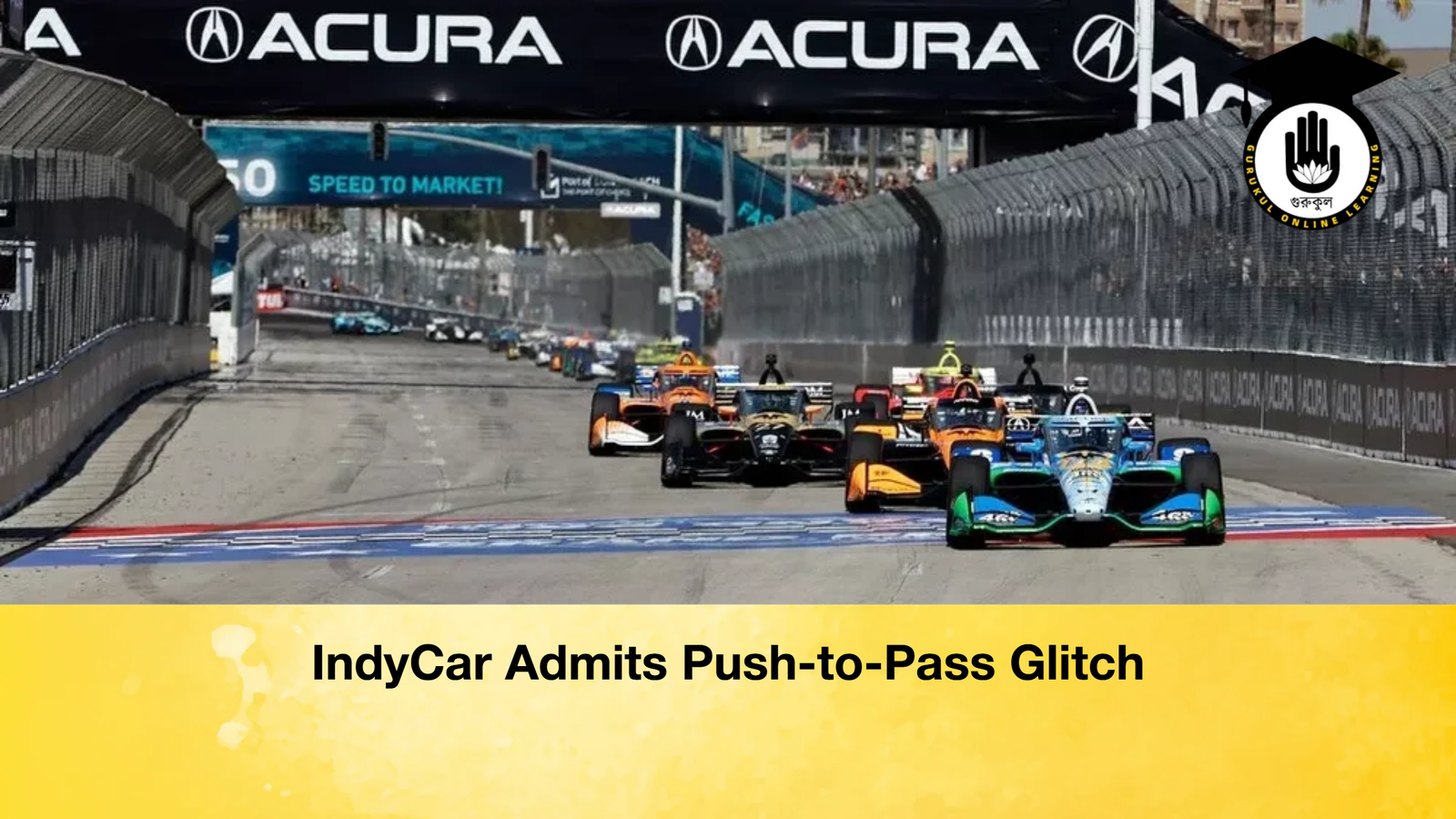

Officials from the IndyCar Series have confirmed that a software malfunction affected the deployment of the Push-to-Pass system during the closing stages of the Grand Prix of Long Beach, but have elected not to impose any penalties.
The issue arose during the race’s only restart on Lap 61 of 90. Under normal regulations, the Push-to-Pass system—a temporary horsepower boost designed to aid overtaking—should not be available until drivers cross the designated alternate start/finish line following a restart. However, due to a technical fault, the system was prematurely activated, allowing all competitors access before the permitted point.
In total, 12 drivers engaged the system during this unintended window. Despite the potential competitive implications, post-race analysis concluded that the incident had minimal effect on the overall classification.
Push-to-Pass Incident Summary
| Category | Details |
|---|---|
| Race | Grand Prix of Long Beach |
| Lap of Restart | Lap 61 |
| System Affected | Push-to-Pass |
| Cars Using Early Activation | 12 |
| Notable Overtake | Marcus Armstrong on Santino Ferrucci |
| Penalties Issued | None |
The only position change directly linked to the early activation involved Marcus Armstrong overtaking Santino Ferrucci. Crucially, officials determined that both drivers had activated Push-to-Pass at roughly the same time, effectively neutralising any unfair advantage.
In an official statement, IndyCar clarified that responsibility for the malfunction lies with the series itself rather than the teams or drivers. The governing body emphasised that competitors had no reasonable means of identifying the error in real time, and therefore could not be held accountable.
“The burden of the rule rests with IndyCar to ensure that the software operates correctly,” the statement read. “IndyCar Officiating does not consider this a team or driver infraction.”
This decision stands in contrast to an earlier controversy during the 2024 season, when Team Penske was penalised after managing to exploit Push-to-Pass availability during restricted periods. In that instance, the infringement was deemed avoidable and within team control—unlike the system-wide fault seen at Long Beach.
Despite the absence of sanctions, IndyCar has acknowledged the seriousness of the issue. Engineers and officials are currently conducting a detailed review of the failure, with a view to implementing safeguards to prevent a recurrence. Potential measures may include additional system redundancies or stricter validation protocols before restarts.
While the glitch ultimately had limited impact on the race outcome—won by Alex Palou—it nevertheless highlights the increasing reliance on complex electronic systems within modern motorsport. Even minor faults can raise questions of sporting fairness, particularly in tightly contested championships where margins are measured in fractions of a second.
For now, the results stand unchanged, but the incident serves as a timely reminder that in contemporary racing, technological precision is just as vital as driver skill.