
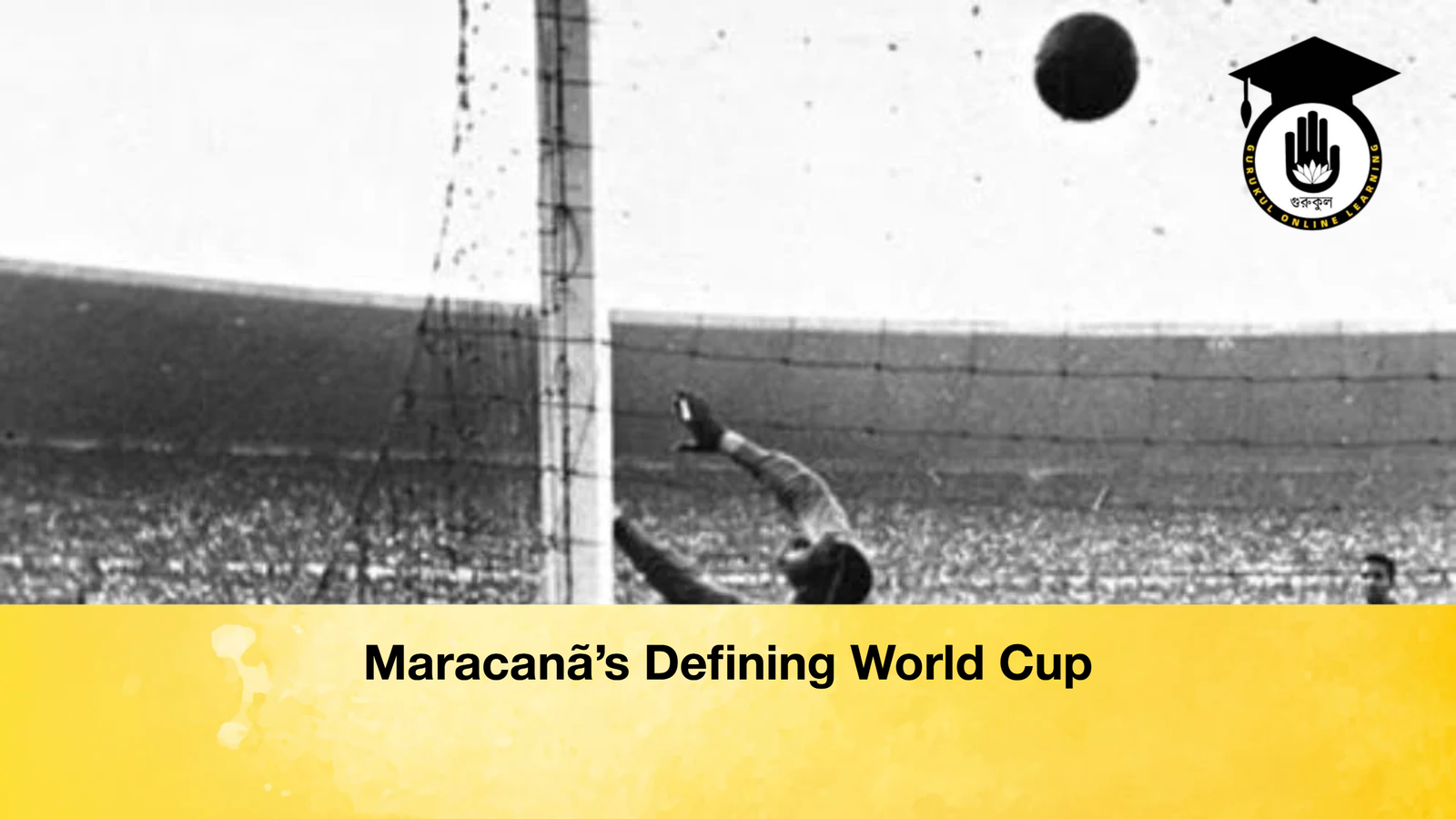

The 1950 FIFA World Cup marked the return of international football after a 12-year interruption caused by the Second World War. The tournaments scheduled for 1942 and 1946 were cancelled because of the global conflict, leaving football absent from the international stage during one of the most destructive periods in modern history. When the competition resumed in 1950, Brazil hosted the tournament, presenting it as a symbol of recovery and international unity in the post-war era.
The competition was organised under the leadership of Jules Rimet, whose stewardship helped preserve the continuity of the World Cup during wartime. The tournament trophy, later known as the Jules Rimet Trophy, became an enduring symbol of football’s survival through global instability.
Several nations did not participate in the 1950 edition despite initial involvement in qualification. Scotland declined participation after failing to meet conditions set by its football authorities. Turkey withdrew because of travel and financial complications. Argentina stayed away amid internal disputes within its football administration. Post-war conditions also kept Germany absent, while Soviet Union did not enter the tournament.
Brazil invested heavily in preparation for the event. In Rio de Janeiro, construction work continued on the vast Maracanã Stadium, which was designed to become one of the largest football venues in the world. Although parts of the structure remained unfinished during the competition, it still hosted unprecedented crowds. Contemporary reports and historical estimates indicate that nearly 200,000 spectators attended the decisive match between Brazil and Uruguay on 16 July 1950.
Key Facts: 1950 FIFA World Cup
| Category | Details |
|---|---|
| Host nation | Brazil |
| Tournament dates | 24 June – 16 July 1950 |
| Participating teams | 13 |
| Champions | Uruguay |
| Runners-up | Brazil |
| Top scorer | Ademir (9 goals) |
| Final venue | Maracanã Stadium |
| Decisive match | Brazil 1-2 Uruguay |
Brazil entered the tournament as the strongest attacking side. Players such as Ademir, Zizinho and Jair produced dominant performances throughout the final stage. Brazil defeated Sweden 7-1 and Spain 6-1, results that strengthened public confidence that the host nation would secure its first World Cup title.
Elsewhere, England arrived with several prominent players, including Stanley Matthews, Tom Finney and Billy Wright. However, England suffered one of the competition’s most famous upsets when they lost 1-0 to the United States after a goal from Joe Gaetjens.
Italy also entered the tournament under difficult circumstances. Much of the national side had been affected by the 1949 Superga air disaster, in which several players from the successful Torino team lost their lives.
The decisive match of the tournament took place at Maracanã on 16 July 1950. Under the format used at the time, the World Cup winner was determined through a final group rather than a single knockout final. Brazil required only a draw against Uruguay to become champions.
Brazil took the lead early in the second half through Friaça, prompting celebrations throughout the stadium. Uruguay responded with an equaliser from Juan Alberto Schiaffino before Alcides Ghiggia scored the winning goal from the right side of the penalty area. Uruguay secured a 2-1 victory and claimed their second World Cup title.
The result became known in Brazilian football history as the “Maracanazo”, reflecting the scale of the defeat for the host nation. Uruguay captain Obdulio Varela later stated that his team understood Brazil were favourites but believed they could compete by maintaining discipline and determination throughout the match.
The 1950 World Cup remains one of the most historically significant tournaments in football history, both for its post-war context and for the dramatic conclusion witnessed at Maracanã Stadium.