
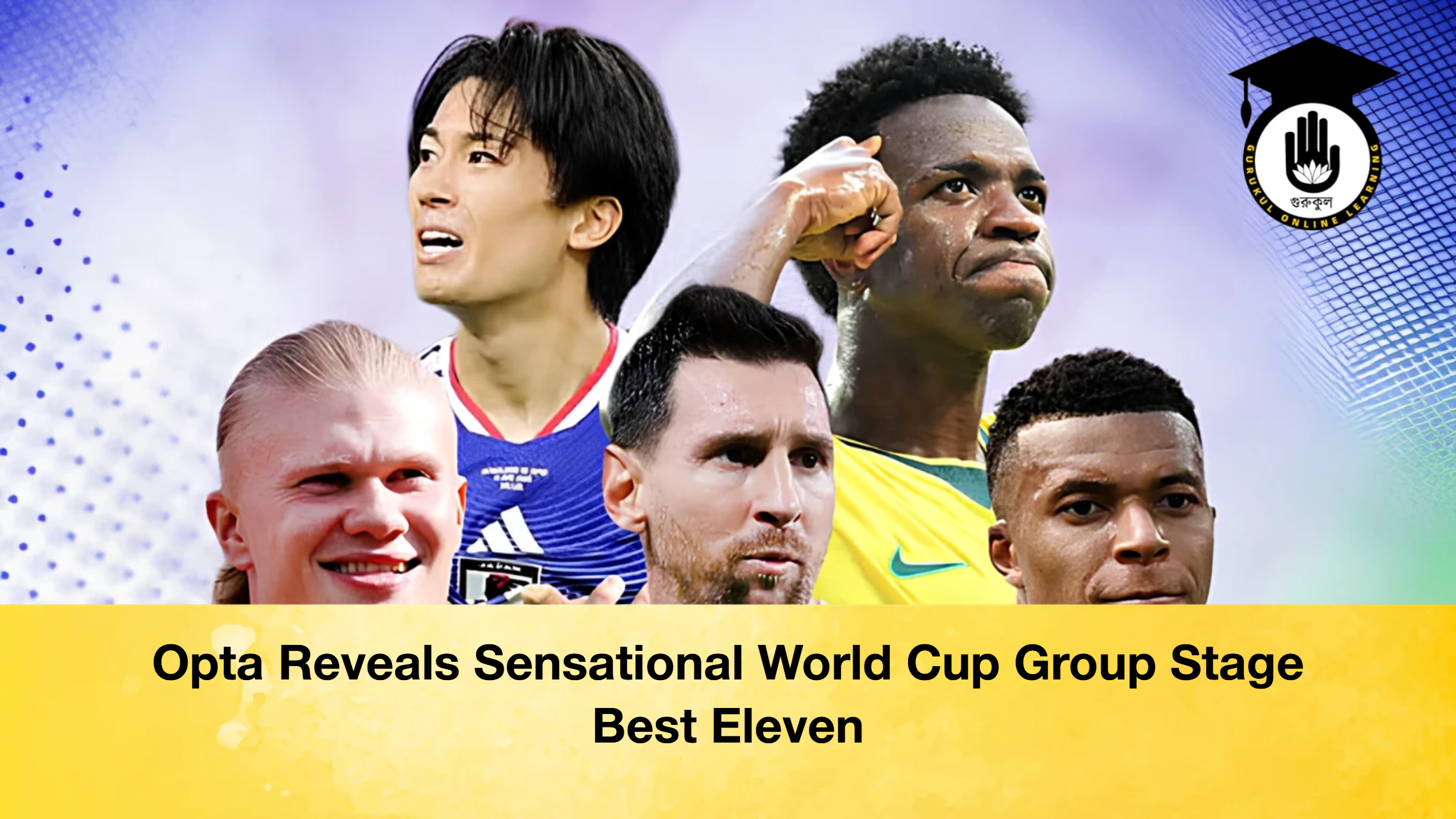

The initial phase of the World Cup has drawn to a dramatic close after 72 fiercely contested group-stage fixtures. As the tournament transitions into the high-stakes knockout rounds, sports data analytics giants Opta Analyst have synthesised thousands of performance metrics to name their definitive team of the group stage. The selection seamlessly blends legendary global icons with unexpected breakout stars who have taken the tournament by storm.
The Defensive Guardians
Between the posts, Cape Verde’s 40-year-old veteran goalkeeper, Vozinha, claims the coveted shirt. He delivered a masterful display in the opener against Spain, and despite conceding twice against Uruguay, he remained an unyielding presence. His stellar form continued into the final group match against Saudi Arabia. Only Spain’s Unai Simón recorded more clean sheets during the group phase.
At right-back, Ghana’s Marvin Senaya produced arguably the finest full-back performance of the tournament during his side’s clash with England. Senaya topped the group-stage charts with 18 tackles and triumphed in 24 out of 38 individual duels. His efficacy in one-on-one defending was particularly striking, boasting a 72 per cent success rate in “true tackles”.
The centre of defence features an intriguing partnership between youth and experience. Cape Verde’s fairytale run owed everything to Diney Borges, who ranked second across the tournament with 31 clearances. Winning 68 per cent of his 20 contested duels, Borges proved to be an indispensable asset. Alongside him is Spain’s 19-year-old prodigy Pau Cubarsí. The teenager displayed maturity well beyond his years, misplacing just five of his 294 passes. His ability to build play from the back was highlighted by his 39 line-breaking passes, putting him fifth amongst all centre-backs.
Completing the backline on the left flank is Japan’s Keito Nakamura. Known for his explosive pace and offensive positioning, Nakamura scored his nation’s opening goal against the Netherlands and engineered the breakthrough against Tunisia. He completed five of his seven attempted dribbles and was directly involved in nine attacking sequences.
The Engine Room
The midfield unit boasts a balanced mix of raw power and creative ingenuity. Weston McKennie operated in an advanced role for the United States, driving through opposition defensive lines with trademark physicality. The American playmaker created seven goal-scoring opportunities from open play, placing him firmly among the elite creative forces of the tournament.
Partnering McKennie is Ecuador’s tireless anchor, Pedro Vite. Currently plying his trade for Mexican club Pumas, Vite proved to be an absolute revelation. He sat third in the tournament tackle rankings with 14 and registered 23 possession recoveries—trailing only Granit Xhaka and Rodrigo Bentancur. His distribution was equally impressive, completing 234 passes and creating eight distinct chances from open play.
A Devestating Forward Line
The attacking department features some of the most recognisable names in world football. On the right wing, Lionel Messi has arguably been the player of the tournament so far. The Argentine magician made history by becoming the first player to score in seven consecutive World Cup matches, netting six goals in just three group games. On the opposite flank, Brazil’s Vinícius Júnior enjoyed a flawless group stage, scoring in all three matches. Historically, every time Brazil have seen a player score in every group game, they have gone on to lift the trophy—a statistic that will surely delight Seleção fans.
Up front, the strike partnership is terrifyingly clinical. Norway’s Erling Haaland found the net four times in just two appearances. His non-penalty Expected Goals (xG) metric reached an exceptional 2.68, trailing only Vinícius Júnior. Haaland also displayed ruthless efficiency, converting 40 per cent of his shots into goals.
Partnering Haaland is the utterly irrepressible Kylian Mbappé. The French talisman became only the fourth player in history to score two or more goals in three consecutive World Cup games. With 16 career World Cup goals, Mbappé is rapidly closing in on the all-time tournament records. His versatility was on full display in the final group match against Norway, where he turned provider to create two goals for Ousmane Dembélé.
Opta’s Team of the Group Stage Statistical Leaderboard
| Player Name | Position | Nationality | Key Tournament Statistic |
| Vozinha | Goalkeeper | Cape Verde | Second-highest clean sheets in group stage |
| Marvin Senaya | Right-back | Ghana | 18 tackles made; 72% true tackle success rate |
| Diney Borges | Centre-back | Cape Verde | 31 ball clearances; 68% duel success rate |
| Pau Cubarsí | Centre-back | Spain | 289 completed passes out of 294 attempted |
| Keito Nakamura | Left-back | Japan | 9 attacking involvements; 5 successful dribbles |
| Weston McKennie | Central Midfield | United States | 7 goal-scoring opportunities created from open play |
| Pedro Vite | Central Midfield | Ecuador | 23 possession recoveries; 234 passes completed |
| Lionel Messi | Right Wing | Argentina | 6 goals in 3 matches; scored in 7 consecutive World Cup games |
| Vinícius Júnior | Left Wing | Brazil | Scored in 100% of group stage matches; 3.51 xG rating |
| Erling Haaland | Striker | Norway | 4 goals in 2 matches; 40% shot conversion rate |
| Kylian Mbappé | Striker | France | 16 career World Cup goals; assisted 2 goals against Norway |


