
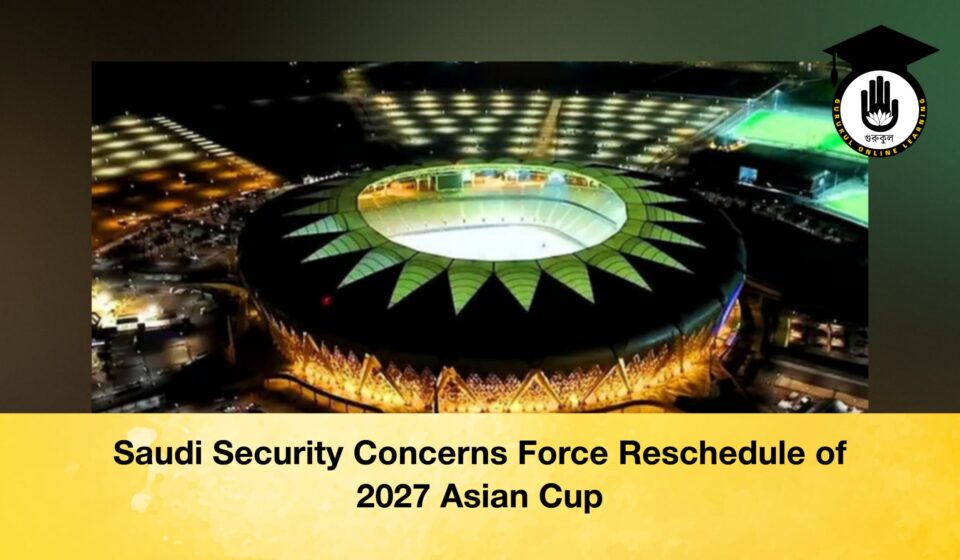

A deteriorating security environment in the Middle East has forced a major overhaul of the international sporting calendar, with the 2027 Asian Cup postponed following a wave of deadly attacks in host nation Saudi Arabia. Twenty-four nations across the continent had been finalizing their preparations for Asia’s premier football tournament, but escalating geopolitical tensions have rendered the original timetable untenable.
Organisers originally scheduled the tournament to run from 7 January to 5 February 2027. Under the revised schedule released by tournament officials, the flagship competition will now kick off on 23 December 2027 and conclude on 21 January 2028.
The Asian Football Confederation confirmed the date changes in an official statement, citing severe operational obstacles caused by regional instability. Football’s continental governing body highlighted significant logistical complications and severe disruption to international transport routes as primary catalysts for the decision. Officials have submitted the rescheduled dates to football’s world governing body, FIFA, for formal ratification.
Safety anxieties heightened significantly across the Gulf region following a devastating missile strike targeted at Riyadh’s main airport last October. The attack, launched by Yemen’s Houthi movement, claimed 13 lives and left more than 300 people injured, exposing critical vulnerabilities in local infrastructure and raising immediate alarms over the security of visiting international delegations.
The geopolitical unrest in Saudi Arabia has created ripples well beyond the football pitch, disrupting the nation’s broader international sports schedule. Riyadh was set to host the prestigious Six Kings Slam, a high-profile exhibition tennis tournament featuring elite global talent. However, with authorities unable to promise adequate safety guarantees for foreign players and traveling fans, organizers were left with no option but to call off the event entirely.
Shifting the Asian Cup by nearly a year creates a complex chain reaction for participating national associations. Team managers must now overhaul their training schedules, rewrite travel logistics, and renegotiate hotel bookings across host cities. Host nation organizers face a similar challenge as they recalibrate venue readiness and security protocols to adapt to the new dates, ensuring that Asia’s centerpiece football event can proceed safely.