Genesis Focused on Reliability First

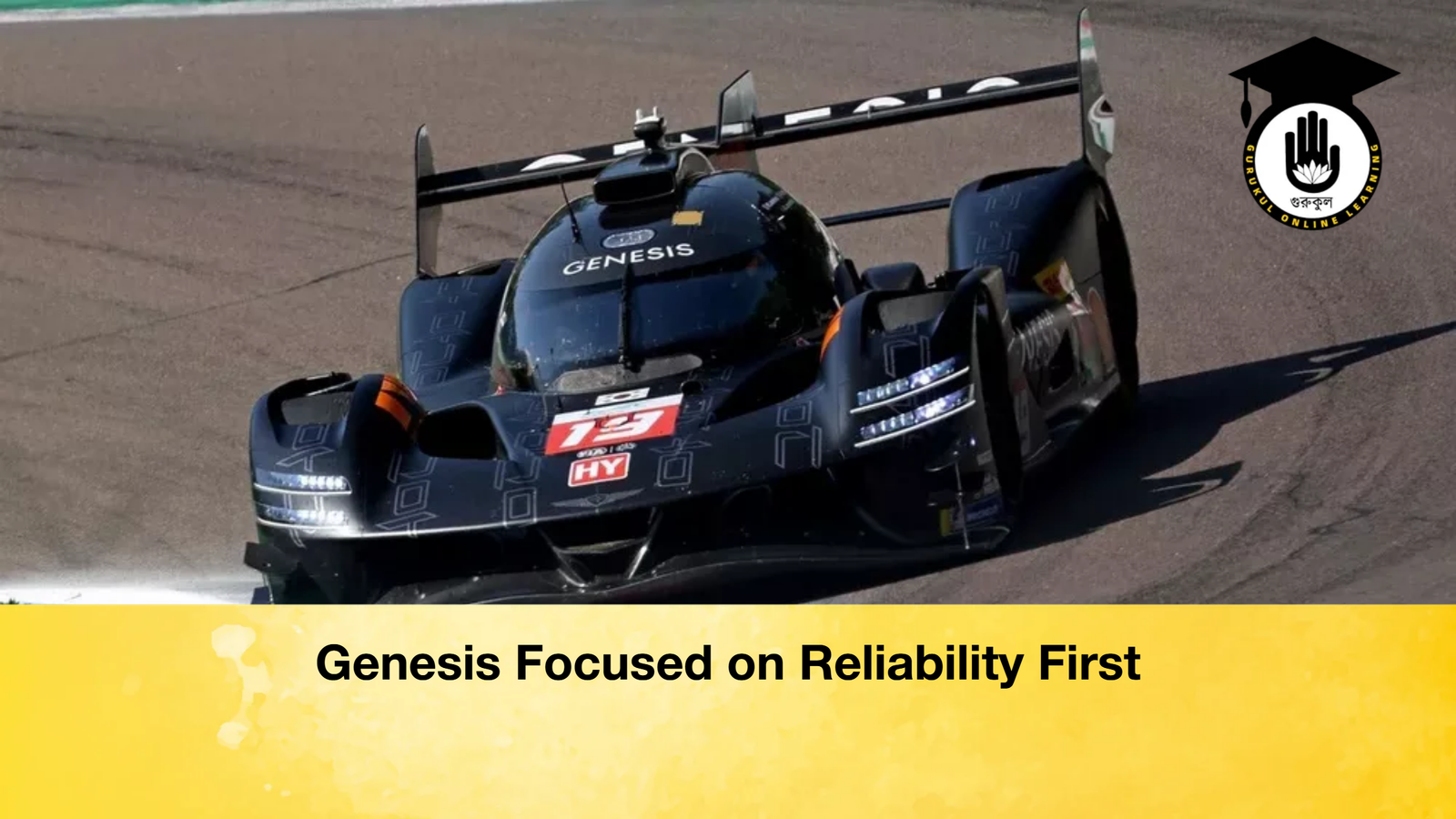
The competitive debut of the Genesis Magma Racing LMDh programme is set to be judged less by outright pace and more by something far more fundamental: whether it simply reaches the finish.
At this weekend’s Imola round of the FIA World Endurance Championship, expectations for the new GMR-001 hypercar are being carefully managed. While the car has impressed internally with its reliability, team insiders are unanimous that performance comparisons at this stage would be premature at best—and misleading at worst.
No benchmark, no expectations
Unlike established rivals, Genesis arrives without historical performance data. In LMDh and LMH competition, early Balance of Performance assessments are heavily influenced by prior race references. With no such baseline, the new entrant is effectively operating blind in the competitive pecking order.
As a result, rivals with established programmes are almost certain to enjoy more favourable initial BoP positioning, leaving Genesis with little expectation of immediate competitiveness on lap time.
Team principal Cyril Abiteboul has been clear that this is not a concern.
“We are not here to chase lap times yet. We are here to build understanding, procedures and reliability,” he said. “If we leave Imola with both cars intact, that is success.”
Genesis GMR-001 preparation snapshot
| Category | Status |
|---|---|
| Test mileage | ~25,000 km |
| Major reliability issues | None reported at Imola week |
| Factory focus | Procedures & endurance execution |
| Performance target (Imola) | Finish race |
| Competitive expectation | Low (new entrant BoP disadvantage) |
A deliberately cautious approach
Genesis has invested heavily in preparation, recruiting experienced personnel from established LMDh programmes and completing extensive private testing across Europe. The GMR-001 has already accumulated around 25,000 kilometres of running, a figure that reflects both ambition and caution.
Abiteboul described the current phase as “the easy part”, noting that real pressure cannot be replicated outside of race conditions.
“You cannot simulate stress, traffic, or the consequences of mistakes in testing,” he explained. “Endurance racing is about execution when everything matters.”
The human factor in endurance racing
For drivers, including Pipo Derani, the challenge is as much psychological as technical.
“In testing, you always have time to fix things,” he said. “In a race, you don’t. That changes everything.”
He also highlighted traffic management as an entirely new learning curve:
“How the car behaves around GT traffic or Hypercars is something we are only just discovering.”
A “healthy” foundation
Despite its newcomer status, Genesis has already earned internal confidence for the GMR-001’s balance and drivability. Dani Juncadella noted that driver feedback across both crews has been remarkably consistent.
“That is a very strong sign,” he said. “It means the car is logical and responds correctly to changes.”
Abiteboul echoed that sentiment, calling the car “healthy” and predictable—two qualities often more valuable than outright speed in a debut season.
Imola as a reality check
The Autodromo Enzo e Dino Ferrari is expected to provide an uncompromising examination of the package. Its aggressive kerbs, uneven surface and high compression zones are a far cry from the smoother circuits used in development.
Derani admitted it may expose weaknesses, but also accelerate learning.
“Imola will teach us more in one weekend than months of testing,” he said.
Patience over performance
Despite optimism within the garage, the message from Genesis remains consistent: patience.
Abiteboul summarised the philosophy succinctly:
“If people are happy, working together and learning, the lap time will come. Not tomorrow—but it will come.”
For now, Genesis is not racing to win. It is racing to arrive.