
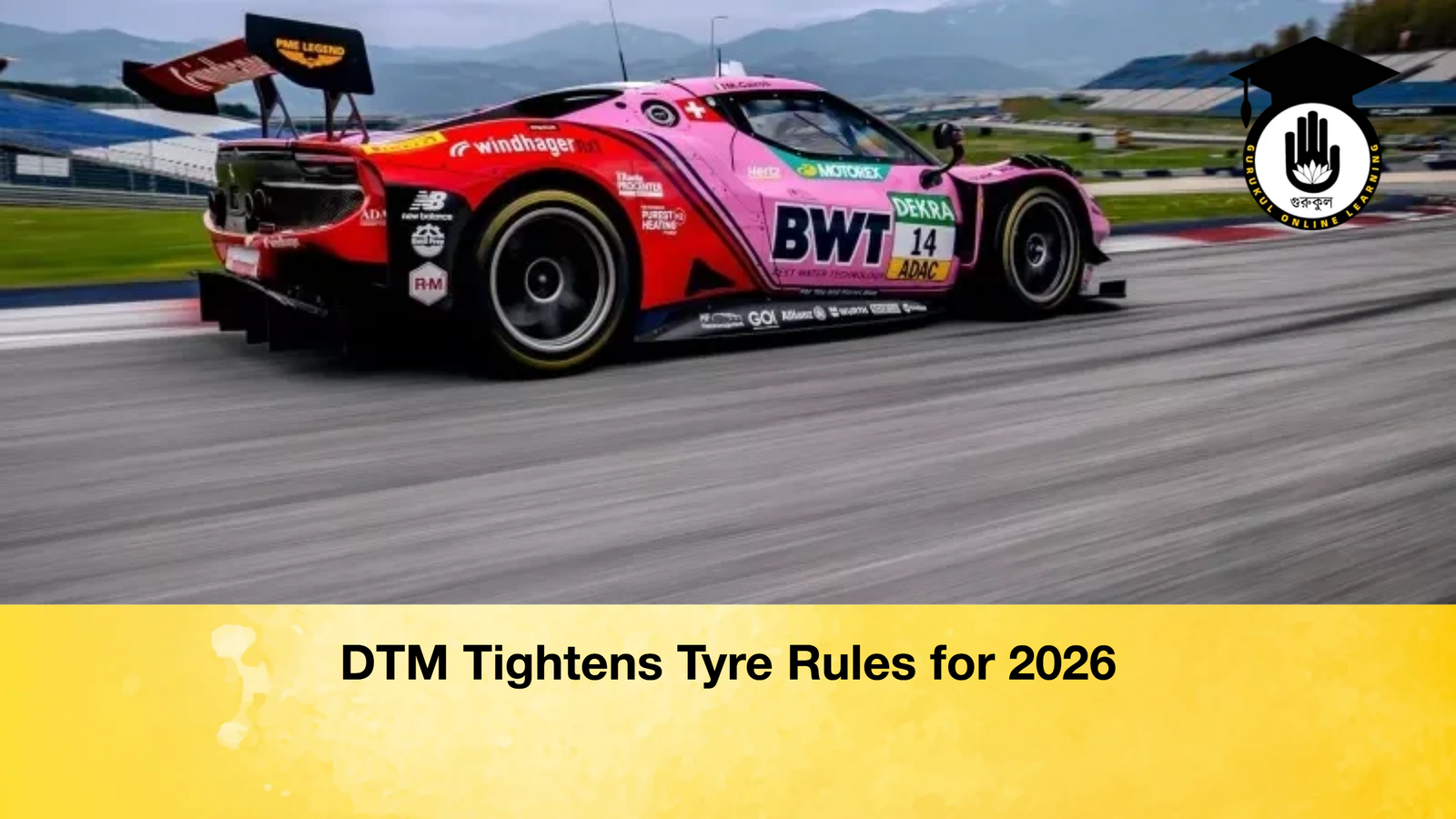
DTM Tightens Tyre Rules for 2026

The DTM has unveiled a comprehensive revision of its tyre regulations for the 2026 season, introducing a more controlled and strategic allocation system just days before the opening round at Red Bull Ring. Central to the overhaul are two major developments: a dual tyre-pool structure and the closure of a controversial loophole informally dubbed the “René Rast rule”.
Table of Contents
ToggleExclusive tyre and dual-pool strategy
At the heart of the changes is a bespoke championship tyre supplied by Pirelli. Designed specifically for DTM competition, this tyre promises improved lap-time performance and increased degradation, encouraging more dynamic racing. Crucially, all tyres must be returned to the supplier, enabling stricter oversight of usage and limiting opportunities for unsanctioned testing.
Rather than allocating a fixed seasonal quota per car, organisers have opted for a two-pool system:
- Race-weekend pool: distributed per event, broadly unchanged from previous years
- Testing and practice pool: managed via a season-long “account” per car
This approach forces teams to balance immediate performance against long-term resource management.
Race-weekend tyre allocation
| Circuit Category | Tyre Sets per Event |
|---|---|
| High-demand tracks (e.g. Circuit Zandvoort, Sachsenring, season opener/finale) | 4 sets |
| Standard circuits (e.g. Norisring, Lausitzring) | 3 sets |
Pit-stop regulations remain unchanged: one mandatory stop on Saturdays and two on Sundays.
A rolling tyre account
The most significant shift concerns testing and practice tyres. Each car accrues a limited number of tyre sets in a running account, which is credited incrementally across the season. Tyres used are deducted, and teams are prohibited from exceeding their allocation.
Strict usage caps apply per session:
| Session Type | Maximum New Tyre Sets |
|---|---|
| Free Practice | 3 sets |
| Official Test Day | 6 sets |
| Private Test Day | 4 sets |
Teams may still deploy “carry-over” tyres from previous sessions, but logistical limits are tight: no more than five sets per car may be retained at any time. Surplus tyres must be returned to Pirelli and are permanently removed from circulation.
This framework introduces a tactical dimension—teams that exhaust their supply early in the season may struggle later, particularly during critical championship rounds.
Anti-abuse measures and testing controls
To prevent misuse or a potential tyre black market, additional safeguards have been implemented. Even for officially sanctioned private tests, extra tyres must be returned before the next event. Meanwhile, testing remains restricted to five days per car on DTM circuits, though limited running on non-championship tracks is still permitted using allocated tyres.
Closing the “René Rast rule”
A notable regulatory refinement addresses a loophole exploited during a 2025 race at the Nürburgring. On that occasion, René Rast’s team managed to gain an unintended advantage by replacing a damaged wheel while retaining access to an additional tyre set.
Under the revised rules, any discarded wheel and tyre combination must now be removed from the allocation entirely, eliminating the possibility of gaining surplus tyres through such manoeuvres.
A more strategic championship
Taken together, the new regulations signal a clear shift in philosophy. By tightening control over tyre usage and closing regulatory grey areas, DTM aims to create a more competitive and strategically nuanced championship. Success in 2026 will depend not only on outright pace, but also on how effectively teams manage one of motorsport’s most critical resources.

Sufi Arshan Aziz Faruq | Contributor | sportsgoln.com
Sufi Aarshan Aziz Faruq is a car enthusiast
Follow Me