
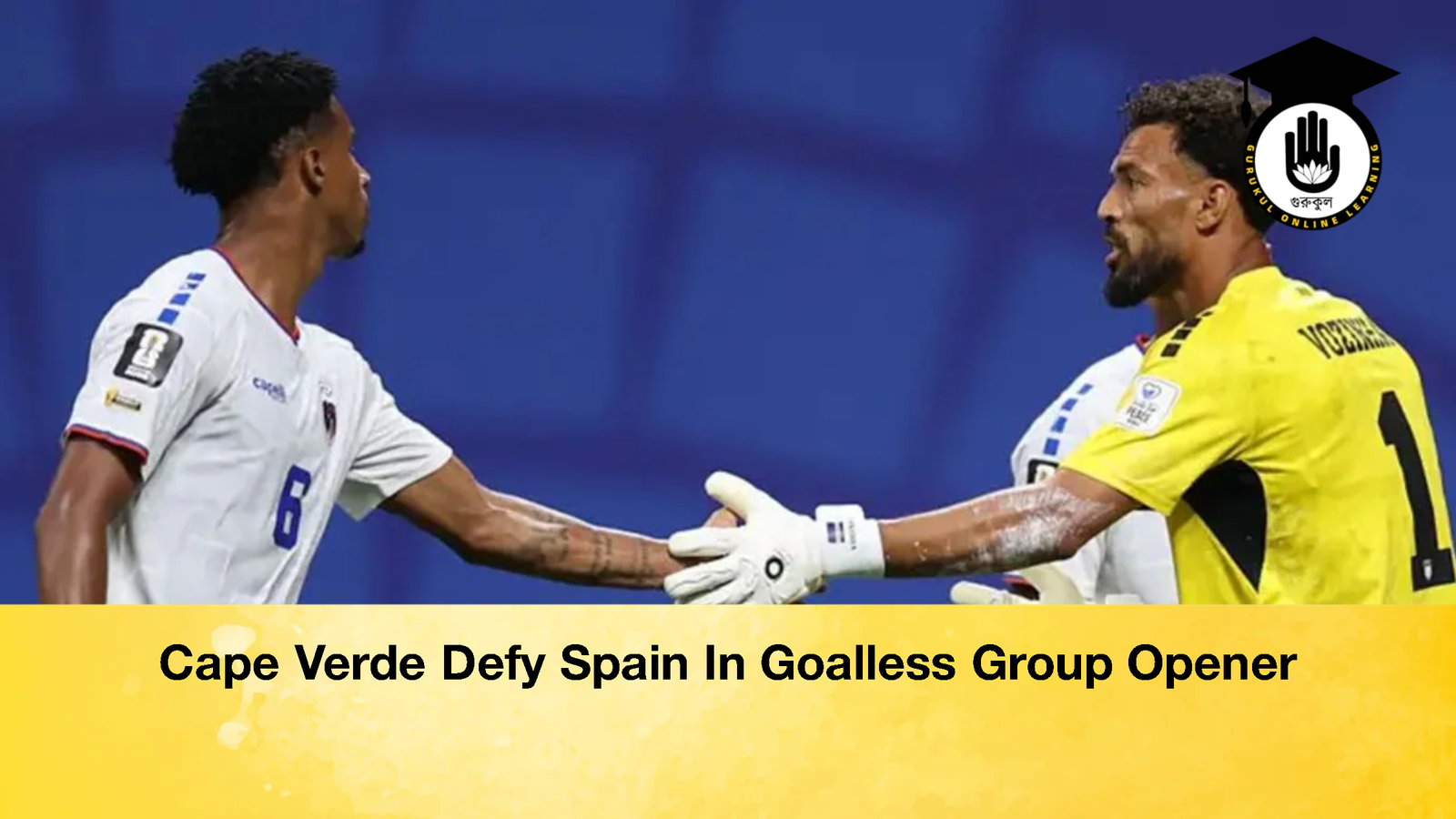

The Cape Verde national football team secured an unexpected result in their first-ever FIFA World Cup appearance by holding former world champions Spain to a goalless draw. Playing in their debut match of the tournament, the debutants displayed a resilient defensive performance to claim their first-ever World Cup point, preventing a highly favoured Spanish side from securing a victory.
First-Half Spanish Dominance and Missed Opportunities
From the commencement of the match, Spain established total control over ball possession, dictating the tempo of the game and restricting Cape Verde to defensive duties. The Spanish side regularly controlled the midfield and circulated the ball in search of gaps in the opposition’s defensive lines. However, despite their overwhelming superiority in possession, the European team struggled to convert their tactical dominance into goals.
As the first half progressed towards its final stages, the intensity of the Spanish offensive maneuvers increased significantly. Spain launched a series of successive attacks on the Cape Verde penalty area, creating multiple clear scoring opportunities. The closest opening came when Spanish forward Torres found himself in a prime position to break the deadlock; however, his subsequent shot struck the crossbar and deflected away, denying Spain the opening goal of the fixture.
Goalkeeping Resilience and Defensive Operations
A central factor in Cape Verde’s ability to maintain a clean sheet during the first half was the exceptional performance of their veteran goalkeeper, Vozinha. The 40-year-old shot-stopper demonstrated remarkable positioning and reflexes to deny the Spanish attackers on multiple occasions. Vozinha executed several crucial saves throughout the opening 45 minutes, providing stability to his backline under continuous pressure from the opposition.
In the final moments of the first half, the Spanish team mounted their most dangerous offensive sequence, threatening to take the lead just before the whistle. Both Torres and defender Laporte managed to launch high-probability scoring attempts in quick succession. However, the Cape Verde defensive unit successfully intervened, blocking and neutralizing both definitive attacks inside the penalty box. These successful defensive interventions ensured that the Spanish team entered the half-time interval frustrated, with the scoreline remaining deadlocked at 0-0.
The second half of the match continued in a similar pattern, with Spain attempting to break through the compact defensive structure organized by Cape Verde. The African nation remained disciplined, absorbing the pressure and relying on the experienced Vozinha to command his penalty area during set-pieces and open-play crosses. The final whistle confirmed the goalless draw, marking a significant milestone for Cape Verdean football on the global stage.
The result represents a notable setback for Spain’s opening group-stage aspirations, as the former champions were widely expected to secure all three points from the fixture. For Cape Verde, the hard-fought point against one of Europe’s traditional footballing superpowers provides them with a historic entry into the tournament statistics and sets up a competitive dynamic for the remaining matches in the group. Local sports analysts have highlighted the performance of the veteran goalkeeper and the organizational discipline of the back four as the primary elements that allowed the underdog nation to successfully restrict the Spanish attacking threats.