
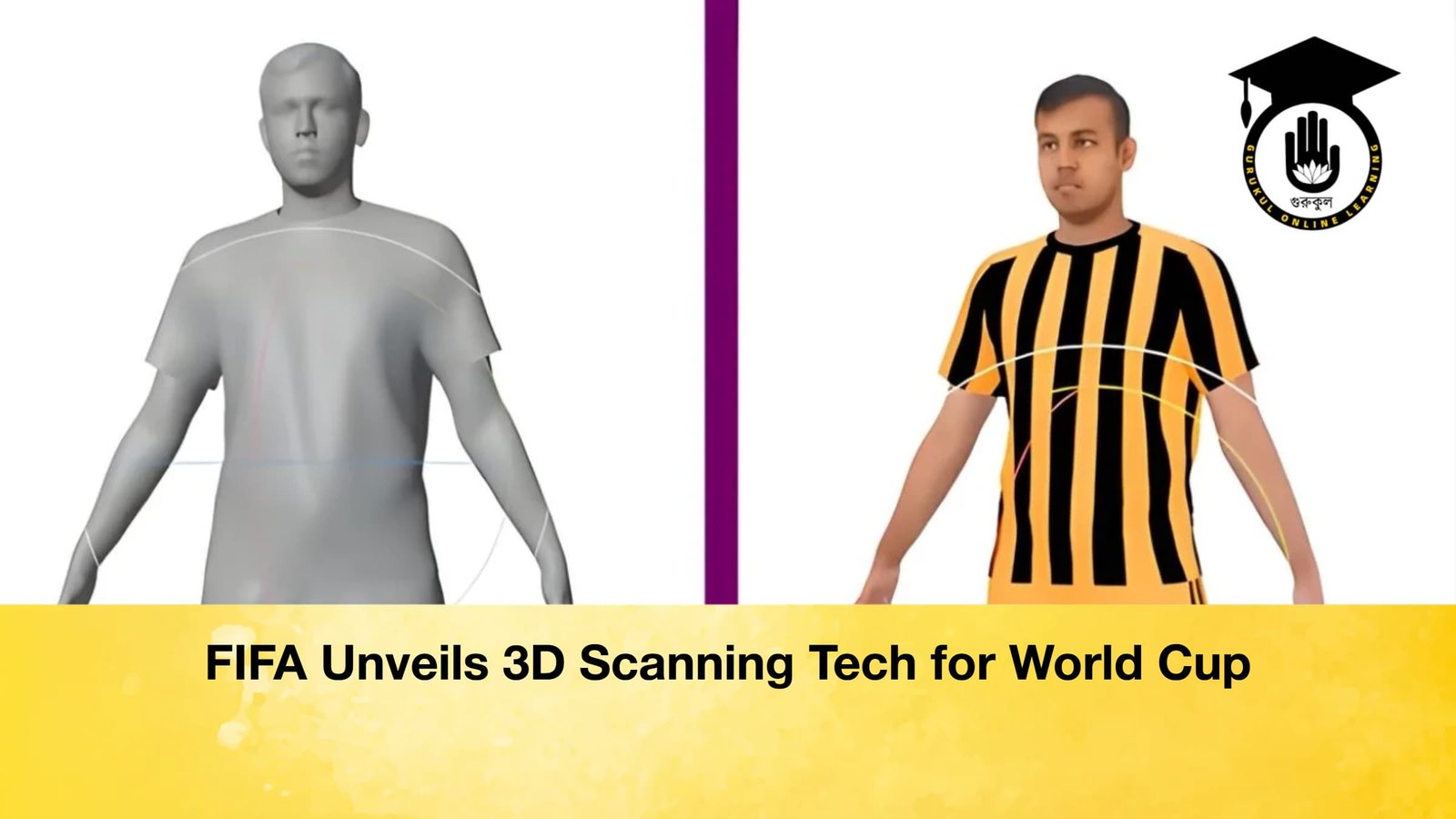

In an ambitious move to merge elite athleticism with cutting-edge digital twin technology, FIFA has announced that every footballer competing in the 2026 World Cup will be transformed into an AI-driven, three-dimensional “avatar”. FIFA President Gianni Infantino unveiled the initiative during a keynote address at the Consumer Electronics Show (CES) in Las Vegas, marking a definitive leap toward forensic officiating.
The Anatomy of an AI Avatar
The logistics of the project are vast. With the tournament expanding to 48 nations, FIFA’s technical team will generate high-fidelity digital replicas for 1,248 players (26 players per squad). These “avatars” are designed to perfect the accuracy of Semi-Automated Offside Technology (SAOT) across the tournament’s 104 matches in the United States, Canada, and Mexico.
Unlike current systems that often rely on generic skeletal frameworks, these bespoke 3D models will capture an athlete’s exact anatomical dimensions. The scanning process is remarkably efficient: players will step into a specialised chamber during pre-tournament media sessions, where a comprehensive scan is completed in just one second.
Ending the Era of “Graphical Mismatches”
The move addresses a recurring controversy in modern football where Video Assistant Referee (VAR) graphics do not always align with live broadcast footage. A recent incident in a Premier League match between Newcastle and Manchester City highlighted this flaw; the SAOT graphic of Ruben Dias showed a body position that appeared physically inconsistent with the actual television feed.
By using a 1:1 digital twin, the AI can determine offside calls based on a player’s true physical profile, even when limbs are obscured or moving at extreme speeds. This ensures that a “toe-fringe” offside is calculated against the player’s actual boot and anatomy, rather than a standardised digital guess.
Table: Evolution of Offside Officiating Technology
| Feature | Standard VAR / SAOT | 2026 World Cup AI-Avatar Tech |
| Player Representation | Generic skeletal “stick” models | Bespoke 3D Anatomical Avatars |
| Scanning Protocol | None (Post-hoc tracking) | Mandatory 1-second pre-cup scan |
| Accuracy Source | Camera-based data points | 1:1 Digital Twin + 30 High-Res Cameras |
| Offside Visuals | Prone to graphical “glitches” | High-fidelity anatomical replication |
| Scope | Selected elite leagues | All 1,248 World Cup participants |
A “Real-Time” Officiating Revolution
President Infantino described the 2026 event as the “greatest show on Earth,” and the technological package extends beyond the offside line. FIFA is currently trialling:
Real-Time 3D Recreation: A system designed to assist with “line-of-sight” offside decisions, determining if a player is blocking a goalkeeper’s vision.
In-Ball Sensors: Advanced tracking to verify if a ball has crossed the touchline or goal line before a crucial phase of play.
Automated Out-of-Play Detection: New AI tools to instantly notify officials if the ball leaves the field of play during rapid transitions.
These innovations, already tested during the Intercontinental Cup with teams like Flamengo, aim to ensure that the outcome of the world’s most prestigious trophy is determined by sporting brilliance rather than technical ambiguity.