
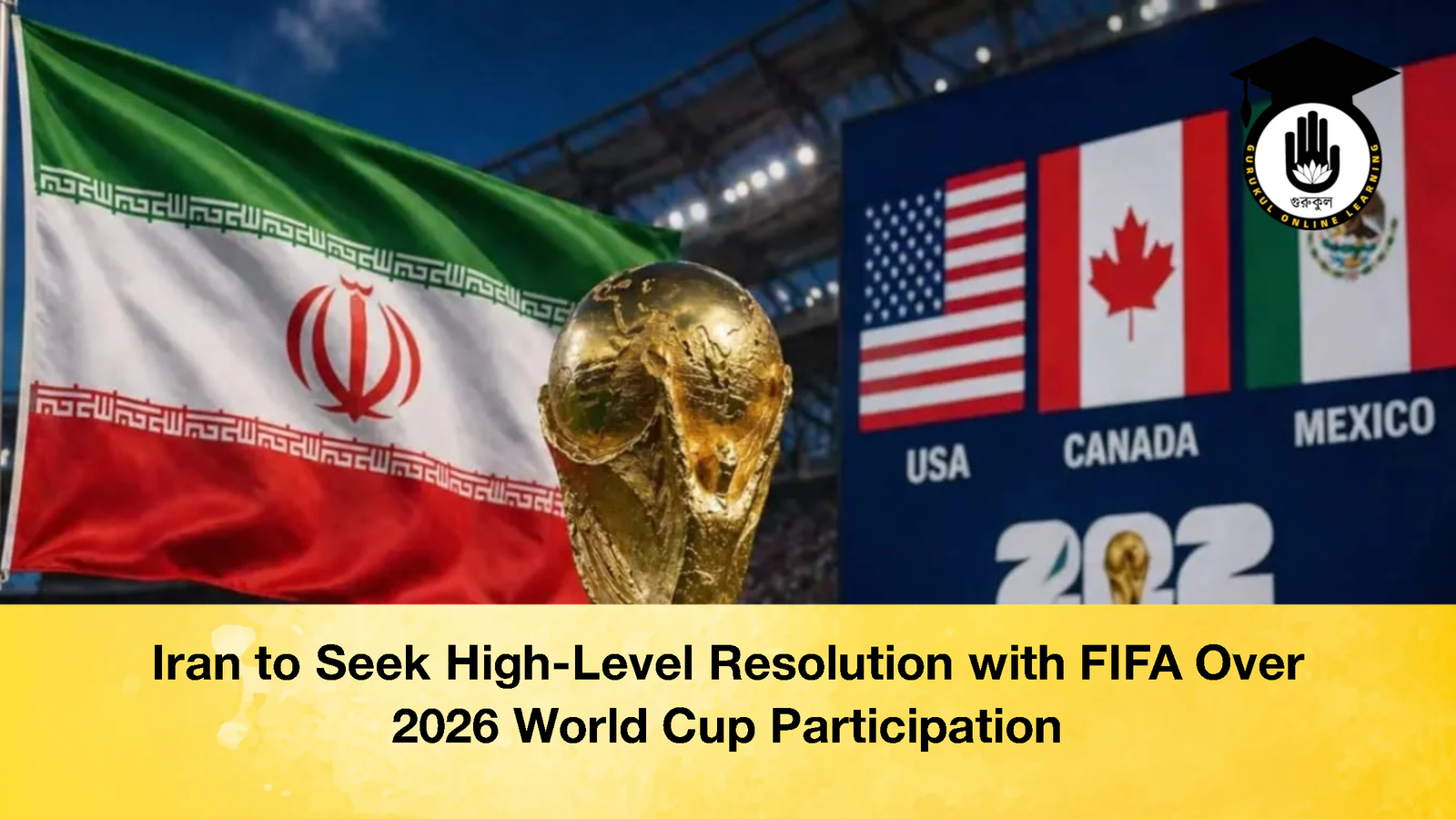

With the 2026 FIFA World Cup scheduled to commence in just 40 days, the involvement of the Iranian national team has reached a critical juncture. Faced with mounting geopolitical tensions and diplomatic friction, senior officials from the Football Federation of the Islamic Republic of Iran (FFIRI) are set to engage in urgent, high-level deliberations with FIFA leadership to determine the team’s final status for the tournament.
The catalyst for this emergency consultation was a significant diplomatic impasse during the 76th FIFA Congress in Vancouver. The Iranian delegation, led by FFIRI President Mehdi Taj, withdrew from the event following a contentious encounter at Toronto Pearson International Airport on Tuesday, 28 April. Reports suggest that Taj, a former commander within the Islamic Revolutionary Guard Corps (IRGC), was detained for three hours by the Canada Border Services Agency for questioning regarding his military background. Although he was eventually cleared for entry, the delegation characterised the treatment as “unacceptable conduct” and returned to Tehran in protest.
Security Concerns and Geopolitical Strains
On Friday, Mehdi Taj reaffirmed the federation’s intent to resolve these issues directly with football’s global governing body. “We have numerous matters to deliberate upon with FIFA,” Taj stated. “It is our position that a formal meeting must take place in the immediate future to address these outstanding issues.”
In response, FIFA Secretary General Mattias Grafström has formally invited the Iranian representatives to the FIFA headquarters in Zurich. This meeting, which must occur by 20 May, represents the final opportunity for a resolution before the tournament’s opening ceremony on 11 June.
The overarching shadow across Iran’s participation remains the geopolitical fallout from the 28 February 2026 joint military strikes by the United States and Israel within Iranian borders. Despite a conditional ceasefire established on 8 April, concerns regarding the safety of Iranian players on American soil have intensified. These anxieties were further heightened by public remarks from US President Donald Trump, who suggested that the team’s presence in the United States might pose risks to their own “life and safety,” despite an official welcome.
The Venue Dispute and FIFA’s Mandate
In light of these safety concerns, the FFIRI officially petitioned FIFA to relocate their Group G fixtures. Iran proposed moving their matches from the United States to venues in Mexico, citing a more neutral political environment. However, FIFA has consistently declined to entertain any alterations to the established hosting schedule.
FIFA President Gianni Infantino has maintained a firm stance on the matter. Speaking at the Vancouver Congress on Thursday, 30 April, Infantino reiterated his position:
“Of course, Iran will be participating at the FIFA World Cup 2026. And of course, Iran will play in the United States of America.”
Infantino has framed the decision as a commitment to the “unifying power of football,” dismissing any proposals for neutral venues or host-nation shifts.
Tournament Logistics and Imminent Deadlines
Iran earned its place in the expanded 48-team tournament following a successful qualification campaign through the Asian Football Confederation (AFC). They are currently drawn in Group G alongside Belgium, New Zealand, and Egypt. Under the current schedule, Iran’s group-stage matches are slated for Los Angeles and Seattle—locations that remain the primary point of contention for the Iranian federation.
The 2026 World Cup is a historic collaboration between the United States, Mexico, and Canada. As the clock ticks down, the global footballing community is focused on the upcoming Zurich summit. Should negotiations fail to produce a breakthrough by the 20 May deadline, FIFA may be forced to initiate contingency protocols. This could involve the withdrawal of the Iranian squad or the implementation of disciplinary measures. For the time being, the FFIRI maintains that its ultimate participation depends entirely on the guarantees and outcomes of the forthcoming executive deliberations in Switzerland.