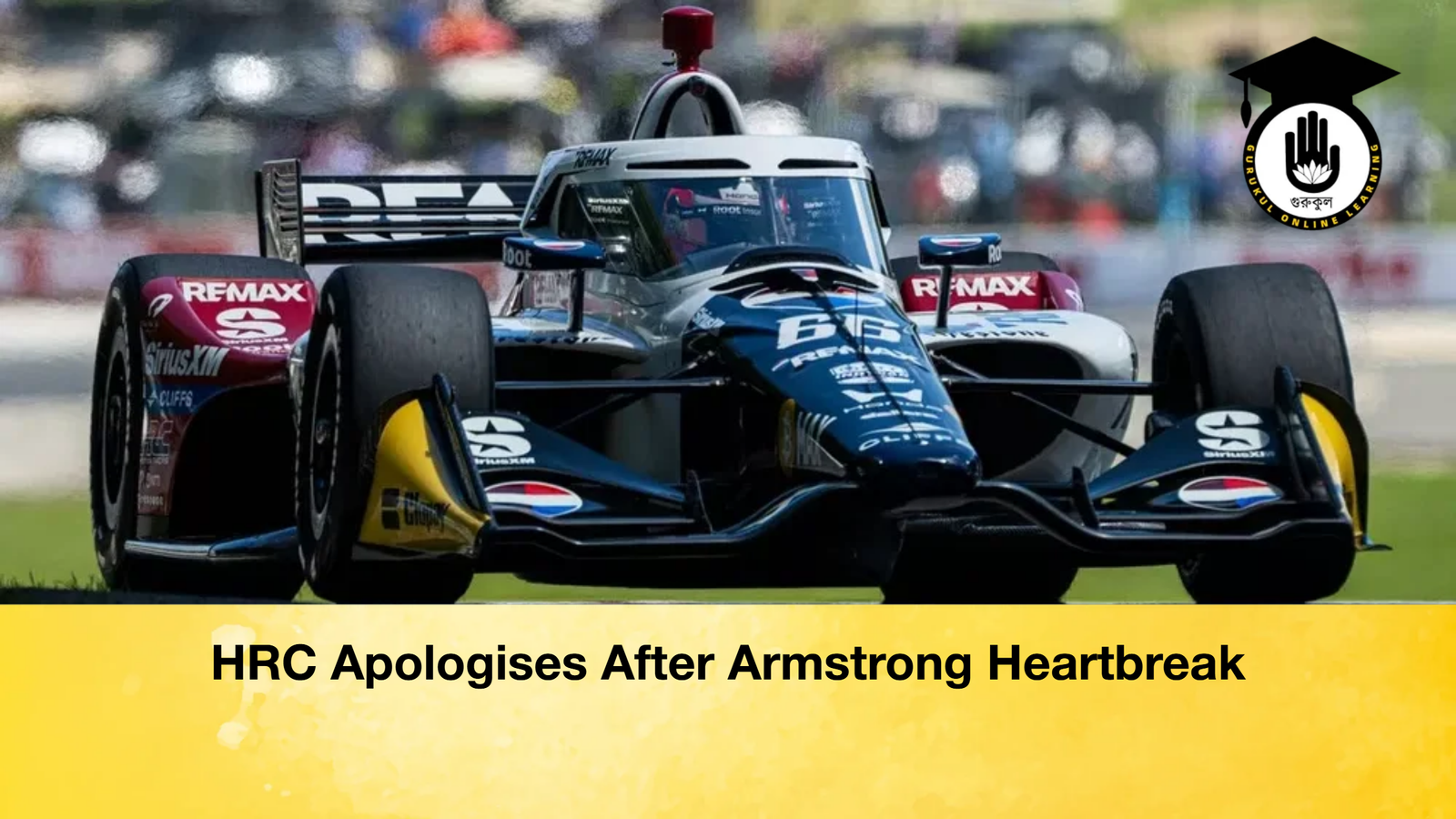

Honda Racing Corporation US (HRC US) President David Salters has publicly apologised to Marcus Armstrong and Meyer Shank Racing after a mechanical failure denied the New Zealander what appeared to be a maiden IndyCar Series victory at Road America.
Armstrong had looked destined to claim the biggest win of his career in Sunday’s XPEL Grand Prix, controlling the closing stages after a superbly executed race. However, with fewer than four laps remaining and holding a comfortable 2.7-second advantage over Arrow McLaren’s Christian Lundgaard, disaster struck.
The 25-year-old’s No. 66 Meyer Shank Racing Honda suddenly lost power exiting Turn 6, forcing him to slow dramatically before coming to a halt. The failure immediately handed the lead to Lundgaard, whose victory was ultimately secured following a caution period and a one-lap sprint to the finish.
Instead of celebrating a breakthrough triumph, Armstrong was classified 24th after retiring just three laps from the chequered flag.
Victory Slips Away
Armstrong had produced one of the strongest performances of his IndyCar career.
After running consistently among the frontrunners throughout the afternoon, he inherited the lead following the final sequence of pit stops and appeared to have the pace required to keep Lundgaard at bay. Although the Dane had begun reducing the deficit in the closing laps, Armstrong still held a sizeable cushion when the problem occurred.
Describing the moment afterwards, Armstrong explained that the issue developed without warning.
“I came out at Turn 6 and the engine just started spluttering like it was out of fuel, but clearly it wasn’t. And then it just completely died.”
The resulting caution eliminated any possibility of Armstrong restarting the race, transforming what had been a commanding performance into one of the cruellest disappointments of the season.
Salters Accepts Responsibility
In Honda Racing Corporation US’s post-race statement, the manufacturer described the incident simply as a “mechanical failure”, with company president David Salters taking responsibility and offering a heartfelt apology to both the driver and Meyer Shank Racing.
Salters acknowledged the emotional contrast between an encouraging overall performance and the devastating ending.
“Racing is sport and sport has its highs and lows. We experienced both this weekend. Pole position and four cars in the Firestone Fast Six showed the hard work of our marvellous drivers, teams and our HRC associates yet again.”
He continued by expressing regret over the failure that occurred while Armstrong was leading.
“In the race we were very competitive and, up to the very end of the race, leading and in a great position. But then we failed with just three laps to go whilst leading.”
Although Salters noted that failures are an unfortunate reality in top-level motorsport, he made it clear that the organisation accepted full accountability.
“The racer in me would always rather fail, which happens unfortunately, whilst leading, but I am extremely sorry to Marcus and the valiant MSR team. It is just heartbreaking and we are extremely sorry for the distress caused to Marcus and the team.”
Investigation Already Underway
Salters confirmed that HRC US has launched a full investigation into the failure.
Modern IndyCar power units operate under enormous mechanical and thermal stress, with manufacturers constantly balancing reliability against outright performance. Salters acknowledged those demands but stressed that understanding the root cause is now the team’s immediate priority.
“We will find out what went wrong, learn and come back fighting,” he said. “We win together and we lose together.”
The investigation is expected to determine whether the issue originated from the engine itself or another component within the powertrain package.
Strong Weekend Overshadowed
The retirement was particularly painful given Honda’s overall competitiveness throughout the Road America weekend.
Alex Palou secured pole position, while four Honda-powered entries reached the Firestone Fast Six qualifying shootout. During the race itself, Honda-powered drivers led the majority of the event before Armstrong’s retirement.
Despite that dominance, the manufacturer failed to secure victory, with Arrow McLaren’s Chevrolet-powered Lundgaard capitalising on Armstrong’s misfortune.
Honda’s Road America Performance
| Category | Result |
|---|---|
| Pole position | Alex Palou |
| Firestone Fast Six entries | 4 Honda-powered cars |
| Total laps led | 45 of 55 |
| Drivers who led | Alex Palou (13), Marcus Armstrong (14), Felix Rosenqvist (18) |
| Highest-finishing Honda driver | Will Power (3rd) |
| Winning manufacturer | Chevrolet |
Armstrong’s Performance
| Statistic | Result |
|---|---|
| Team | Meyer Shank Racing |
| Car | No. 66 Honda |
| Age | 25 |
| Largest lead | 2.7 seconds |
| Failure occurred | Fewer than four laps remaining |
| Final classification | 24th (retired) |
Although the result will inevitably be remembered for its bitter conclusion, Armstrong’s performance provided further evidence of his growing stature within the IndyCar paddock. He demonstrated race-winning pace against one of the series’ strongest fields and appeared on course to deliver both his maiden victory and Meyer Shank Racing’s first triumph of the season.
For HRC US, however, the race will remain a painful reminder that in elite motorsport, reliability is every bit as important as outright speed. After publicly accepting responsibility, the manufacturer now faces the challenge of ensuring such a costly failure is not repeated as the 2026 championship enters its decisive second half.