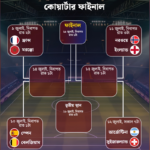


The expanded 48-team FIFA World Cup has narrowed to its final eight competitors, setting the stage for a highly anticipated quarter-final clash between Morocco and France at the Boston Stadium. Whilst the sporting stakes are exceptionally high, the fixture carries a deeply personal undertone for a specific contingent within the Moroccan squad. Six players selected to represent the Atlas Lions will take the pitch to compete against the nation of their birth, upbringing, and footballing education.
This compelling narrative is the result of a deliberate, long-term strategy enacted by the Royal Moroccan Football Federation to identify and integrate eligible dual-national talent from its global diaspora. Within the current 26-man tournament squad, six individuals—Redouane Halhal, Gessim Yassin, Samir El Mourabet, Neil El Aynaoui, Issa Diop, and Ayoub Bouaddi—were born on French soil. As descendants of North African immigrant families, these players possessed dual eligibility, leaving them with a choice between the European powerhouse and their ancestral homeland.
The decision of 18-year-old midfielder Ayoub Bouaddi has generated significant discussion within footballing circles. Earlier this year, Bouaddi was serving as the captain of the French Under-21 national team, making his subsequent switch to the Moroccan senior squad a notable development. His pre-tournament pledge to Morocco highlighted the ongoing competition between national federations to secure elite prospects emerging from top-tier European academies.
This pathway from the French youth system to the Moroccan senior setup is well-established. Over the past two decades, Moroccan recruitment networks across Europe have successfully persuaded numerous high-profile players to commit to the Atlas Lions. Previous generations of talent who made similar decisions include established internationals such as Sofiane Boufal, Romain Saïss, Marouane Chamakh, Medhi Benatia, and Mustapha Hadji.
When the quarter-final commences in Boston, tactical execution will inevitably take precedence over administrative eligibility. However, for the six French-born athletes in the Moroccan side, the match remains a unique test of emotional compartmentalisation. Their objective is to secure victory over their country of birth in order to guide their ancestral nation into the semi-finals of world football’s premier tournament.