IndyCar 101: History

A Concise History of IndyCar
IndyCar racing occupies a singular place in American motorsport, combining technical innovation, daring drivers and a history shaped as much by politics as by speed. From its early 20th-century origins to the modern, globally followed IndyCar Series, the championship has continually reinvented itself while remaining anchored by the iconic Indianapolis 500.
Single-seater championship racing in the United States began in 1905 under the sanction of the American Automobile Association (AAA). In these formative decades, the Indianapolis 500, first held in 1911, rapidly became the sport’s defining event. Early IndyCars were front-engined, brutally powerful machines, and success depended as much on mechanical sympathy as outright bravery. Legendary marques such as Duesenberg and Miller set engineering benchmarks, while drivers became national heroes.
Following the AAA’s withdrawal from motorsport in 1955, governance passed to the United States Auto Club (USAC). This era, stretching into the late 1970s, saw profound technical change. Rear-engined cars replaced traditional layouts, aerodynamic understanding advanced rapidly, and the turbocharged Offenhauser engine became dominant. The Indianapolis 500 remained the jewel in the crown, but tensions grew between teams and organisers over commercial control and prize money.
Those disputes culminated in a seismic split in 1979, when leading teams formed Championship Auto Racing Teams (CART). CART’s rise ushered in a commercially successful and internationally respected period, attracting top drivers from Formula One and beyond. However, a further schism occurred in 1996 with the creation of the Indy Racing League (IRL), founded to emphasise oval racing and cost control. For more than a decade, American open-wheel racing was divided, confusing fans and diluting prestige.
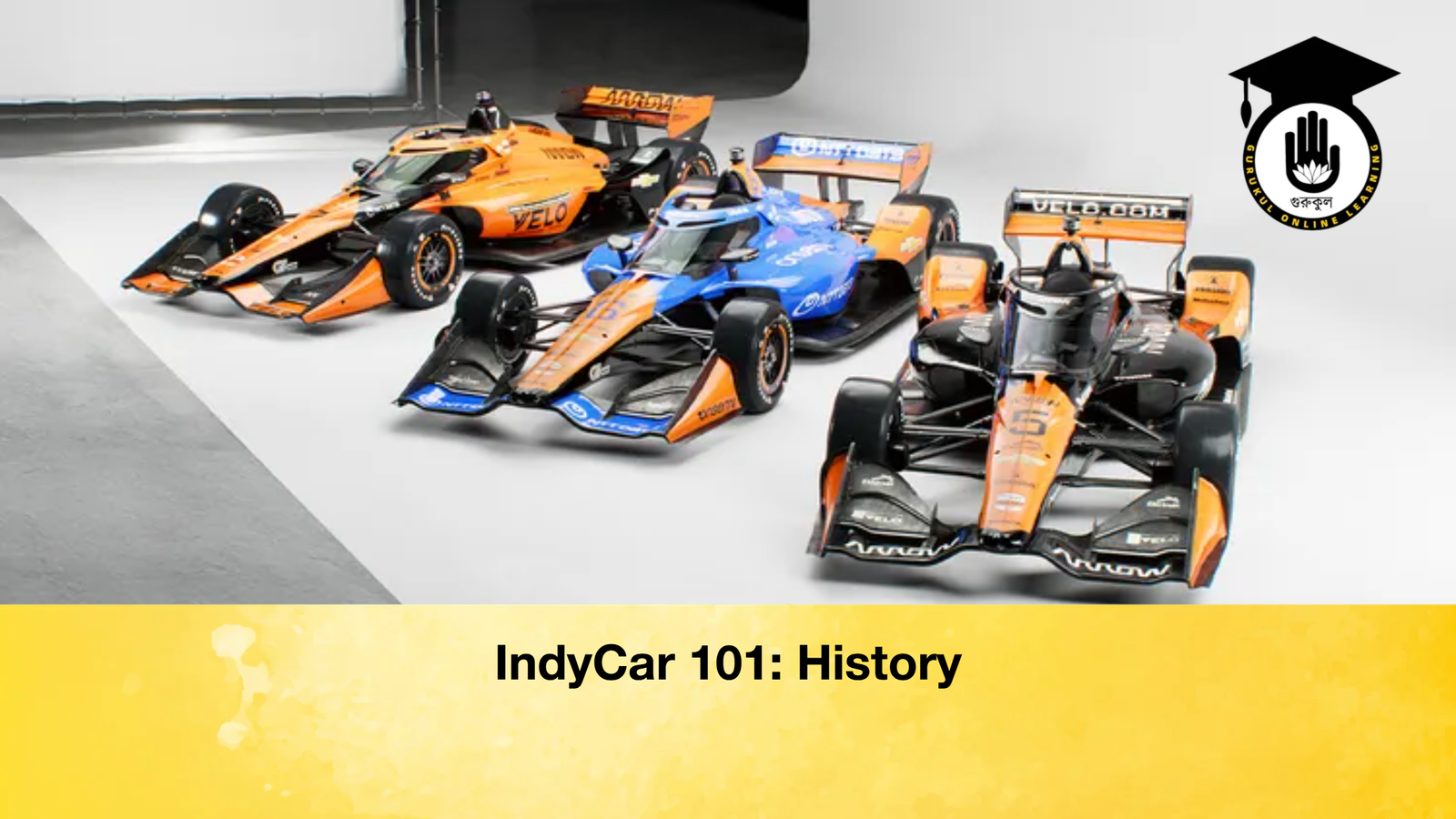
Reunification finally arrived in 2008, consolidating the sport under what is now known as the IndyCar Series. Since then, stability has been prioritised through cost-controlled regulations, a single chassis supplier and manufacturer competition between Honda and Chevrolet. Modern IndyCars are technologically sophisticated yet deliberately similar, ensuring close racing across ovals, road courses and street circuits.
Today, IndyCar blends tradition with modernity. The Indianapolis 500 remains its spiritual heart, while a diverse calendar and international driver roster reflect a championship that has learned from its turbulent past. Its history is not merely a timeline of races, but a story of resilience, rivalry and reinvention.
Key Eras in IndyCar History
| Period | Governing Body | Defining Characteristics |
|---|---|---|
| 1905–1955 | AAA Contest Board | Birth of championship racing; Indy 500 established |
| 1956–1978 | USAC | Rear-engined revolution; turbocharged dominance |
| 1979–1995 | CART | Commercial growth; international recognition |
| 1996–2007 | CART / IRL split | Divided championships; philosophical conflict |
| 2008–present | IndyCar Series | Reunified series; cost control and parity |
IndyCar’s past explains its present: a championship shaped by innovation, conflict and an enduring commitment to spectacular racing.