
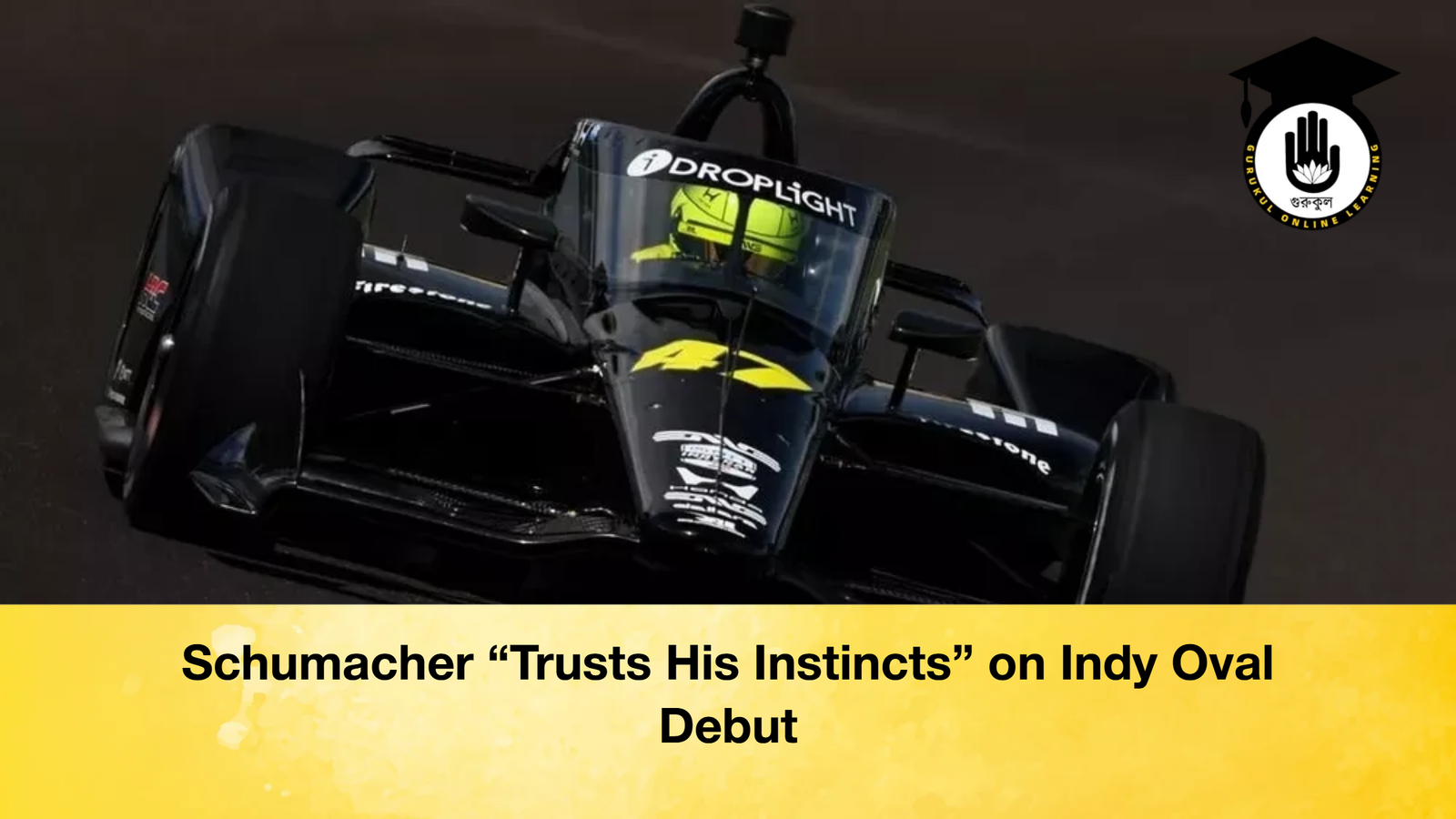
Schumacher “Trusts His Instincts” on Indy Oval Debut

Mick Schumacher has described his first experience of oval racing at the iconic Indianapolis Motor Speedway as a steep but controlled learning process, revealing that he is increasingly reliant on instinct—what he calls “trusting my butt”—to judge car behaviour at extreme speed.
The IndyCar rookie completed his initial laps on the 2.5-mile oval during the opening day of the official pre-Indianapolis 500 test programme. As part of the mandatory Rookie Orientation Programme (ROP), Schumacher successfully passed all three stages at his first attempt, allowing him to progress into full-speed running alongside the rest of the field.
Driving for Rahal Letterman Lanigan Racing, the German began his day in relatively controlled conditions before gradually increasing speed and reducing aerodynamic downforce. Later, he also experienced pack running for the first time—an essential and highly technical aspect of IndyCar oval racing.
Table of Contents
Toggle“A gradual build-up, not a shock”
Schumacher emphasised that nothing about the experience surprised him, crediting his preparation and prior oval mileage.
| Session Phase | Focus | Outcome |
|---|---|---|
| ROP Stage 1–3 | Speed progression | Passed at first attempt |
| Solo running | Line learning | Gradual build-up to full pace |
| Pack running | Traffic simulation | First drafting experience |
“Everything was pretty much as expected,” he said. “We built up gradually, understood the track, and worked through setup changes. It was very structured.”
He added that the experience at Indianapolis felt markedly different from shorter ovals such as Phoenix Raceway, where he had previously impressed with a strong qualifying performance.
“Phoenix was more aggressive,” Schumacher explained. “You really push hard into the corners. Here, it’s about being smooth, controlled, and precise—always trying to keep the car as clean as possible through the turns.”
Learning to listen to the car
During the ROP, Schumacher briefly exceeded the permitted speed range—an infraction that drew attention from officials—but he treated the moment as part of the learning curve rather than a setback.
“I went a bit quicker than allowed and people weren’t too happy,” he said with a smile. “But I’ve done enough oval testing to understand what’s expected.”
He highlighted prior experience at venues such as World Wide Technology Raceway and Homestead-Miami Speedway as crucial preparation, helping him adapt quickly.
A key focus, however, has been developing sensitivity to subtle changes in car behaviour—particularly at sustained high speeds.
“When something doesn’t feel right, you come in and fix it,” he explained, echoing advice from driver coach Ryan Briscoe. “You have to trust what the car is telling you. I call it trusting my butt. You feel it immediately.”
He added that this instinct becomes even more critical at Indianapolis due to the significantly higher speeds and sustained lateral load.
Still more to discover
Despite a smooth opening day, Schumacher acknowledged that key elements of Indy 500 preparation remain ahead, particularly running with qualifying-spec aerodynamic setups and increased engine boost.
“Qualifying trim and full boost are still unknowns for me,” he admitted. “That’s something I’ll only fully understand closer to ‘Fast Friday’.”
For now, he is focused on building a detailed reference base ahead of May’s intense race build-up.
“Everything has gone smoothly so far,” he concluded. “It’s about collecting information now so I’m ready for what comes next.”

Sufi Arshan Aziz Faruq | Contributor | sportsgoln.com
Sufi Aarshan Aziz Faruq is a car enthusiast
Follow Me