
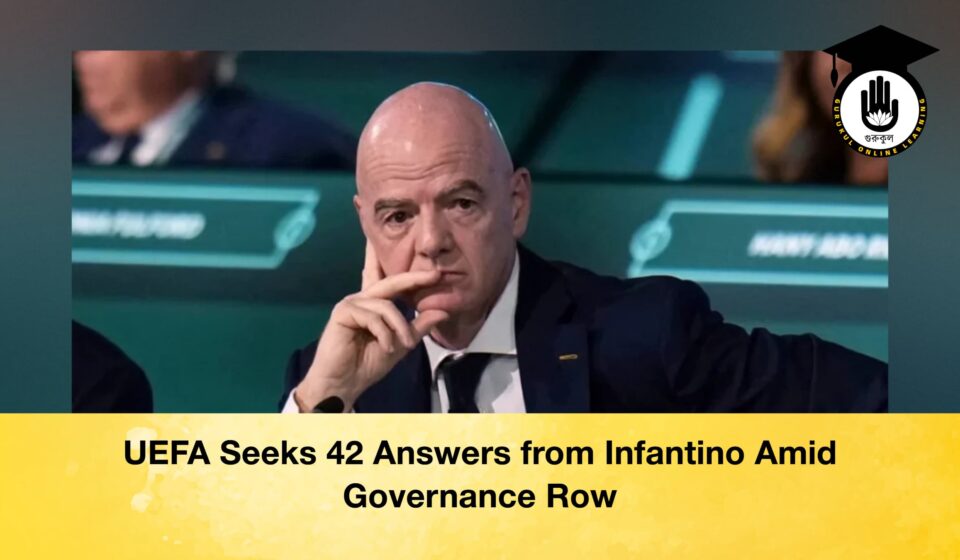

UEFA has demanded written answers to 42 questions from FIFA president Gianni Infantino, setting a deadline of 2 November for a detailed response and supporting documentation. The European football governing body is seeking clarification on three contentious issues: the suspension of a red-card punishment involving American footballer Folarin Balogun at the most recent World Cup, the FIFA Peace Prize awarded to US President Donald Trump, and a disputed commercial initiative known as FIFA Forward Enterprise (FFE).
The demand highlights growing tensions between UEFA and FIFA over transparency, accountability and the handling of major decisions within football’s global governing body. According to sports broadcaster ESPN, which reviewed the correspondence, UEFA believes several fundamental questions remain unanswered despite FIFA’s subsequent statements on the disputed matters.
On 19 October, UEFA general secretary Theodore Theodoridis sent an eight-page letter to FIFA secretary general Mattias Grafström outlining the concerns. The letter referred to serious issues surrounding the FFE project and other aspects of FIFA’s governance and decision-making procedures.
Dispute over World Cup commercial rights
At the centre of the dispute is a proposal to raise funds by selling part of the commercial rights associated with the World Cup through the FIFA Forward Enterprise initiative. The plan reportedly involved Thrive Capital, an investment firm led by Josh Kushner, the brother of Jared Kushner, who is married to US President Donald Trump’s daughter Ivanka Trump.
UEFA’s principal objection concerns how the proposal was developed and pursued. The European body questioned whether FIFA’s governing council had been properly consulted before discussions over the commercial arrangement advanced.
The FIFA Council is a key decision-making body within the organisation, responsible for setting its strategic direction between FIFA Congress meetings. UEFA’s concerns therefore extend beyond the commercial merits of the proposal to the procedures followed by FIFA’s leadership.
After learning of the plan, UEFA threatened to boycott FIFA competitions. The threat was withdrawn after Infantino reassured the European body that the proposal would not proceed in its original form, following substantial opposition.
However, the withdrawal did not settle the matter. UEFA now wants to know who granted Thrive Capital exclusive advantages without consulting the FIFA Council, when the FFE initiative was first proposed and who initially put it forward.
The questions are intended to establish how the project developed, who was involved and why the council was allegedly not engaged at the appropriate stage.
Trump and Balogun incidents under scrutiny
UEFA is also seeking an explanation for the suspension of Balogun’s red-card punishment at the most recent World Cup. The American footballer’s case has become part of the wider dispute over the way decisions involving FIFA and senior political figures were handled.
According to ESPN, UEFA wants to establish what Trump requested from Infantino during a telephone conversation concerning the removal of Balogun’s punishment. The correspondence seeks a factual account of the discussion and the circumstances surrounding the decision.
Trump’s receipt of the FIFA Peace Prize is another subject covered by the questions. UEFA is seeking clarification about the circumstances in which the award was granted and the process through which the decision was reached.
These issues have added to wider concerns about the relationship between football governance and political influence. FIFA operates internationally and must navigate relationships with governments and public institutions, but its major decisions also face scrutiny from member associations and other football authorities.
UEFA’s questions focus on whether the appropriate procedures were followed and whether sufficient information has been provided to explain the decisions.
UEFA says key questions remain unanswered
In the eight-page letter, Theodoridis told Grafström that several fundamental questions raised by members of the FIFA Council had not received satisfactory explanations. He also said that requested documents had not been supplied.
UEFA acknowledged FIFA’s subsequent statement concerning the disputed meeting, including the withdrawal of the FFE proposal, an admission of error and a commitment to consider possible governance reforms. However, the European body argued that the statement did not explain how the decisions had been reached or why the FIFA Council had not been involved at the appropriate level.
The letter formally requests a factual written response to every question, accompanied by all relevant supporting documents, by Monday, 2 November.
The deadline is significant because UEFA is seeking detailed explanations rather than general assurances that FIFA’s procedures may be reviewed. Documents relating to the development of the FFE proposal and the decisions surrounding the other disputed matters could help clarify the sequence of events and the roles played by those involved.
Wider tensions over Infantino’s leadership
The dispute comes amid broader disagreements over Infantino’s leadership of FIFA. UEFA has taken a position against his leadership and his anticipated bid for re-election as FIFA president in March 2027.
The latest confrontation could further strain relations between the two organisations, which occupy central positions in international football. FIFA oversees the sport globally, while UEFA governs football across Europe and organises major competitions involving the continent’s national teams and clubs.
Their cooperation is important to the administration of international tournaments, the commercial development of football and the relationship between global and regional governing bodies. Disagreements over governance can therefore extend beyond individual projects or disciplinary decisions.
For UEFA, the immediate priority is to obtain clear answers about how the disputed decisions were made and whether the appropriate procedures were followed. FIFA’s response to the 42 questions, due by 2 November, will be closely watched as the organisations navigate an increasingly public dispute over accountability and leadership.