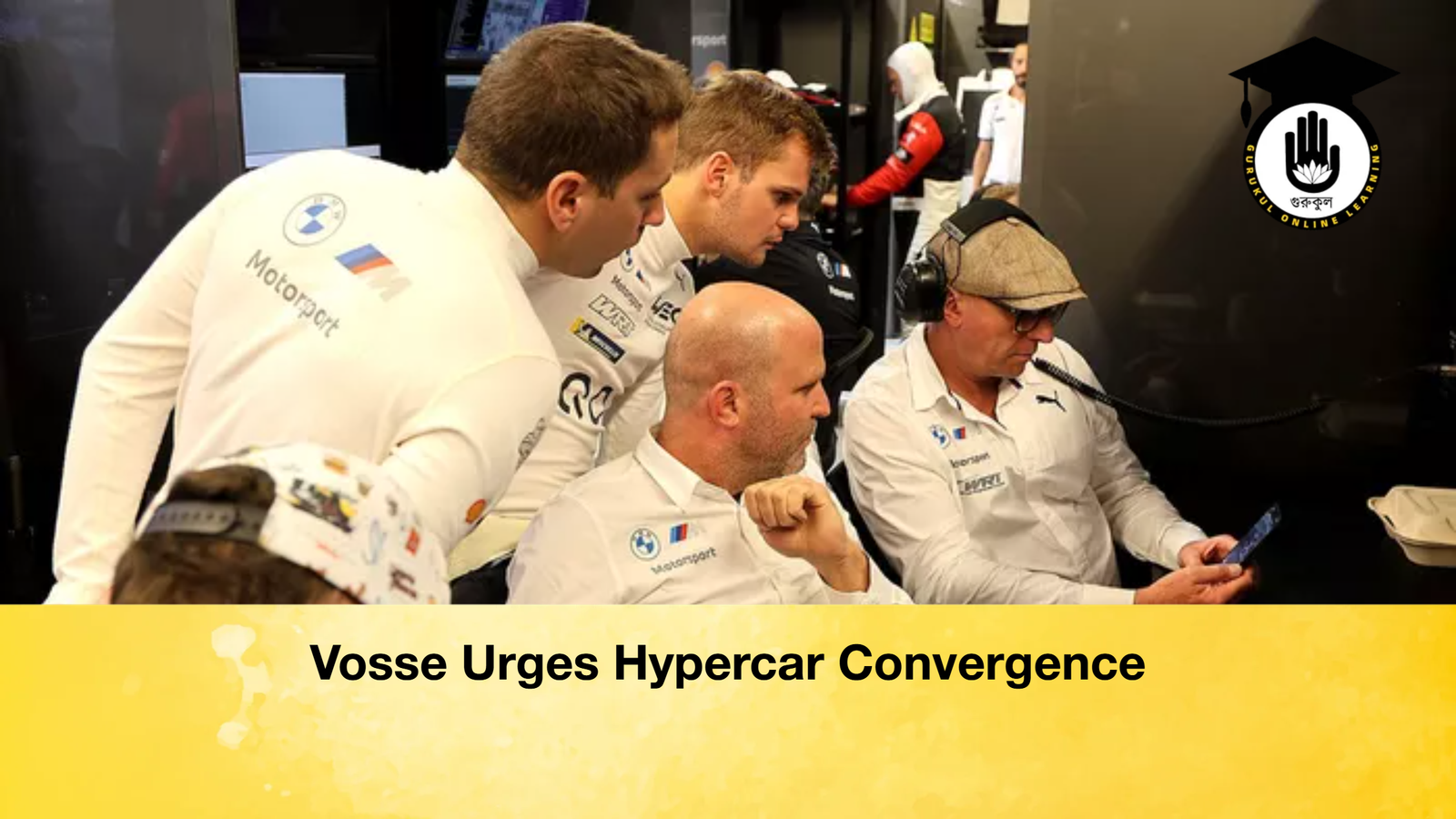
Fresh from a landmark victory at Spa-Francorchamps, Vincent Vosse has reflected on the state of endurance racing, BMW’s growing Hypercar programme, and the long-term health of the FIA World Endurance Championship (WEC). The Belgian team principal believes the current golden era of sports car racing can continue to flourish, but only if manufacturers, organisers and governing bodies work together to control costs and improve convergence between competing regulations.
As head of WRT, Vosse oversees one of BMW’s most significant factory-backed operations, spanning GT racing, the WEC and IMSA competition. Speaking at Monza ahead of the 2026 Le Mans 24 Hours, he discussed BMW’s recent success, the benefits of running parallel programmes on both sides of the Atlantic, and the challenges facing endurance racing’s premier category.
Spa Triumph Vindicates Strategy
BMW and WRT arrived at Spa with high expectations but endured a disappointing qualifying session. However, Vosse revealed that confidence in the race package never wavered.
The team executed an aggressive strategic approach, particularly when the No. 20 BMW encountered issues during a pit stop. Rather than playing safe, WRT committed to an alternative fuel and energy strategy that ultimately delivered victory.
Vosse explained that the sister No. 15 entry played a crucial supporting role by finishing second and helping shield the race-leading car from pressure, allowing it to conserve vital fuel and energy during the closing stages.
The result represented a major breakthrough for BMW’s Hypercar programme and reinforced the progress made with the updated M Hybrid V8 package.
IMSA-WEC Collaboration Paying Dividends
One of the strongest themes of Vosse’s remarks was the importance of collaboration between BMW’s WEC and IMSA programmes.
According to the Belgian, information-sharing between the two operations is stronger than ever, aided by common technical leadership and personnel working across both championships.
Benefits of BMW’s Dual-Programme Approach
| Area | Advantage |
|---|---|
| Data Collection | More race weekends generate a larger pool of performance data |
| Technical Development | Engineers can compare solutions across different circuits and regulations |
| Personnel Integration | Shared staff improve communication between programmes |
| Vehicle Evolution | Lessons from IMSA and WEC accelerate development of the M Hybrid V8 |
| Strategy Analysis | Greater understanding of tyre, fuel and race-management approaches |
Vosse acknowledged that the latest evolution package has improved the car in several areas, although he suggested some compromises may have affected qualifying pace and drivability.
Even so, he believes BMW has reached a competitive position that aligns with the programme’s objectives.
Convergence Remains a Priority
Perhaps the most significant issue discussed was the future structure of Hypercar racing.
The current top class is contested by two different technical philosophies:
| Category | Description |
|---|---|
| LMDh | Cost-controlled prototype platform using standardised components |
| LMH | Bespoke Hypercar regulations allowing greater manufacturer freedom |
While the Balance of Performance system allows both concepts to compete together, Vosse believes the sport would benefit from greater convergence in the future.
He argued that a more unified ruleset would simplify participation, improve sustainability and strengthen the championship as a whole.
Without naming specific manufacturers, Vosse acknowledged that leading teams naturally have differing views depending on their current competitiveness. However, he stressed that decisions should be made for the benefit of the championship rather than individual brands.
Costs Must Remain Under Control
Vosse also highlighted the financial dimension of convergence.
He believes the responsibility falls on the FIA, the ACO and championship organisers to ensure that costs between LMDh and LMH competitors remain balanced. If expenses continue to escalate, manufacturers may begin to reassess their commitments.
The success of GT3 racing was cited as an example of how stability and cost control can create a sustainable platform. More than two decades after its introduction, GT3 remains one of the world’s most popular racing categories.
According to Vosse, the Hypercar category should seek a similarly durable future.
Warning Against Complacency
Despite the current strength of the WEC, Vosse warned against assuming that the championship’s success is guaranteed.
The series currently enjoys one of the strongest manufacturer line-ups in endurance racing history, featuring brands such as Ferrari, Toyota, Porsche, BMW, Cadillac, Alpine and Genesis, with additional manufacturers preparing to join in coming seasons.
However, Vosse cautioned that periods of exceptional growth can also create greater risk if costs, regulations or competitive balance are mishandled.
“The championship is very strong right now,” he noted, while emphasising that stakeholders must remain vigilant to preserve its momentum.
Le Mans and Spa 24 Hours Ahead
Attention now turns to the 24 Hours of Le Mans, where Vosse hopes an LMDh machine can finally claim overall victory against the highly successful LMH challengers.
Beyond Le Mans, WRT’s emotional focus remains the Spa 24 Hours. As the team’s home event, it carries special significance.
Although WRT has enjoyed success there in the past, Vosse admitted that Spa remains one of the most difficult races to master. For him, a hard-fought result achieved through flawless execution can be as satisfying as a dominant victory.
With strong driver line-ups, competitive BMW machinery and momentum from Spa’s recent triumph, WRT heads into the summer’s major endurance classics believing it has the tools required to challenge for victories on multiple fronts. The greater challenge, according to Vosse, will be ensuring that endurance racing’s current golden age remains sustainable for many years to come.