Albuquerque Backs IMSA’s Bright Future

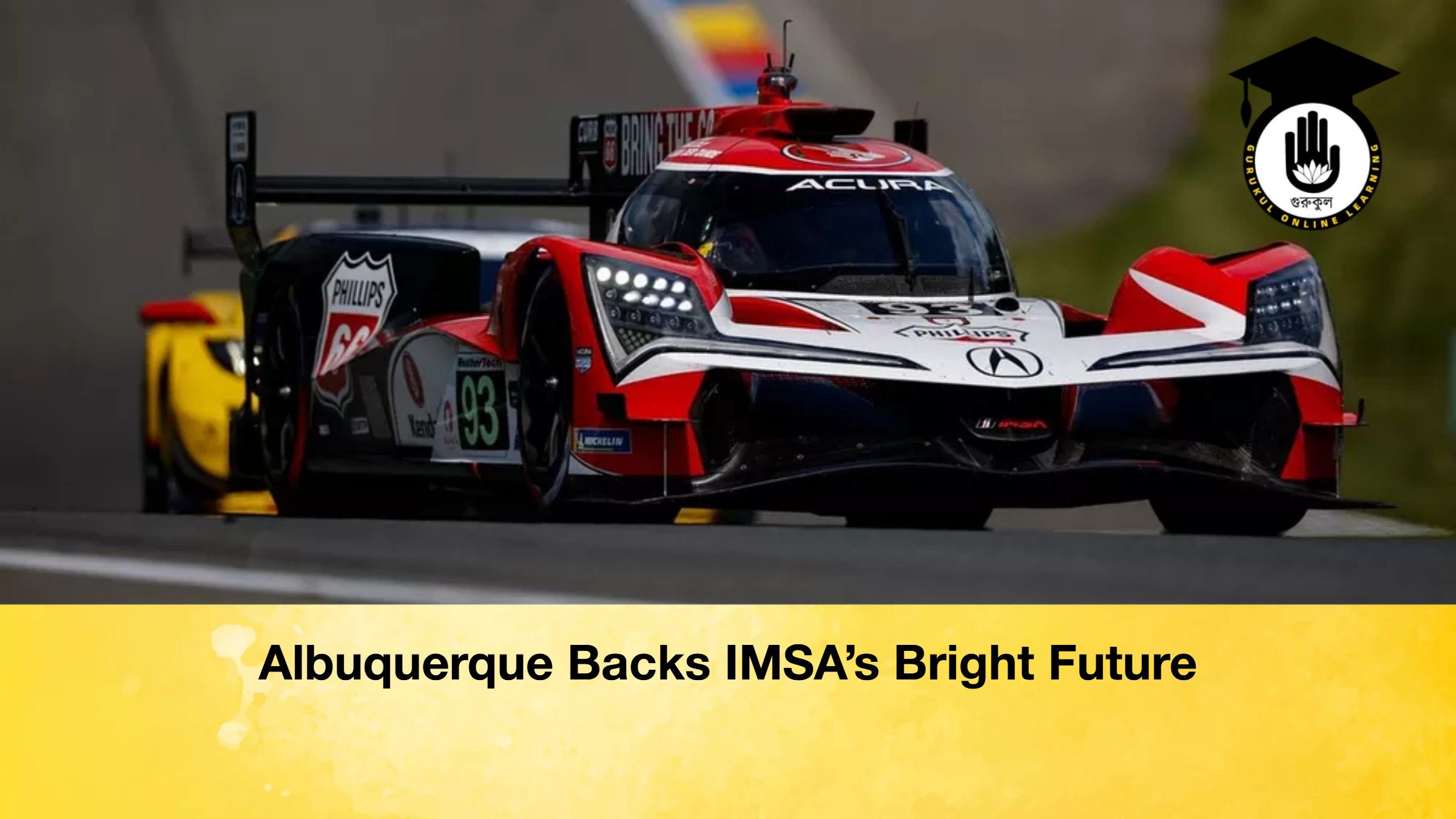
Despite Acura’s impending departure from IMSA’s premier GTP category, Filipe Albuquerque believes the championship remains in excellent health and insists the loss of another manufacturer should not be viewed as a sign of decline.
The Portuguese driver, who enjoyed four successful seasons as an Acura factory driver between 2021 and 2024, believes endurance racing is simply entering another natural phase in its manufacturer cycle. While acknowledging that Acura’s decision is disappointing, Albuquerque expects the grid to recover quickly as additional manufacturers prepare future programmes.
Acura will step away from IMSA’s GTP class following the current campaign, becoming the second major manufacturer to suspend its prototype programme after Lamborghini ended its SC63 project at the conclusion of the 2025 season. The departures leave Cadillac, Porsche and BMW’s LMDh machinery to compete against Aston Martin’s Valkyrie LMH for overall victories in North America’s premier sportscar championship.
However, Albuquerque remains convinced that the current situation should be viewed in perspective rather than with pessimism.
“I don’t see it all as a downfall,” Albuquerque told Motorsport.com. “Four manufacturers is still great. We need to agree that 10 or 11 manufacturers overall is not normal. It’s the peak of the peak of all times.
“Not even when we talk about the 1990s, when most manufacturers were involved, did we see numbers like that for any sustained period. We’ve had multiple manufacturers competing for five years now, and that’s fantastic.”
Manufacturer cycles are inevitable
Albuquerque believes the current contraction is simply part of motorsport’s long-established pattern, where manufacturers enter in large numbers before some inevitably withdraw as competition intensifies.
Rather than focusing on the two departures, he highlighted the growing interest from several global manufacturers that are either preparing or evaluating future GTP programmes.
“It’s not because one leaves,” he explained. “More manufacturers are still joining endurance racing.
“McLaren, Genesis and Ford are all looking at programmes and, eventually, regulations that could allow them to compete at Daytona and throughout IMSA. It makes total sense, particularly for Ford and McLaren given the importance of the American market and McLaren’s existing IndyCar presence.
“So maybe 2027 has four manufacturers, but you could easily see 2028 featuring seven. That would be more than we’ve ever had before. I don’t see any sort of collapse in endurance racing in America.”
His comments reflect growing optimism surrounding the future of the GTP regulations, which continue to share technical commonality with the FIA World Endurance Championship’s Hypercar class.
WEC continues expanding
While IMSA prepares for a reduced grid in the short term, the World Endurance Championship continues to enjoy unprecedented manufacturer support.
Eight manufacturers currently compete in the Hypercar category, with Genesis joining the championship after Porsche shifted its primary factory focus towards IMSA. The grid is scheduled to expand again next season when both Ford and McLaren introduce their new LMDh programmes.
Although Genesis has already confirmed that its IMSA expansion will not occur before 2028, Albuquerque believes the technical similarities between the two championships make dual programmes increasingly attractive.
Shared regulations create opportunities
One of the greatest strengths of modern prototype racing, Albuquerque argues, is the shared regulations between IMSA and the WEC.
Manufacturers can now compete globally using virtually identical machinery, significantly reducing development costs compared with previous generations of prototype racing.
“I know the American market is huge for McLaren and Ford,” Albuquerque said.
“I’ve just come from speaking with Michelin. It’s the same tyres and essentially the same cars. Running an additional programme doesn’t mean your costs suddenly double.
“You gain exposure in one of the world’s biggest automotive markets, and that’s ultimately why manufacturers go racing.”
He also suggested that greater calendar coordination between IMSA and the WEC would further encourage manufacturers to contest both championships simultaneously.
“I don’t want to point fingers,” he continued, “but if the calendars were managed a little better there would be fewer clashes. Teams could share engineers and mechanics across both championships far more efficiently.
“I see the future of IMSA, the future of the WEC and endurance racing as very positive.”
Questions over Ford’s timeline
Despite expressing confidence that additional manufacturers will eventually arrive, Albuquerque admitted he is surprised that Ford has chosen to prioritise the World Endurance Championship before committing to IMSA.
Given Ford’s deep American heritage, he believes a domestic prototype campaign appears an obvious long-term objective.
“I don’t know,” he admitted when asked why manufacturers are choosing WEC first. “I think that comes down to internal marketing strategies and company planning.
“It is difficult for me to understand, especially from Ford’s perspective. If I were going racing, I’d want to race at home.
“But I believe they’ll join soon. I certainly hope they do.”
Current and future GTP landscape
| Category | Current Situation |
|---|---|
| Acura | Programme ends after the current IMSA season |
| Lamborghini | Withdrew GTP programme after the 2025 season |
| Current IMSA GTP manufacturers | Cadillac, Porsche, BMW and Aston Martin |
| Confirmed future WEC entrants | Ford and McLaren |
| Genesis IMSA plans | Earliest expected entry from 2028 |
| Shared regulations | LMDh and LMH platforms allow competition in both WEC and IMSA |
Although IMSA’s GTP grid will temporarily shrink following Acura’s departure, Albuquerque believes the championship remains in an exceptionally strong position. With common regulations continuing to attract global manufacturers and additional programmes expected over the next few years, the Portuguese driver is confident endurance racing’s current golden era is far from over.