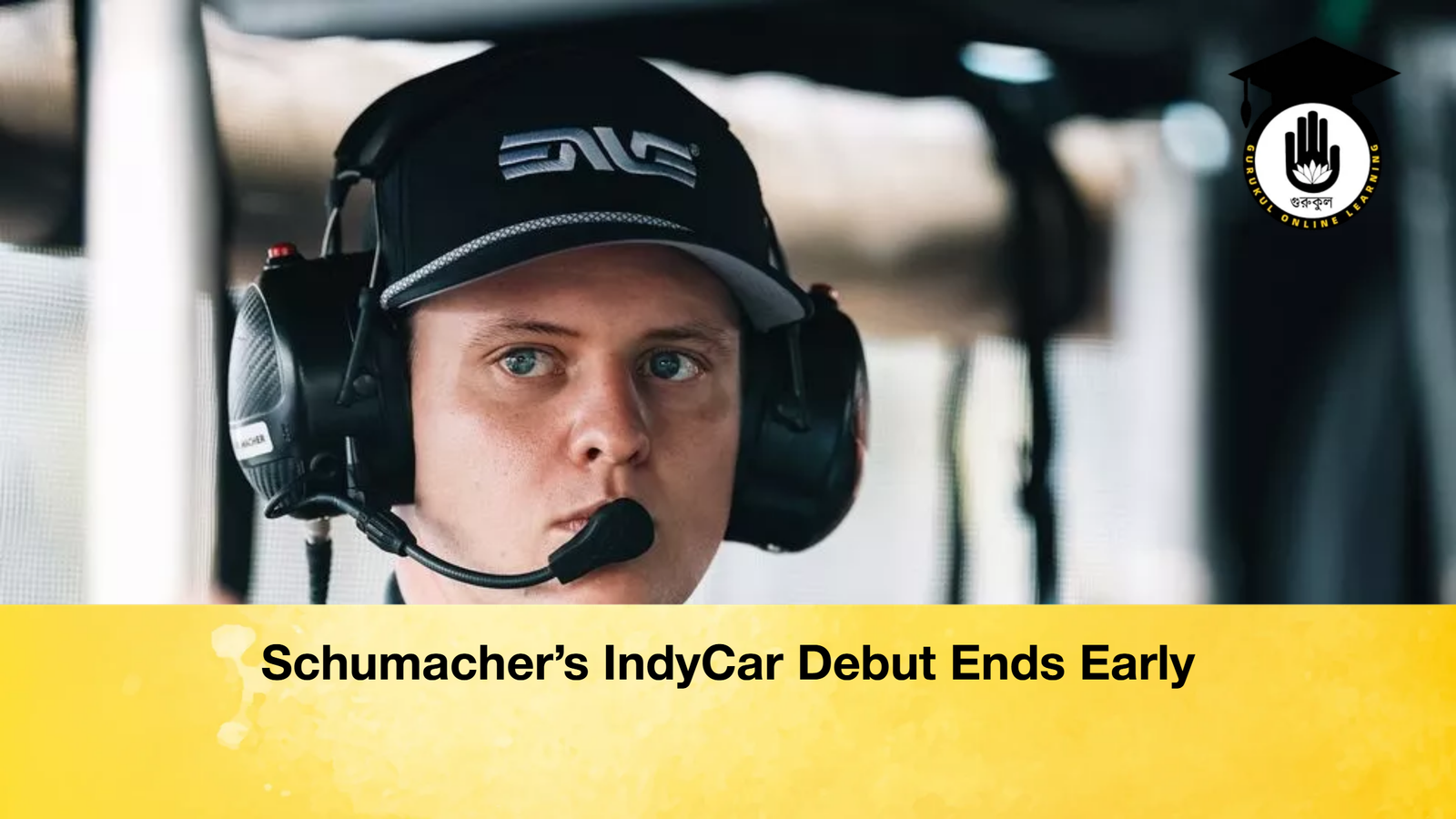
Schumacher’s IndyCar Debut Ends Early

Mick Schumacher endured a frustrating and short-lived introduction to the IndyCar Series, as his debut race at St Petersburg ended after just four corners in a chaotic opening-lap collision.
Driving the #47 entry for Rahal Letterman Lanigan Racing, Schumacher had started from 21st position and was navigating the congested midfield when disaster struck at Turn 4. The incident was triggered ahead of him by Sting Ray Robb, who braked too late into the heavy braking zone, colliding with Santino Ferrucci.
The resulting impact sent both cars into the barriers nose-first, leaving Schumacher with nowhere to go. In a dramatic sequence, his car rode up over Ferrucci’s rear wing, briefly coming to rest atop the stricken machine. Both Schumacher and Ferrucci were forced to retire on the spot, while Robb was later penalised with a 30-second stop-and-go for causing avoidable contact.
Table of Contents
ToggleA debut cut painfully short
The premature end to Schumacher’s first IndyCar outing was a disappointing outcome for a driver whose arrival in American open-wheel racing had generated significant anticipation, not least due to his lineage as the son of seven-time Michael Schumacher.
Despite the dramatic nature of the crash, Schumacher emerged uninjured and even found a moment of levity when reflecting on the incident. “My first thought was whether I could reverse out and continue,” he remarked. “But the safety crew arrived quickly, and that was the end of it.”
Ferrucci, speaking shortly after the race, was openly critical of Robb’s actions, emphasising the unnecessary risk taken so early in a 100-lap contest with multiple pit strategies at play.
Key details of the Lap 1 incident
| Factor | Details |
|---|---|
| Location | Turn 4, opening lap |
| Trigger | Late braking by Robb |
| Cars involved | Robb, Ferrucci, Schumacher |
| Outcome | Schumacher and Ferrucci retired |
| Penalty | Robb given 30-second stop-and-go |
Lessons learned: qualifying crucial
While the crash itself was unavoidable, Schumacher was quick to identify a broader lesson: track position matters. Starting deep in the field exposed him to the heightened risk that often characterises opening laps in tightly packed grids.
“We need to look at qualifying,” he admitted. “We lost momentum there and paid the price in the race. When you’re at the back, you’re often three or four cars wide into corners—that’s always a risk.”
The German believes the car had far greater potential than the result suggests. Encouraged by the team’s strategy and underlying pace, he remains confident that stronger qualifying performances will unlock better race outcomes.
Looking ahead with optimism
Despite the setback, Schumacher has adopted a measured and forward-looking mindset. With a long season ahead, he views the experience as part of the learning curve required to adapt to IndyCar’s unique demands.
“There are still many races to go,” he said. “This was only the beginning. We’ll take what we’ve learned and apply it at the next round.”
For Schumacher, the debut may have been brief, but it has already underscored two defining aspects of IndyCar racing: its unforgiving nature—and the importance of seizing every opportunity to stay clear of trouble.

Sufi Arshan Aziz Faruq | Contributor | sportsgoln.com
Sufi Aarshan Aziz Faruq is a car enthusiast
Follow Me